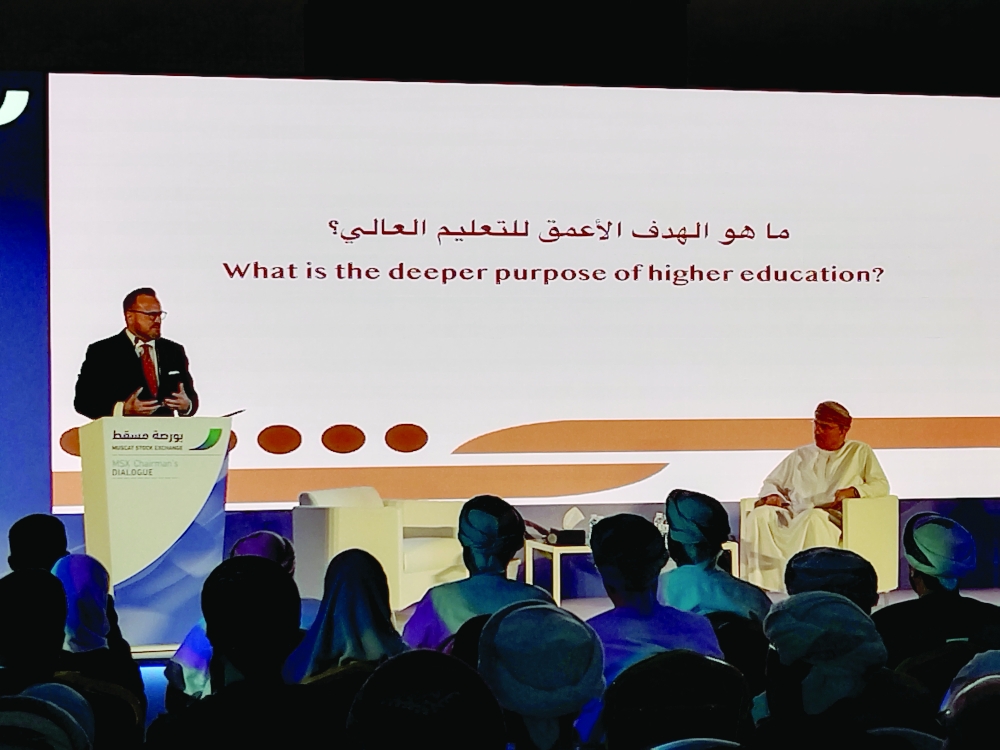





MUSCAT: As many as 65 per cent of the jobs that our future generation will be working in the next decade do not exist today and the job scenario will take a mammoth leap from what it is today to what it is going to be in the future, according to Dr Bradley J Cook, President of the American University of Bahrain.
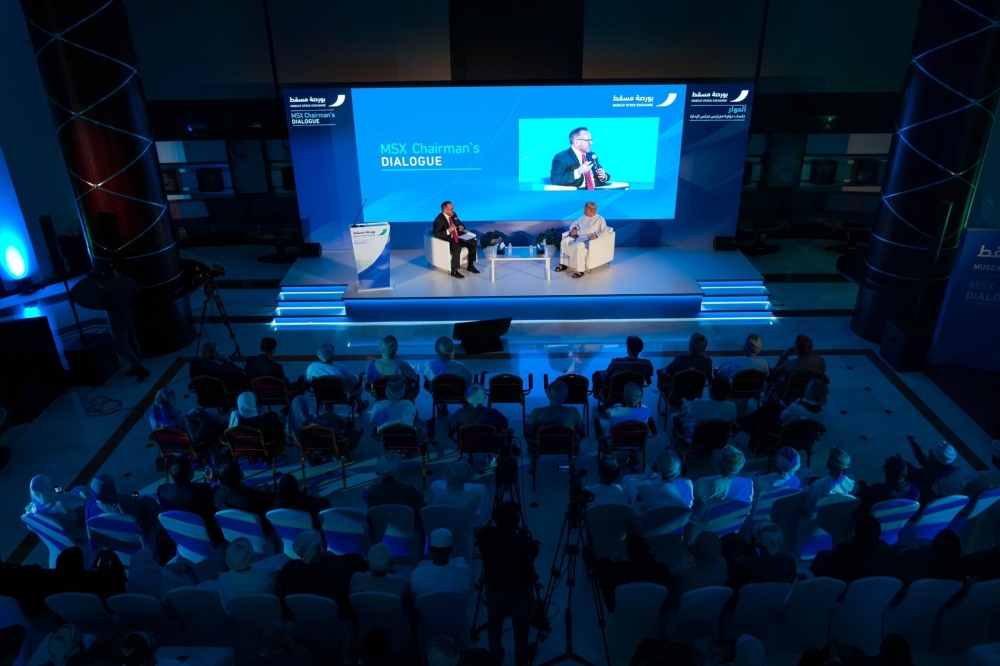
Speaking at the inaugural edition of the ‘MSX Chairman’s Dialogue’ organised by Muscat Stock Exchange and hosted by Major General Mohammed bin Mahfoodh al Ardhi, Chairman, MSX at the MSX Investors Hall recently, Dr Bradley said that to help future generations cope with the changing trends, universities will forge stronger partnerships with industry to bridge the gap between academia and the workforce.
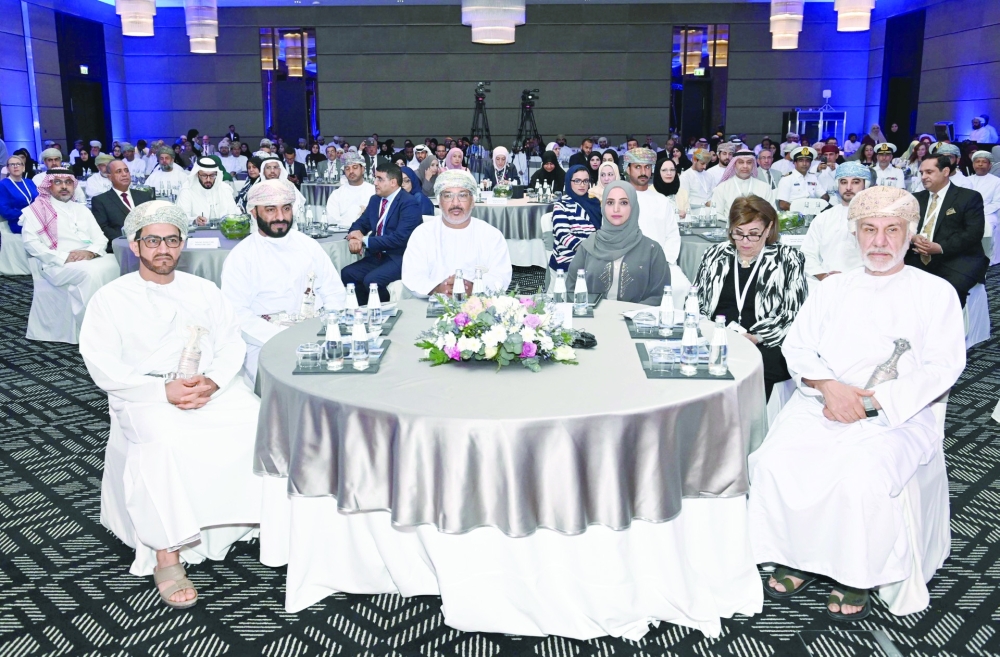
“Further, industry-sponsored projects, mentorship programmes, and work-integrated learning opportunities will prepare students for successful careers. AI will set education back 2,500 years and that is a good thing. Future universities may offer more interdisciplinary programmes that combine diverse fields of study to address complex real-world problems. Collaboration across disciplines will be emphasised to foster creativity and innovation,” Dr Cook said at the event held in the presence of Dr Ali bin Saud al Bimani and Dr Hussein bin Sulaiman al Salmi and CEOs and other stakeholders.
According to Dr Bradley, the deeper purpose of higher education is human wellbeing and health should be of foremost importance in whatever initiatives that we take a step forward.
“The very deeper purpose of higher education is human wellbeing and any higher education that doesn’t aim at human wellbeing is of no use. The first and foremost element required towards achieving it is health. When I say health, it means both mental and physical health. We need to help our children to be resilient to changes, and prepare them for the future,” Dr Bradley, who is the President of the AUB, the first comprehensive American-model co-educational university in the Kingdom of Bahrain, said.
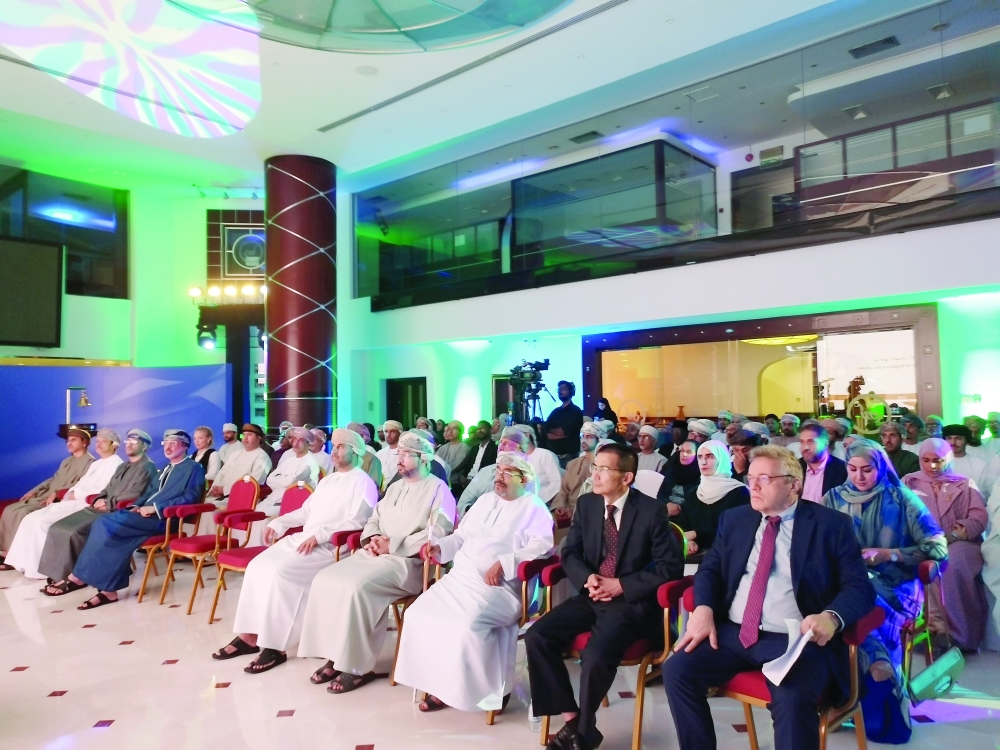
The ‘Dialogue’ titled ‘The Future of Higher Education in the Middle East’ aimed at endeavouring to build a bridge between global and Omani stalwarts from their respective fields, to shed light on the current state of higher education, the key to shaping the future of higher education, global dynamics, and shifting economies, evolving educational paradigms and vision for the future, Mohammed bin Mahfoodh al Ardhi, Chairman, MSX said that said higher education in the Middle East is influenced by several factors that include technological advancements, changing demographics and economic development.
“Higher education in the Middle East is influenced by several factors and technology would continue to play a key role in transforming higher education in the Middle East. E-learning platforms, online courses, and virtual classrooms will become more prevalent, offering greater flexibility and accessibility to students,” Major General Al Ardhi added.
Dr Cook, who is a noted educationist with nearly 30 years of executive administrative experience in higher education, said though the current state of higher education does not look great, he had firm belief in education.
Research continues to demonstrate the value of a university education due to better earning potential, increased household incomes and better health. Middle East countries would continue to invest heavily in research and development to foster innovation and knowledge-based economies. This will pave the way for a greater focus on research-oriented programmes and the establishment of research centres and technology parks.
Al Ardhi hoped that international collaborations and partnerships with leading universities and institutions worldwide would facilitate knowledge exchange, research collaborations, and faculty exchanges thereby enhancing the quality of education in the region.
Oman Observer is now on the WhatsApp channel. Click here