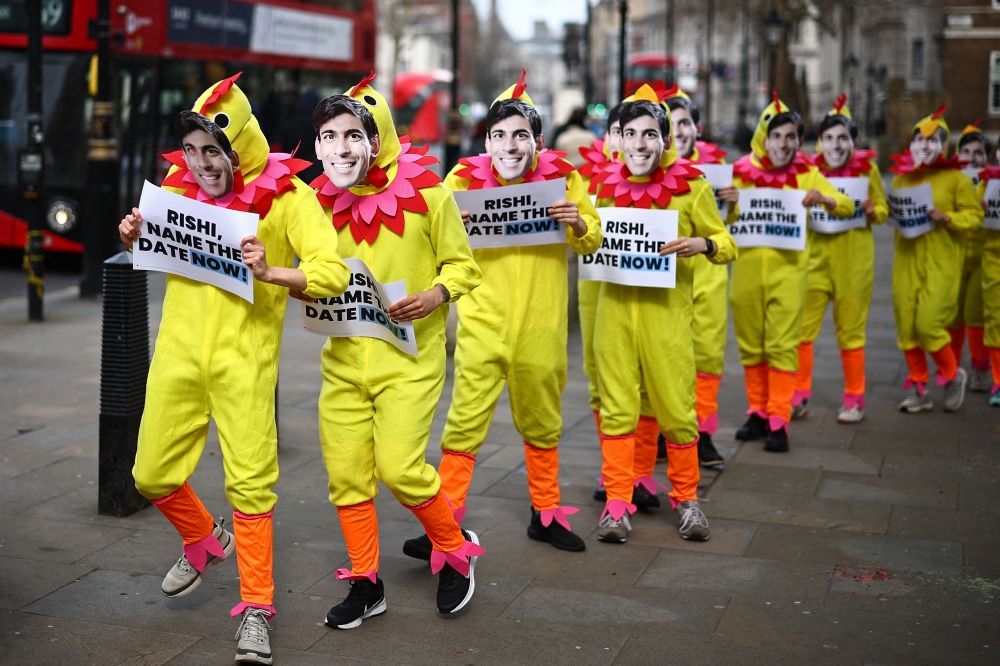





LONDON: British Prime Minister Rishi Sunak said on Thursday that he would not hold a general election in early May, in the strongest indication yet that the national vote would take place later this year.
The comments are likely to end speculation that the prime minister will call an early general election. Opposition political parties have tried to goad Sunak into holding one, saying he was running scared of voters.
Asked if he would rule out holding a general election on May 2, the same day as local elections, Sunak told ITV West Country: "there won't be an election on that day."
Sunak is unlikely to hold an election on any other day in May because of the logistical difficulties of organising two sets of elections within a few weeks of each other.
The prime minister had endured a difficult week, with the defection of a former Conservative deputy chair to a rival party and questions over why he was not returning millions of pounds from a donor embroiled in a racism row.
Sunak has previously been reluctant to specify when a general election would be held. He said in January that his "working assumption" was that it would take place in the second half of the year.
Polls predict Sunak will lose the election, with his Conservative Party trailing the main opposition Labour Party by about 20 percentage points. The government has struggled to make progress on its main promises, including stopping asylum seekers arriving in small boats, growing the economy and cutting hospital waiting lists. Sunak has hit one target of halving inflation by the end of 2023.
Sunak must hold a general election by January next year, but the prime minister has the power to call one before then. Meanwhile, two senior UK lawmakers on Friday became the latest from the ruling Conservatives to announce that they will stand down at the next election, as Sunak's party appears headed for defeat.
Armed Forces minister James Heappey said he had taken the "painful decision" not to fight his seat at the nationwide vote, which is expected to occur in the second half of this year.
His announcement came after Brandon Lewis, a former chairman of the Tories who was also Northern Ireland and justice secretary, said late on Thursday he would not be a candidate.
At least 66 Conservatives and former Conservatives have now announced they are leaving parliament at the election -- the most since Labour's landslide win under Tony Blair in 1997.
The most high-profile of them is former prime minister Theresa May, who revealed last week that she would step down after 27 years as an MP. The retirements add to a growing feeling in Westminster that the election will see the Tories kicked out of government after 14 years in power.
Oman Observer is now on the WhatsApp channel. Click here