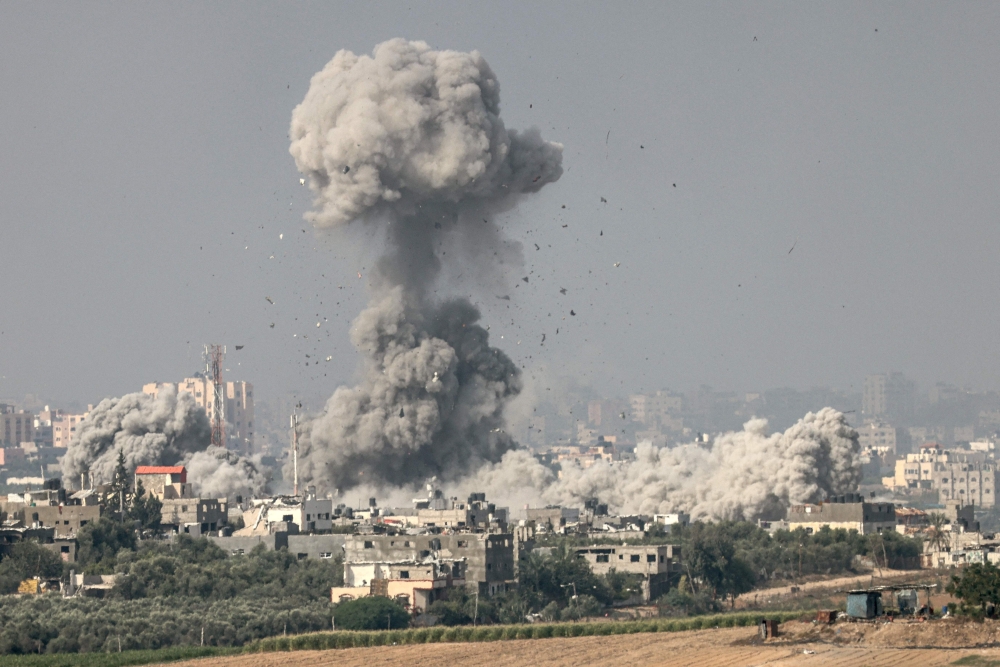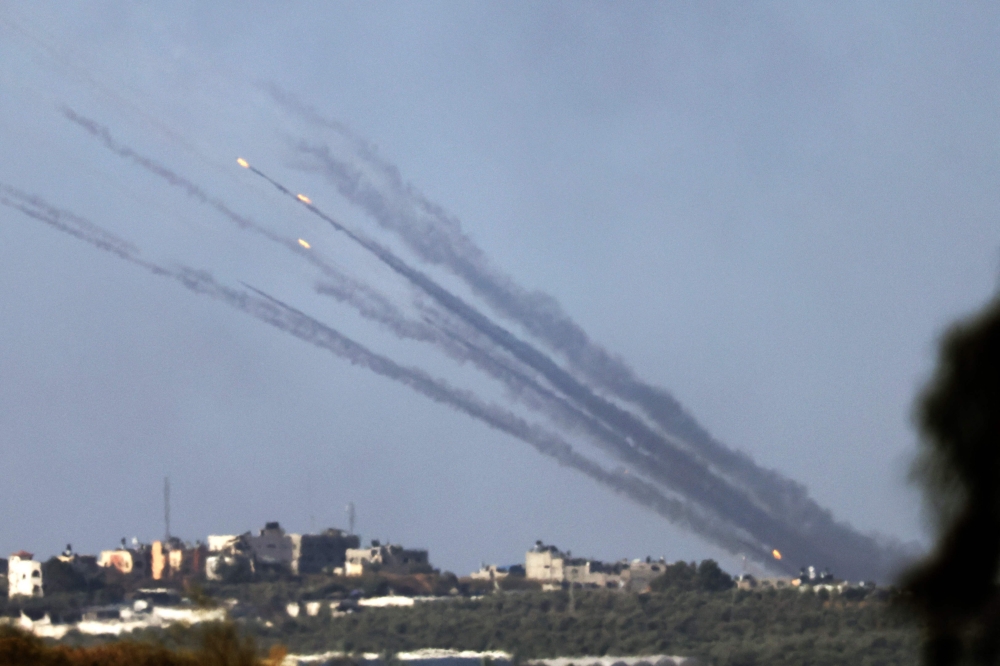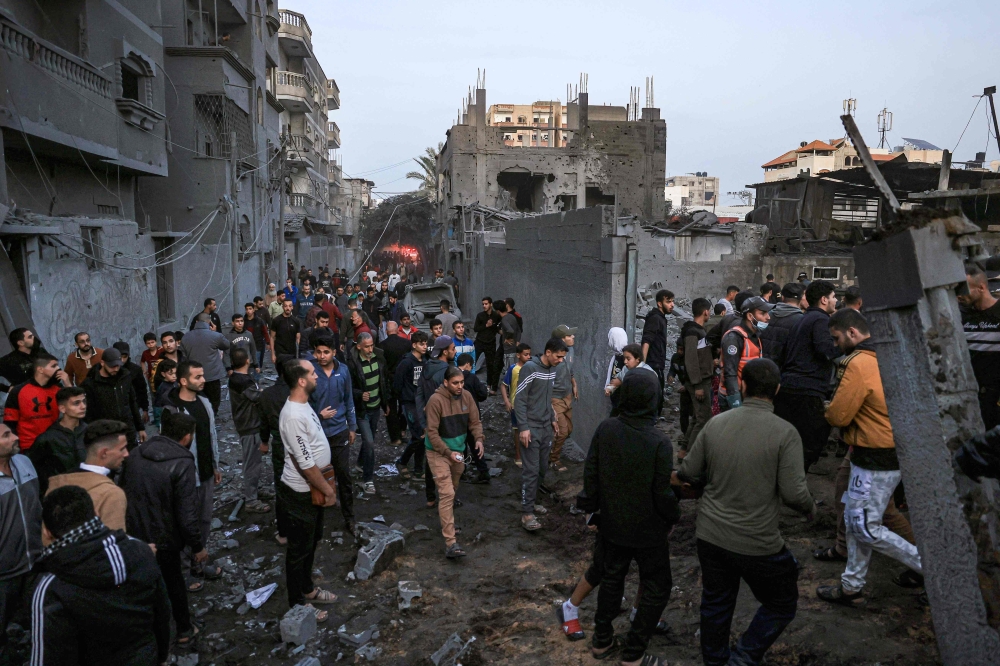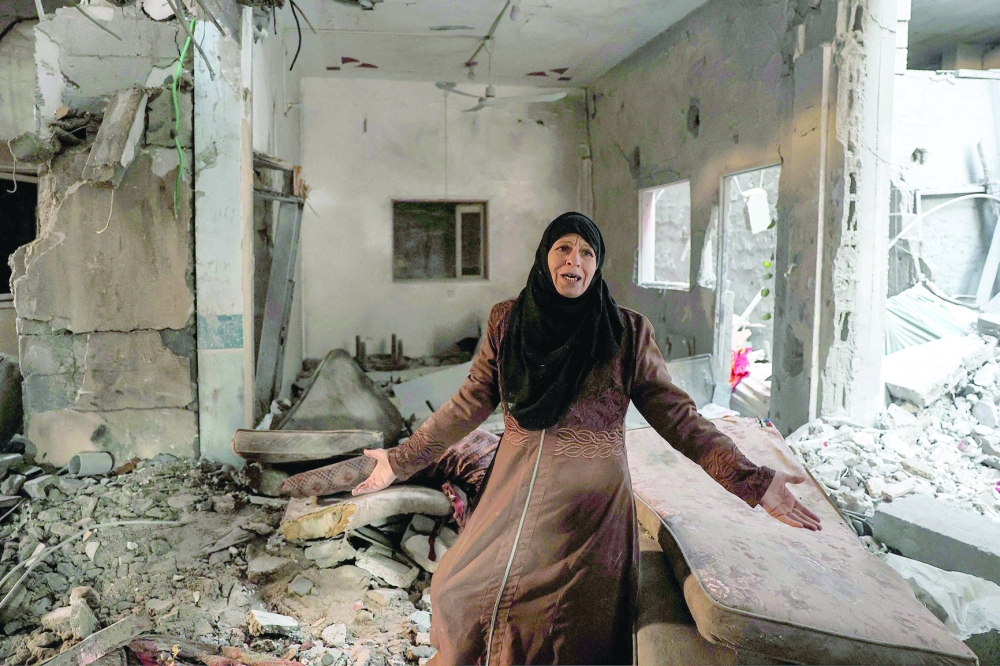





DOHA/TEL AVIV: Israeli forces bombed areas in the southern border city of Rafah on Thursday where more than half of Gaza's population is sheltering, a day after Prime Minister Benjamin Netanyahu rejected a proposal to end the war in the Palestinian enclave.
Netanyahu said on Wednesday terms proposed by Hamas for a ceasefire that would also involve releasing hostages held by the Palestinian group were "delusional" and vowed to fight on, saying victory was in reach and just months away.
The rejection followed intense diplomacy to end the four-and-a-half-month conflict before a threatened Israeli assault on Rafah, which is now home to over a million people, many of them in makeshift tents and lacking food and medicine.
In a sign the diplomacy is not over yet, a Hamas delegation led by senior official Khalil Al Hayya arrived in Cairo on Thursday for ceasefire talks with mediators Egypt and Qatar.
Aid agencies have warned of a humanitarian catastrophe if Israel follows through on its threat to enter Rafah, one of the last remaining areas of the Gaza Strip that its troops have not moved into during its ground offensive.
Israel says it takes steps to avoid civilian casualties and accuses Hamas of hiding among civilians, including at school shelters and hospitals, leading to more civilian deaths. Hamas has denied this.
Israeli planes bombed areas in Rafah on Thursday morning, residents said, killing at least 11 people in strikes on two houses. Tanks also shelled some areas in eastern Rafah, intensifying the residents' fears of an imminent ground assault.
Inside Rafah, mourners wept over bodies of those killed in an air strike that hit the Tel Al Sultan neighbourhood. The corpses were laid out in white shrouds. A man carried the body of a small child in a black bag.
"Suddenly in a blink of an eye, rockets fell on children, women, and elderly men. What for? Why? Because of the upcoming ceasefire? Usually before any ceasefire this happens," said resident Mohammed Abu Habib.
Emad, 55, a father of six sheltering in Rafah after fleeing his home elsewhere, said the greatest fear was a ground assault with nowhere left to run: "We have our backs to the (border) fence and faces toward the Mediterranean. Where should we go?”
Despite Israel's rejection of the Hamas proposal, more talks are planned. US Secretary of State Antony Blinken, who had shuttled between mediators in pursuit of a deal this week on his fifth trip to the region since the start of the war, said he still saw room for negotiations.
In a late-night press conference on Wednesday, Blinken said elements of the proposal put forward by Hamas had contained clear "non-starters", without saying what they were, but that he would push on with talks.
Blinken also said the civilian death toll was too high and reiterated that Israel's operation should put civilians first.
"And that’s especially true in the case of Rafah, where there are somewhere between 1.2 and 1.4 million people, many of them displaced from other parts of Gaza."
He said he had suggested some ways to minimise harm in talks with Israeli leaders, but gave no details. Blinken departed to return to the US on Thursday afternoon.
The Hamas delegation in Egypt is expected to meet officials including Egyptian intelligence chief Abbas Kamel, Egyptian security sources said.
Gaza's health ministry says at least 27,840 Palestinians have been confirmed killed, and more than 67,000 injured.
The Israeli bombardment continued in Khan Younis and Deir-Al-Balah in central Gaza overnight, killing a Palestinian television journalist, Nafez Abdel Jawwad, and his son.
Philippe Lazzarini, head of the main UN aid agency for Palestinians, UNRWA, said on X the agency had been denied access to bring food to areas where it has "identified deep pockets of starvation and hunger", with people on the verge of famine.
UN human rights chief Volker Turk said the Israeli military was bulldozering civilian infrastructure to create a buffer zone inside Gaza's border fence, which he said may be a war crime.
A senior Israeli military officiall denied this: "Our operations along the border are aimed at exposing tunnels. This is not related to a buffer zone at this time." - Reuters
Oman Observer is now on the WhatsApp channel. Click here