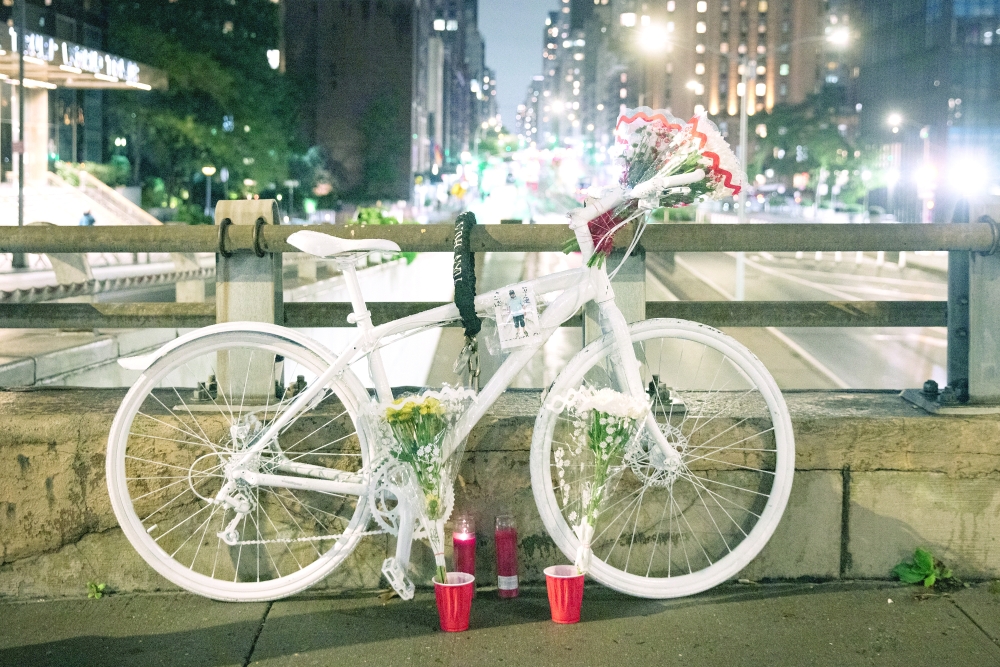





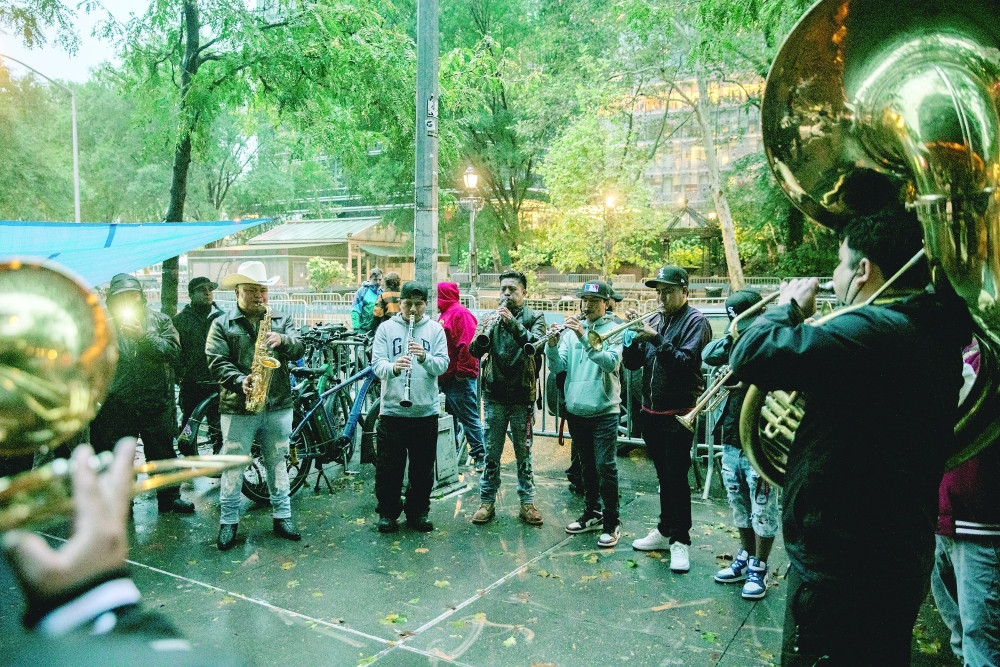
After the brass band packed up its instruments, Sergio Solano and two other food delivery workers walked a white bicycle to an overpass within view of the United Nations headquarters.
A fellow worker, or compañero, as they call each other, meaning “partner,” had died less than two weeks earlier that September in yet another bicycle wreck on the streets of Manhattan. Delivering food has proved to be a deadly occupation for many of them. Riding bikes at all hours, they get hit by cars, are at constant risk of having accidents and fall prey to crime.
The spray-painted bicycle paid homage to Félix Patricio Teófilo, a Mexican immigrant who, like them, made his living pedaling to deliver food. They chained it to the metal railing near the intersection of 47th Street and First Avenue, where he met his end.
With that solemn march through the drizzle, Solano, 39, was adjourning an evening of mourning, fulfilling what he has come to see as a mission: illuminating in death lives that were relegated to the shadows.
“We never thought we would be organizing vigils,” Solano said. “That was never our objective.”
Just over three years ago, Solano and relatives who are also delivery workers started “El Diario de Los Deliveryboys en La Gran Manzana,” which translates to “The Journal of the Deliveryboys in the Big Apple,” a Facebook page with aims both practical and informative.
The page would act as an online support network, a space to alert of bicycle thefts, traffic accidents and discriminatory encounters reported by Spanish-speaking immigrants who brave the urban frenzy to satisfy a New Yorker’s takeout cravings.
Along the way, it would chronicle the job’s twists and turns.
Soon after the page was up and running it became clear to Solano that the project would tell a bigger story: Compañeros die regularly on the job.
More than 40 have died since the page went live in late 2020, by Solano’s latest count.
In Patricio’s case, he hit his head on a curb without a helmet in a solo crash.
Food delivery workers were for a brief period celebrated in New York as the Covid-19 pandemic drove life indoors and their services became critical.
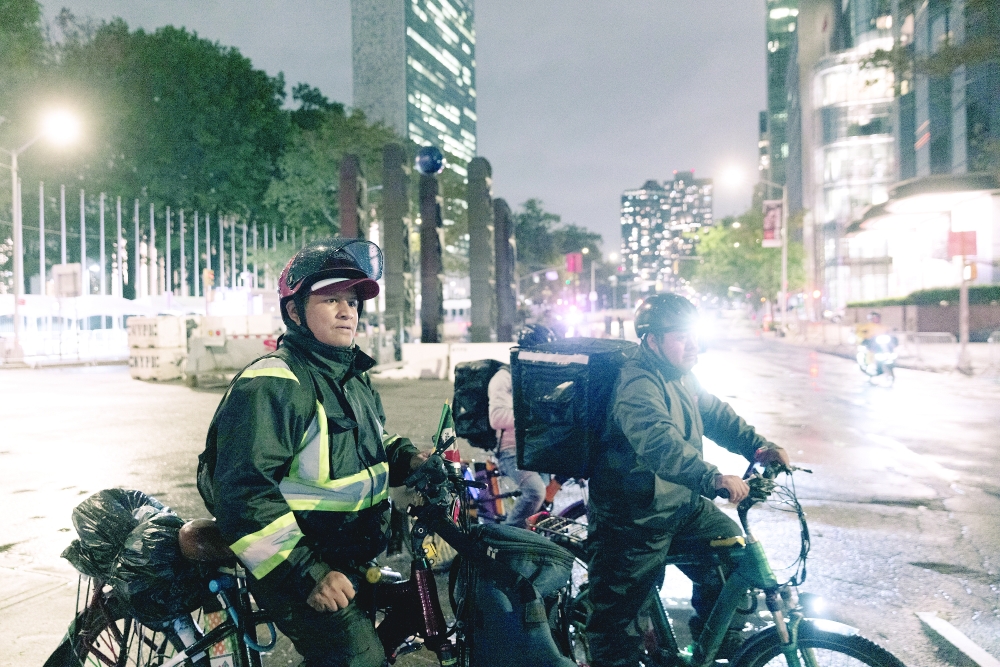
Delivery apps offered viable income to those who had been laid off from their jobs or had their hours slashed, and for those whose immigration status complicated obtaining government aid.
As the pandemic lurched on, the dangers of the in-demand work became glaring. Activists formed unions and pushed for better pay and protections, an effort that continued into 2023. Under pressure, the city set a higher minimum wage for app-based delivery workers, starting at about $18 per hour in October.
Still, the risk for many workers has gone beyond wages. On the Deliveryboys page, a stream of photos bears the names and faces of the fallen.
Most of them are immigrants from Mexico or Guatemala who are part of an estimated cavalry of 65,000 food delivery workers in New York City.
The job has become one of the deadliest.
A report by the city published in November 2022 said that the fatality rate among food delivery workers who don’t use a car was 36 deaths per 100,000 thousand workers from January 2021 to June 2022. That rate surpassed that of workers in construction (Seven deaths per 100,000), which had historically been the deadliest industry.
Funerals, vigils, death anniversaries and requiems have been organized, fundraised and digitally inscribed into the community’s memory by the self-titled journal.
Many have died in traffic accidents while on the job. Some of the deaths are not related to work. Others, like Francisco Villalva, have been murdered.
In March 2021, an assailant who was after Villalva’s bicycle shot him at a park near 108th Street and Third Avenue in Manhattan. Villalva, of Xalpatlahuac, Guerrero, in southwestern Mexico, was 29.
Two days later, the page streamed live video from the spot of the killing, calling for others to support the family. Relatives who appeared in the video spoke in both Spanish and Nahuatl, an Indigenous language spoken in parts of Mexico. (To date, the video has more than 132,000 views.) They also called for justice.
“Unfortunately, another compañero has lost his life doing this job,” César Solano, Sergio Solano’s nephew, and also a page administrator, said in Spanish, relating the news with a television reporter’s cadence.
The Deliveryboys page’s follower count has surged from hundreds to thousands, affording the platform some mobilizing power.
“For almost a month, we did protests,” Sergio Solano said. “We did vigils upon vigils upon vigils. People would come offering to donate food or provide live music. Every day that we did something, a ton of people would come.”
Villalva’s death had galvanized the community. Compañeros paused their delivery apps to attend the events. A Catholic priest was brought in to lead prayers. Family and friends arranged for food. Others picked up instruments.
One group wrote Villalva his own corrido, a Mexican folk ballad, telling of his journey in New York through its unnerving end.
The killer, identified as Douglas Young, was caught and eventually convicted of murder. In April, Young, a 41-year-old man from Queens, was sentenced to serve 41 years to life in state prison.
Since Villalva’s death, the page has helped ensure that each fallen compañero is given a remembrance — a practice that has become almost ritualistic, reminiscent of the farewells to police officers killed in the line of duty.
The loved ones bear the brunt of the organizing, Solano said, but the page, which is 51,000 followers strong, brings people out.
At Patricio’s vigil, César Solano, 22, livestreamed the band’s truncated sidewalk performance. Police officers fielding a noise complaint gave them 10 minutes to play their tribute. Some find the page’s exhaustive posts invasive.
But Sergio Solano said the page’s focus and the tributes honor the fallen delivery workers with “a proper final goodbye” and give loved ones a chance to grieve from afar. “If they loved and adored him back home, we show that he was loved and adored here as well,” he said in Spanish.
- The New York Times.
Oman Observer is now on the WhatsApp channel. Click here