




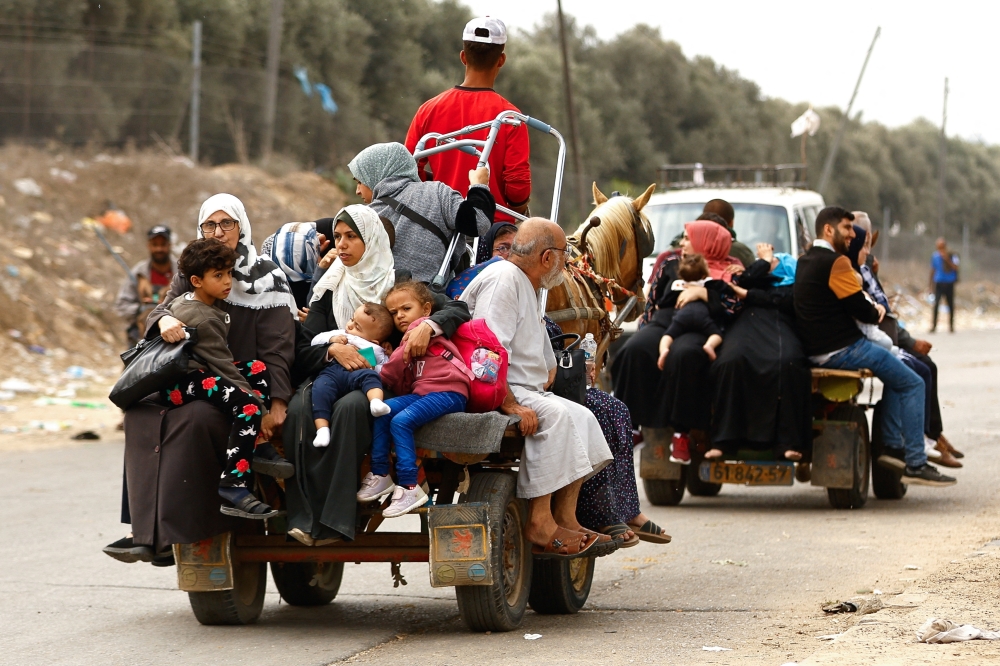
KHAN YUNIS: Perched on trucks, crammed into cars, pulled by donkeys on carts, and on foot, tens of thousands of Palestinians are fleeing Israeli army strikes on the territory squeezed between Israel, Egypt and the Mediterranean. At the Bani Suheila crossroads in Khan Yunis, on the immense Salah Al-Din road that threads Gaza top to bottom, the processions are growing still.
People fleeing Gaza City are joined by those leaving Khan Yunis heading further south, towards Rafah, the last city before Egypt.
At first Youssef Mehna thought the war would quickly be over. Then he was wounded, his house was destroyed, and he was forced to survive "25 days without anything".
So like thousands of others, Mehna finally fled north Gaza for the south.
Mehna left the Jabalia refugee camp at seven in the morning, in the north of Gaza City, also hoping to reach Rafah.
But his journey finished in Khan Yunis, after eight hours of travel covering only 25 kilometres.
Each trip was short, as fuel shortages prevent drivers from accepting long-distance fares. Sometimes, between car rides, they were forced to go on foot.
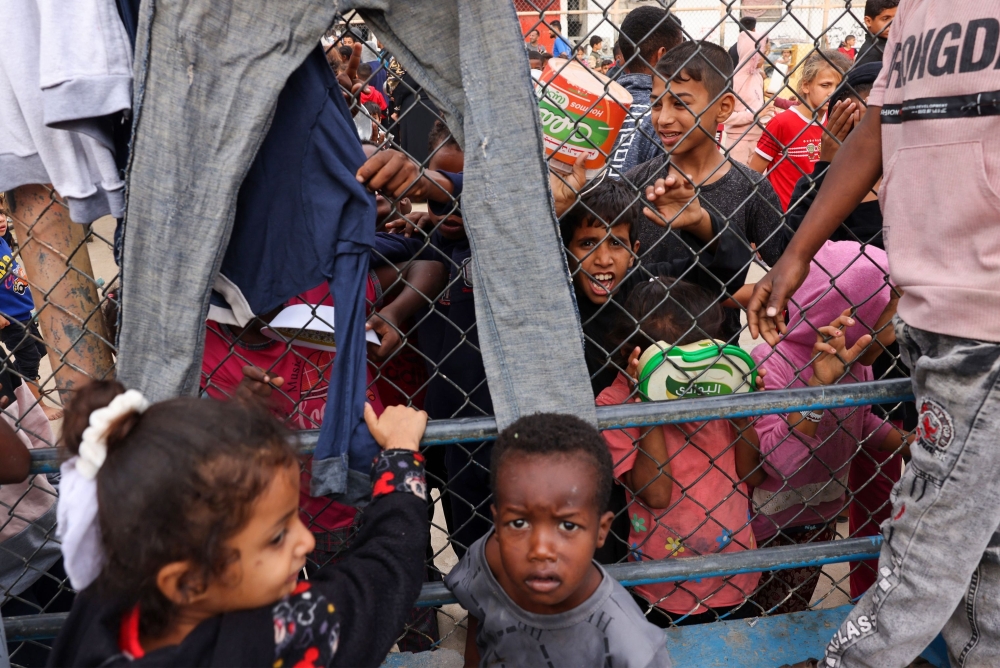
Around him, hundreds of families were waiting. Children sleep on the floor beside parents wondering how they will live in a territory where more than 1.5 million people are displaced and nearly one house in two has been destroyed, according to the United Nations.
The UN has said access to bread in the south is "challenging" because "the only operative mill in Gaza remains unable to grind wheat due to a lack of electricity and fuel".
Before the war, a little over 80 per cent of Gazans lived in poverty and almost two-thirds were dependent on international aid, especially for food, according to the UN.
Now, 50-kilo sacks of flour have increased in price from 40 shekels to 150 shekels, so it's worse still.
But hunger is not the only worry for Umm Yaaqub. "My husband has heart problems," she says.
And her 20-year-old daughter Rim "is normally in a medical bed". "But we all sleep on the ground, in the dust, and we don't have a single blanket even though the nights are very cold."
Shops across southern Gaza are running out of everything. Bottled water, milk for children, nappies, pasta and juices are now nearly impossible to find.
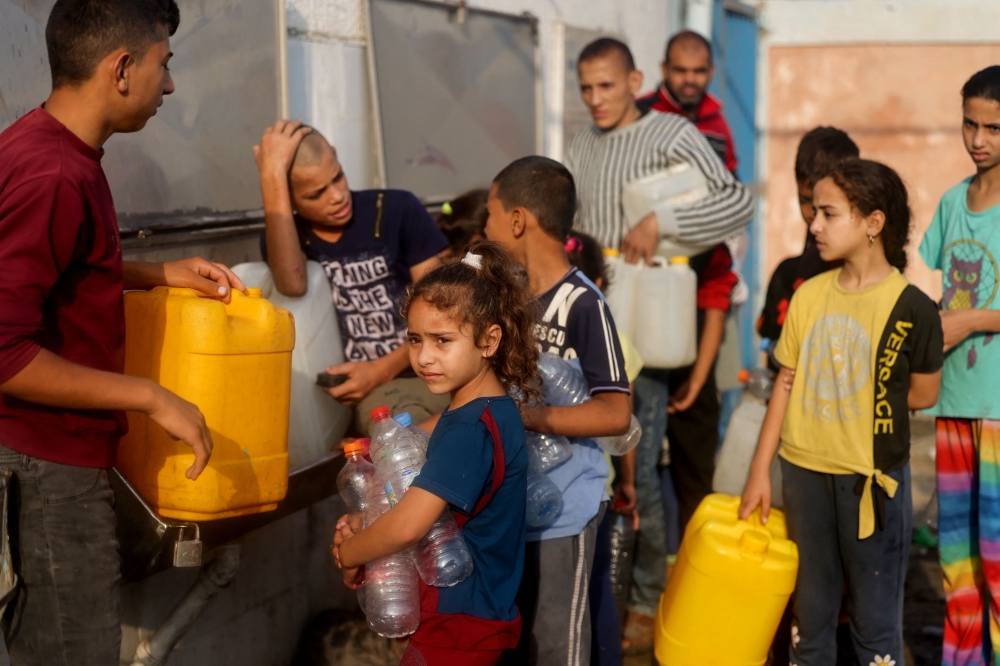
Water flows from a tap where long crowds of displaced people queue. — AFP
Oman Observer is now on the WhatsApp channel. Click here