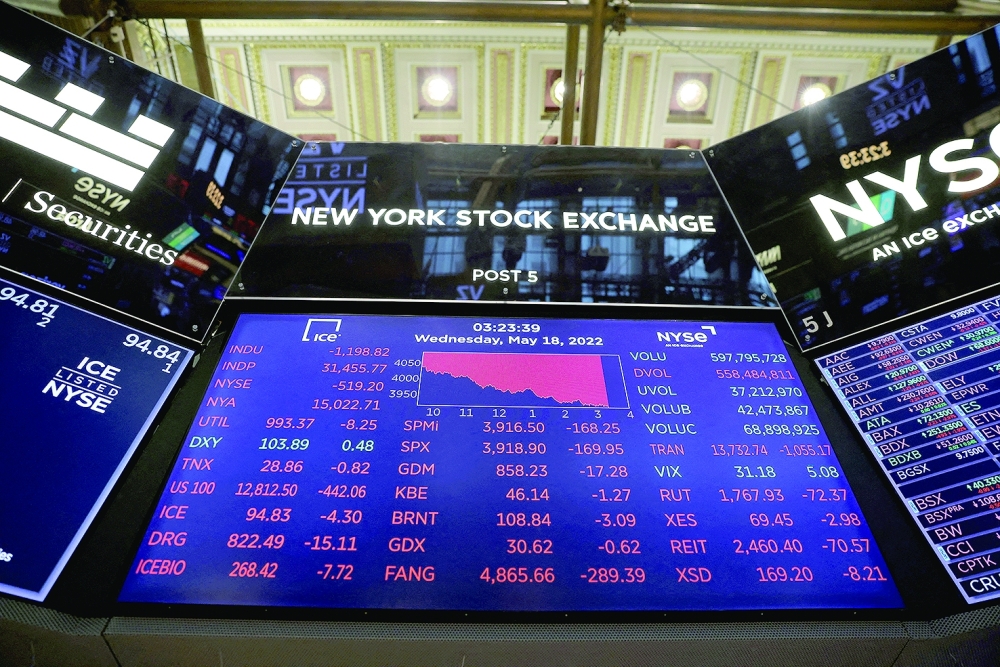





SYDNEY: Asian shares rallied for a fourth consecutive session on Monday after markets factored in earlier rate cuts in the United States and Europe, bullish wagers that will be tested by a swarm of central bank speakers this week.
Battered bond markets also enjoyed a welcome recovery as a benign US payrolls report and upbeat productivity numbers suggested the labor market was cooling enough to obviate the need for further rate increases from the Federal Reserve.
"This year's better-than-expected US supply-side performance raises hopes for a soft landing," said Bruce Kasman, head of economic research at JPMorgan.
"By encouraging disinflation, strong productivity and labor supply gains might allow for job growth and low inflation to coexist," he added. "This, in turn, would open the path for early Fed easing." Futures markets swung to imply a 90 per cent chance the Fed was done raising rates, and an 86 per cent chance the first policy easing would come as soon as June.
Markets also imply about an 80 per cent probability the European Central Bank will cut rates by April, while the Bank of England is seen easing in August.
Central bankers have their own chance to weigh in on this dovish outlook, with at least nine Fed members speaking this week, including Chair Jerome Powell. Also on the docket are speakers from the Bank of England and the European Central Bank.
An outlier is Australia's central bank, which is likely to resume raising rates at a policy meeting on Tuesday as inflation stays stubbornly high.
The Bank of Japan is also on the road to tightening, albeit at a glacial pace. The head of the central bank on Monday said they were closer to achieving their inflation target, but it was still not enough to end ultra-loose policy.
Elsewhere, hopes for lower borrowing costs helped MSCI's broadest index of Asia-Pacific shares outside Japan gain 2.0 per cent, having already rallied 2.8 per cent last week and moving away from one-year lows.
Japan's Nikkei rose another 2.4 per cent, after jumping 3.1 per cent last week, while South Korea climbed 4.3 per cent as authorities re-imposed a ban on short-selling until mid-2024.
Chinese blue chips gained 1.3 per cent, ahead of data on trade and inflation due this week.
S&P 500 futures and Nasdaq futures were both flat. EUROSTOXX 50 futures were also little moved, while FTSE futures inched up 0.1 per cent.
BOND RELIEF Two-year Treasury yields paused at 4.86 per cent, after falling 17 basis points last week. Yields on 10-year notes stood at 4.586 per cent, some way from October's painful peak of 5.021 per cent.
"Our view remains that rate cuts from the Fed, ECB, and BoE will come a little sooner than is priced by markets and, in the initial phases, is likely to be bolder in terms of size," analysts at NatWest Markets wrote in a note. "We look for the Fed Funds rate to fall to 3-3.25 per cent, the ECB depo rate to 3 per cent, and the BoE Bank Rate to 4.25 per cent by the end of 2024." The retreat in Treasury yields pulled the rug out from under the dollar, which was pinned at 105.080, having slid 1.3 per cent last week to the lowest since late September.
The euro was firm at $1.0735, having surged 1 per cent on Friday to its highest in two months. The dollar even lost ground to the ailing yen, standing at 149.52, some way from its recent top of 151.74.
The drop in the dollar and yields helped underpin gold at $1,983, within striking distance of the recent five-month peak of $2,009.
Oil prices edged higher, after shedding 6 per cent last week, drawing support from confirmation that Saudi Arabia and Russia would continue their additional voluntary oil output cuts. — Reuters
Oman Observer is now on the WhatsApp channel. Click here