




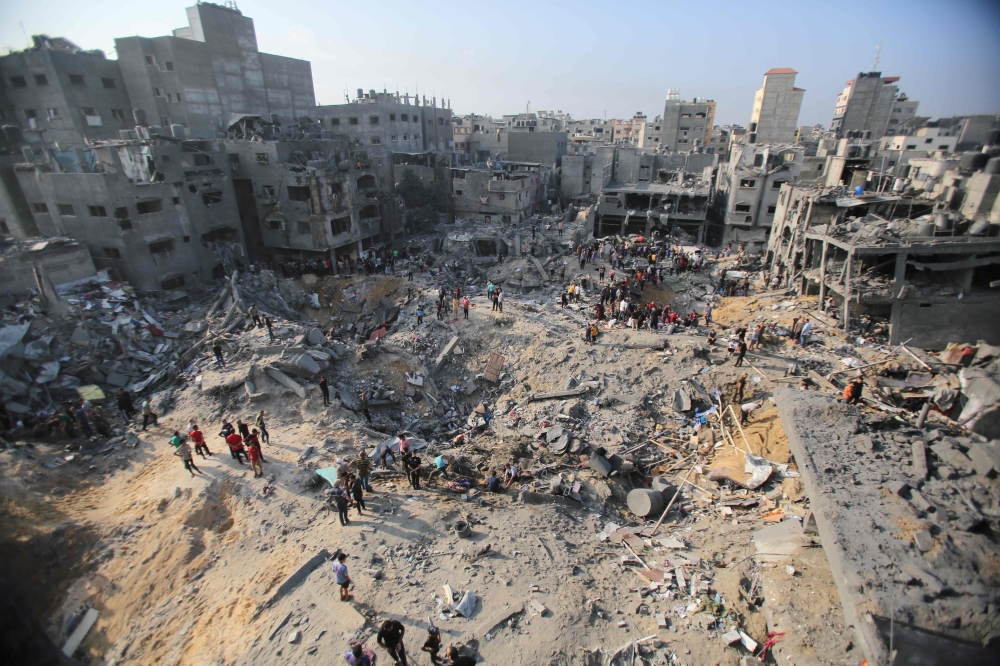
GAZA: An Israeli strike on Gaza's largest refugee camp killed a massive number of people on Tuesday in an area crowded of civilians.
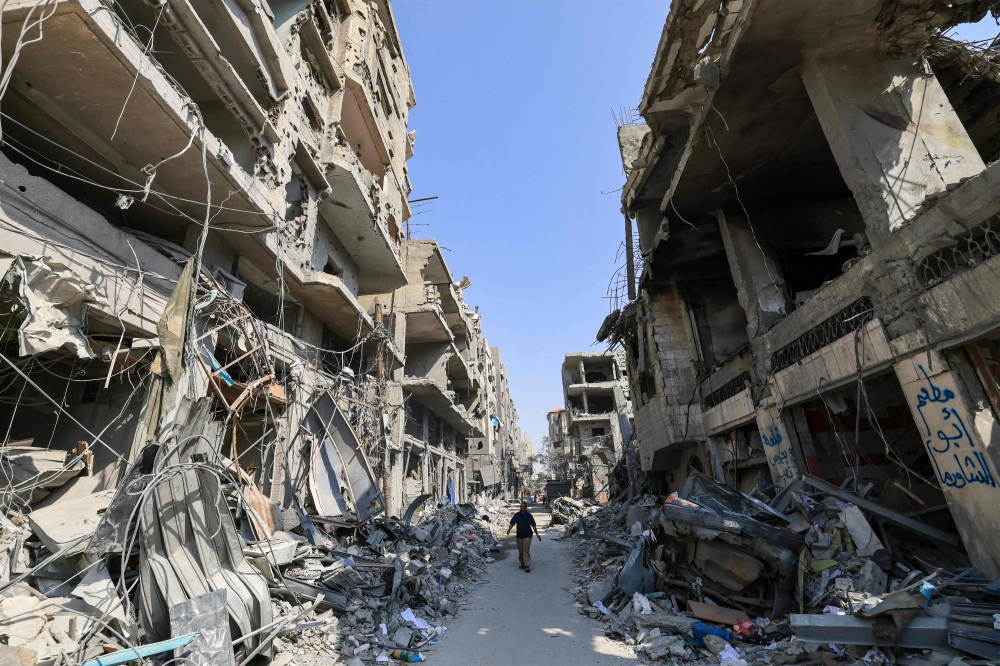
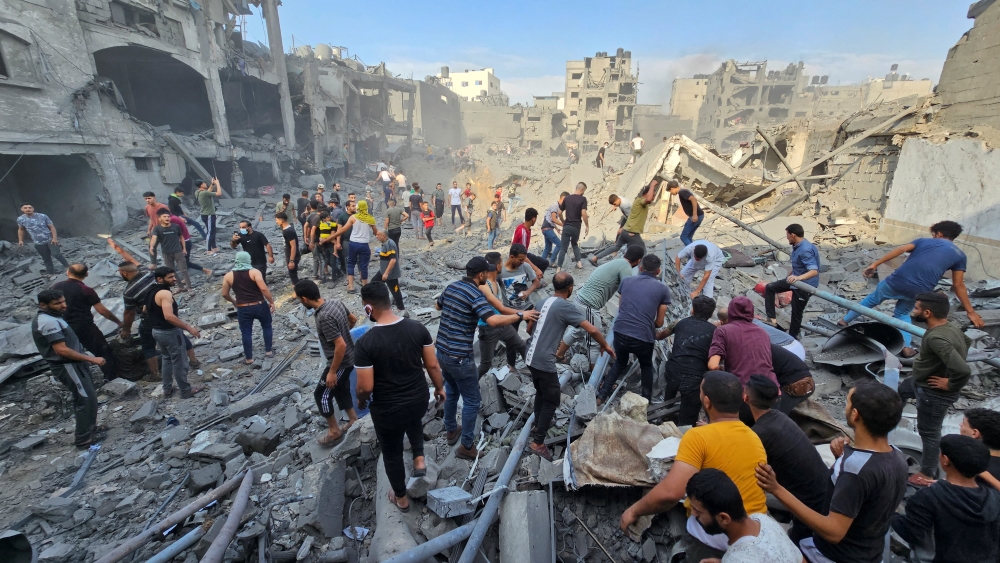
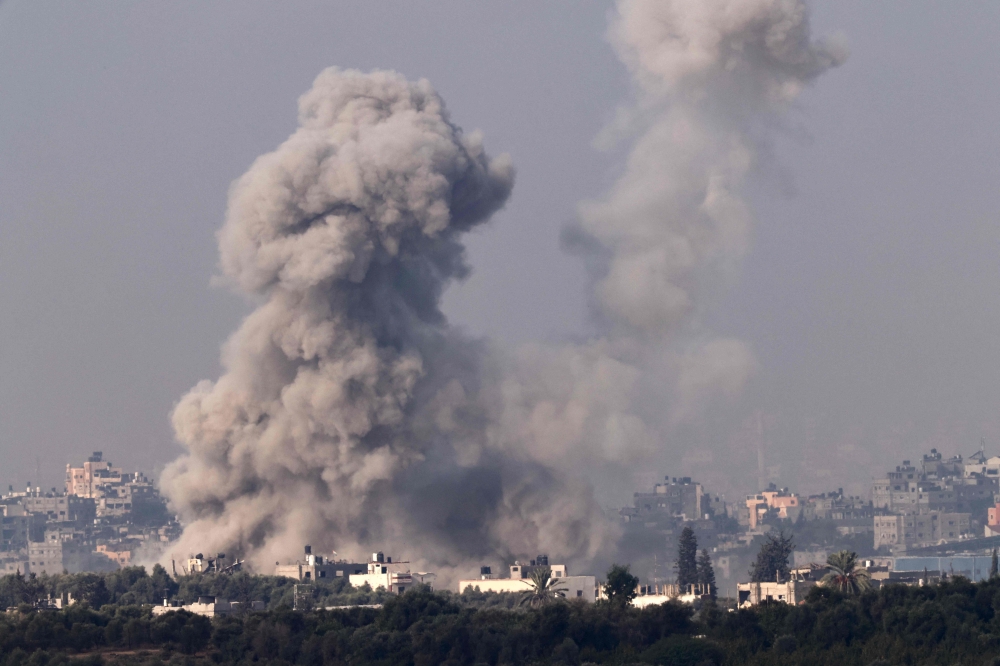
Large rocket explosions ripped through the densely packed Jabalia camp before nightfall, tearing facades off nearby buildings and leaving a deep, debris-littered crater.
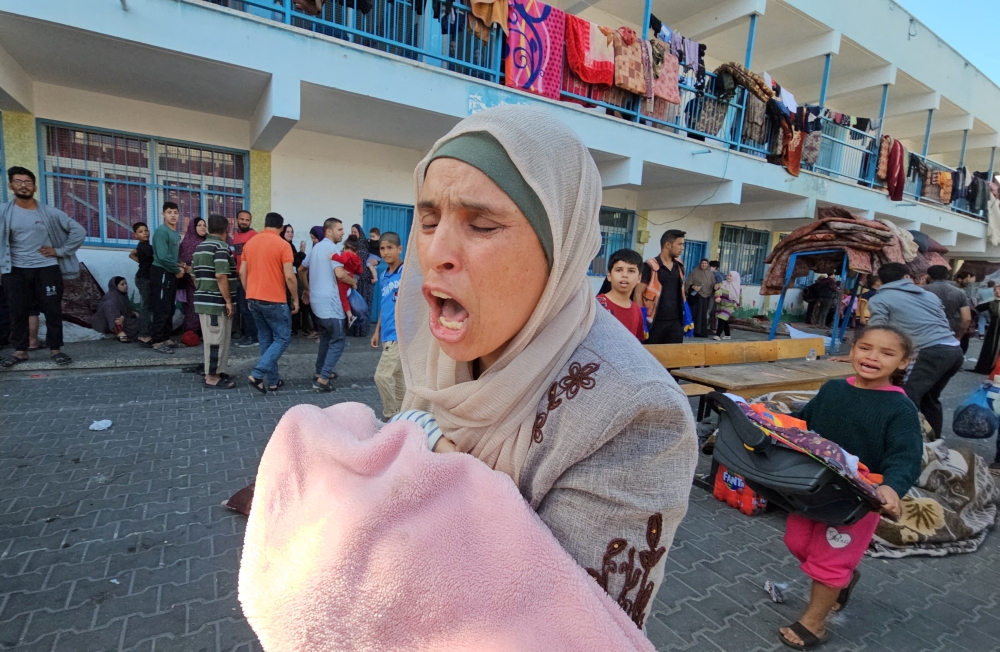
Wails filled the air as hundreds of bystanders and volunteers clawed at concrete blocks and twisted metal looking for survivors.
Horrified resident Ragheb Aqal, 41, likened the explosion to "an earthquake" and spoke of seeing "homes buried under the rubble and body parts and martyrs and wounded in huge numbers".
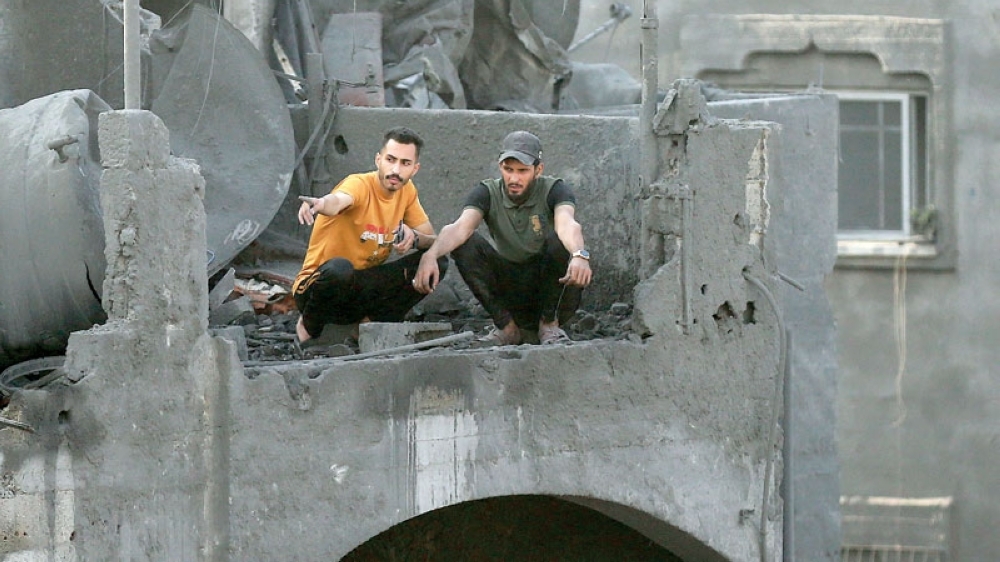
Tuesday's strike is sure to fuel anger at Israel's prosecution of the war, and the toll on Palestinian civilians.
Gaza's health ministry denounced the incident as "a heinous Israeli massacre" and said an initial toll of 50 dead and 150 wounded was sure to rise.
The ministry says that in three-plus weeks of Israeli bombing has killed more than 8,796 people in Gaza, two-thirds of them women and children.
Earlier, Bolivia had said it was severing diplomatic ties with Israel as a "repudiation and condemnation" of the Gaza offensive.
And Qatar warned that expanded strikes would "undermine mediation and de-escalation efforts".
Doha hosts several senior officials and is a key channel in trying to secure the release of hostages believed to have been taken on October 7. There is little sign of the conflict abating.
Aid groups and the United Nations warned time is running out for many of the territory's 2.4 million people denied access to food, water, fuel and medicine.
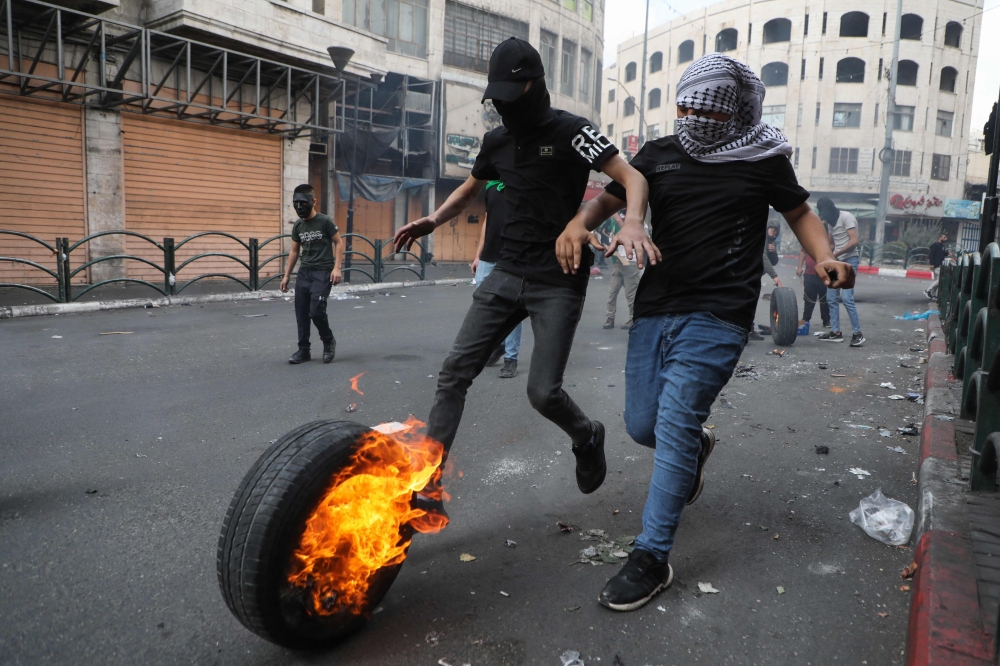
Surgeons are conducting amputations on hospital floors without anaesthetic, and children are forced to drink salty water, said Jean-Francois Corty, vice-president of Medecins du Monde, which has 20 staff on the ground.
Israel's Prime Minister Benjamin Netanyahu has dismissed international calls for a humanitarian ceasefire.
As a result, Israeli security personnel carry out stringent inspections that have slowed the flow of aid to a trickle.
As Israel steps up its assault on Gaza, the families of hostages are struggling with an unbearable wait for news of relatives in Gaza.
"It's really hell. There are no words to express this," said Hadas Kalderon as she walked past homes of kibbutz Nir Oz.
"I don't have any control and knowledge about army actions, I just know my children are still there in the middle of a war," said the 56-year-old. — AFP
Oman Observer is now on the WhatsApp channel. Click here