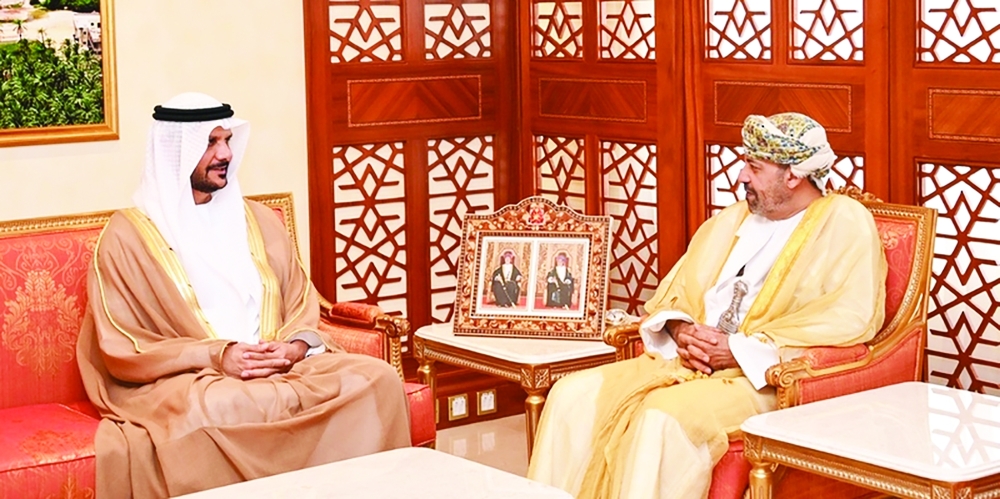





MUSCAT/GAZA: The 43rd Extraordinary Session of the GCC Ministerial Council will convene here on Monday to discuss the developments in Gaza Strip.
Jasem Mohamed Albudaiwi, GCC Secretary-General, stated that the convening of the emergency session of the Ministerial Council to discuss the developments in Gaza comes in response to a request submitted by the Sultanate of Oman, the country currently holding the GCC presidency, following consultation with the GCC countries.
The GCC secretary-general said that this emergency meeting aims to hold discussion and consultation among the GCC member states on the developments and the serious Israeli violations in Gaza Strip.
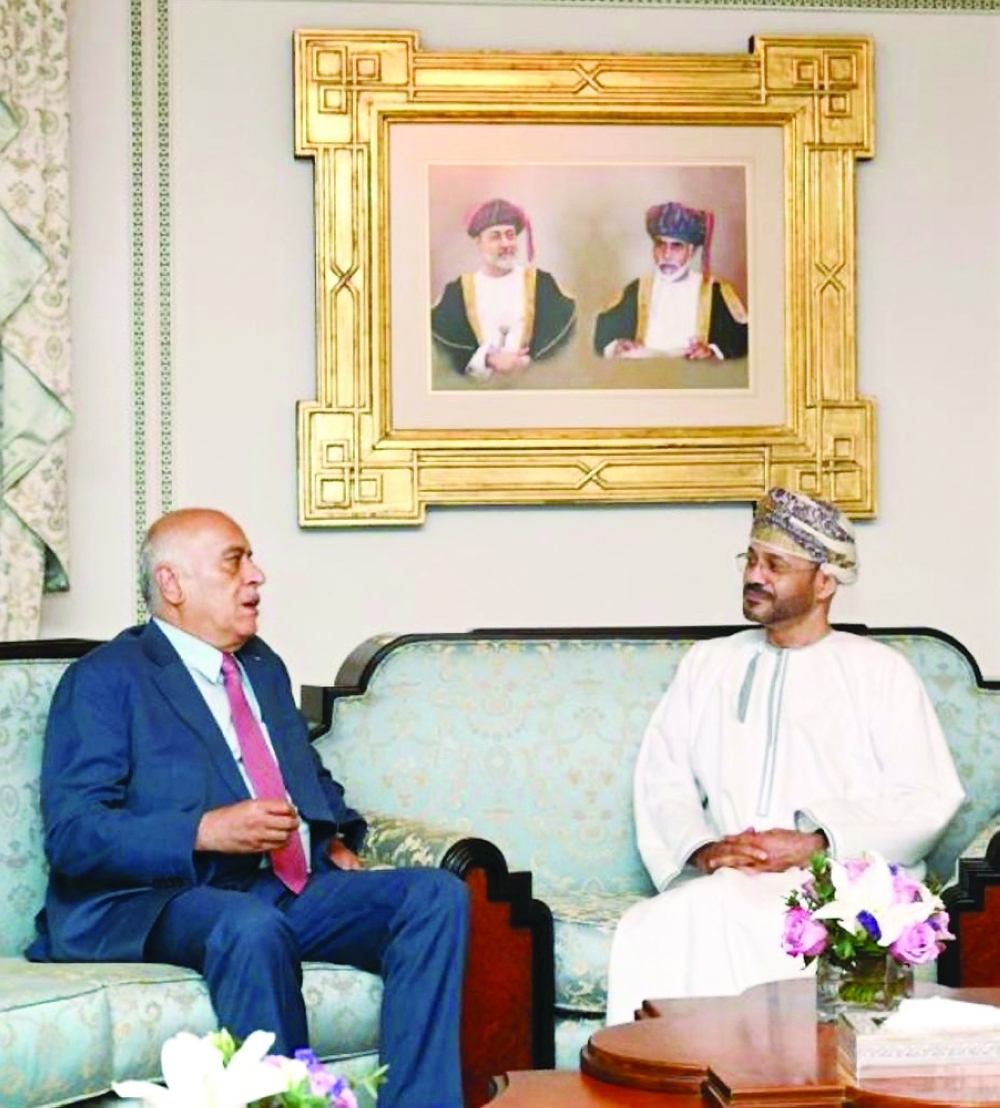
Meanwhile, Foreign Minister Sayyid Badr bin Hamad al Busaidy made a phone call with Philippe Lazzarini, Commissioner-General of the United Nations Relief and Works Agency for Palestine Refugees in the Near East (UNRWA). The two sides stressed the importance of maintaining efforts to ensure the supply of humanitarian and relief aid to Gaza Strip.
They affirmed the urgent need for resuming the work of electricity and water lines, fuel, food and medicine for the people of Gaza. They also demanded the termination of the Israeli military operations in Gaza.
Sayyid Badr and Hakan Fidan, Minister of Foreign Affairs of the Republic of Türkiye, held consultations over phone, on Monday.
They discussed regional and international efforts aimed to end Israeli escalation and to ensure the delivery of humanitarian aid to the inhabitants in Gaza.
The two sides stressed the importance of the peace option based on the two-state solution and the right of the Palestinians to self-determination and to establish their independent state with East Jerusalem as its capital.
RAISING FEARS
Diplomatic efforts to arrange a ceasefire to let aid reach the besieged Gaza Strip failed on Monday, and Israel ordered the evacuation of villages in the territory near its border with Lebanon, raising fears the war could spread to a new front.
Israel has put Gaza, home to 2.3 million Palestinians, under a total blockade and pounded it with unprecedented air strikes, and is widely expected to launch a ground assault. Gaza authorities say at least 2,750 people have been killed there.
According to the United Nations, a million Gazans have already been driven from their homes. Power is out, sanitary water is scarce, and the last fuel for emergency generators could be used up within a day.
Residents said overnight air strikes were the heaviest yet, and the bombing carried on through the day.
"We were inside the house when we found bodies scattering, flying in the air - bodies of children who have nothing to do with the war," said resident Abed Rabayaa, whose neighbour's house in Khan Younis, the main city in the southern part of the enclave, was hit overnight.
In the biggest sign yet that the war could spread to a new front, Israel ordered the evacuation on Monday of 28 villages in a two km-deep zone near its Lebanese border.
Diplomatic efforts have concentrated on getting aid into Gaza through the Rafah crossing with Egypt, the sole route out that is not controlled by Israel.
Egypt said Israel was not cooperating, leaving hundreds of tonnes of supplies stuck.
"There is an urgent need to alleviate the suffering of Palestinian civilians in Gaza," Egypt's Foreign Minister Sameh Shoukry told reporters, adding talks with Israel on opening Rafah for aid had so far been fruitless.
Washington has also been focusing on getting the crossing briefly opened to allow some of the few hundred Gazans with US passports to leave. Shoukry said Egypt could allow medical evacuations and let in some Gazans with permission to travel.
There has been no public talk, however, of Egypt accepting a mass influx of refugees, meaning the vast majority of Gazans are unlikely to be offered a route out.
Those trying to reach the crossing inside Gaza described the route as perilous and under attack.
"On our way to the crossing they shelled Rafah Street and we started screaming," said one resident near the crossing, Hadeel Abu Dahoud. "Nowhere is safe in Gaza. Wherever we go there's shelling, shelling, crying, screaming, blood."
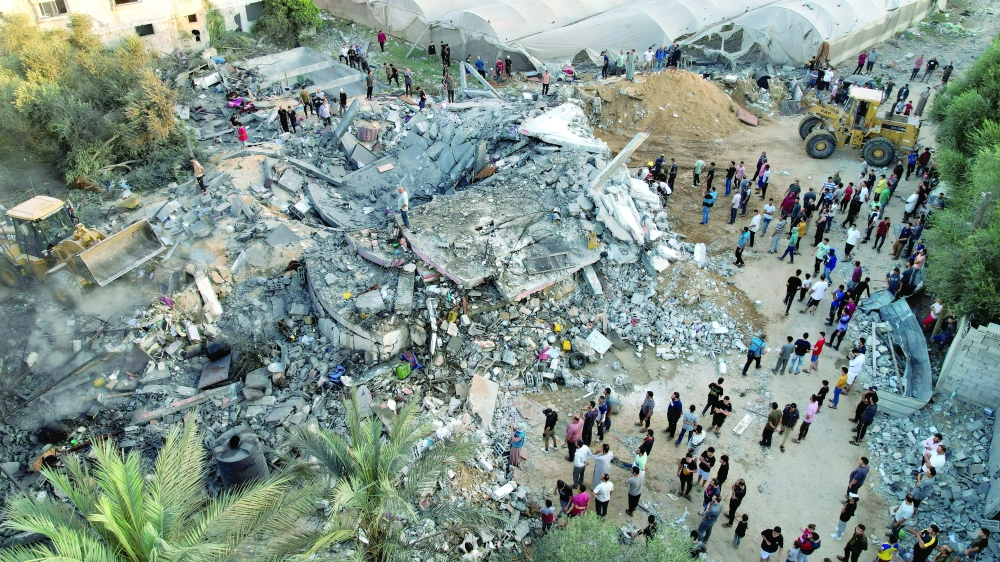
With each day of air strikes, Gazans have been clawing at the rubble of flattened buildings with bare hands to rescue neighbours and recover the dead, with virtually no mechanical equipment to clear away the wreckage.
Civil emergency officer Abid Saqir said at one bomb site that there were at least 1,000 bodies trapped under rubble at locations across the enclave. SEE ALSO P6&7
Oman Observer is now on the WhatsApp channel. Click here