




GAZA CITY: The death toll from five days of ferocious fighting between Hamas and Israel rose sharply overnight as Israel kept up its bombardment of Gaza Wednesday after recovering the dead from the last communities near the border where Palestinian fighters had been holed up.
In Israel, the death toll from Saturday's shock cross-border attack by Hamas rose to 1,200, making it the deadliest attack in the country's 75-year history, while Gaza officials reported more than 900 people killed as Israel pounded the territory with air strikes.
Hamas said two of its top officials had been killed, while Israel's military said the bodies of roughly 1,500 Hamas fighters had been found.
Fears of a regional conflagration have surged ahead of an expected Israeli ground incursion into Gaza.
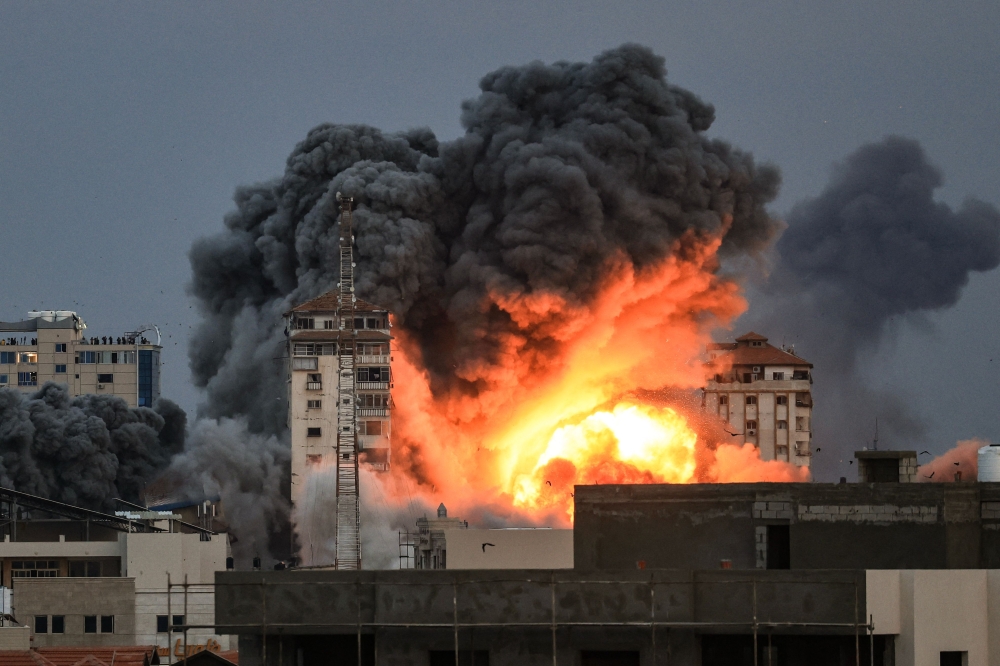
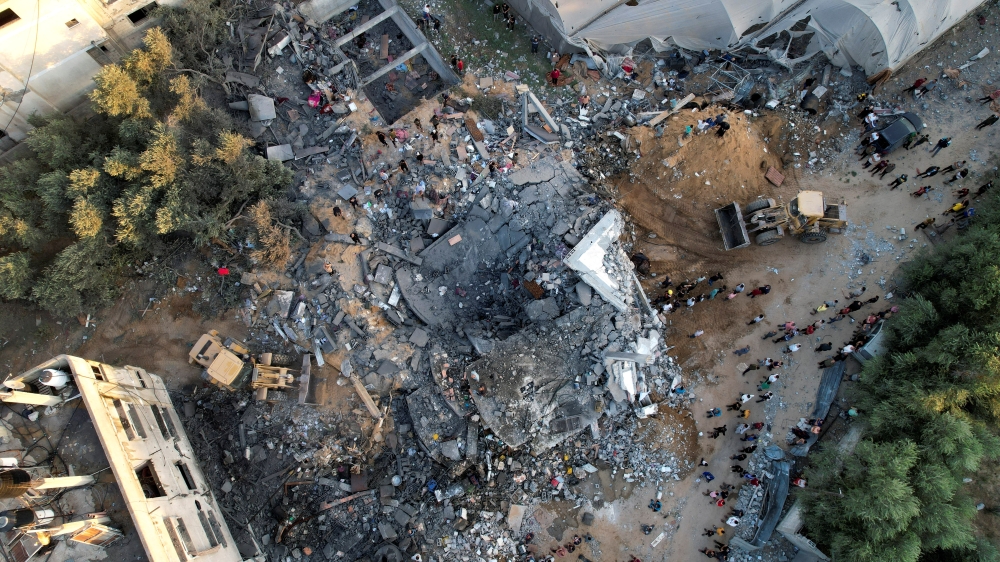
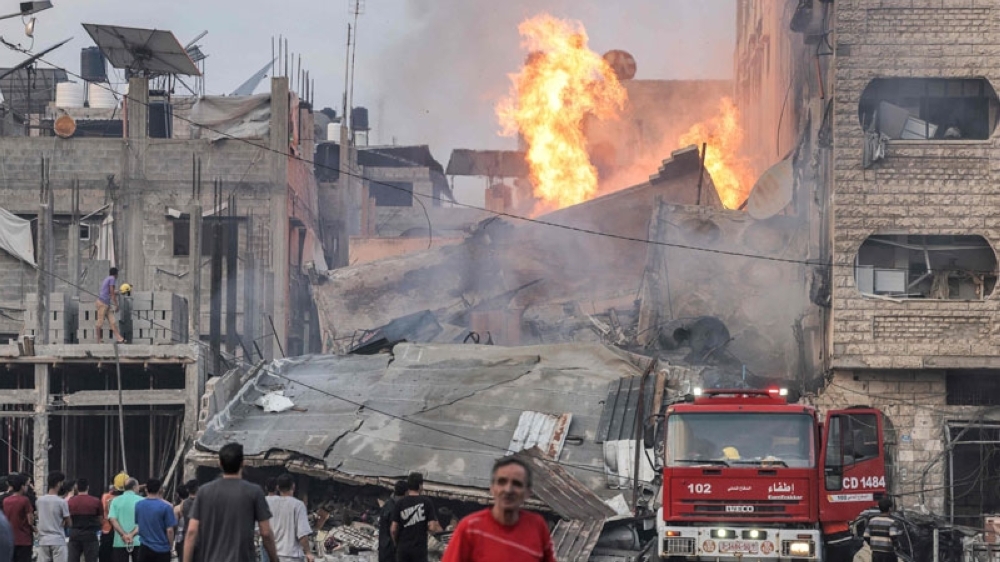
At least 30 people were killed and hundreds wounded as Israel pounded the Gaza Strip with hundreds of air strikes overnight, officials said Wednesday.
The strikes destroyed several buildings of the Islamic University in Gaza City, a university official said.
The Israeli military confirmed it had hit dozens of Hamas targets during the night.
It said fighter jets destroyed "advanced detection systems" that Hamas used to spot military aircraft.
They also hit 80 targets in the Beit Hanoun area of the northeastern Gaza Strip, including two bank branches the military said.
In response to Saturday's attack, Israel imposed a "total siege" on Gaza, suspending supplies of food, water, electricity and fuel to the already blockaded enclave.
In announcing Israel's latest death toll on Wednesday morning, army spokesperson Lieutenant Colonel Jonathan Conricus said the figure was rising not because of the ongoing fighting, but because "we are discovering bodies of dead Israelis in the various communities."
The Israeli army has called up 300,000 reservists and massed tanks and other heavy armour both near Gaza and on the northern border with Lebanon.
The military said its forces had dislodged holdout Hamas fighters from more than a dozen communities near the border and were largely back in control.
But late Tuesday, in the southern Israeli city of Ashkelon, troops backed by helicopters and drones exchanged fire with several militants, leaving three fighters dead, the army said.
Israeli munitions have continued to hammer Gaza, a densely populated city of about 2.3 million people.
Hamas said the strikes killed two of its senior figures: Zakaria Muammar led its economics section, and Jawad Abu Shamala coordinated ties with other Palestinian factions.
Eight Palestinian journalists have also been killed in the strikes, according to media unions and officials.
The United Nations said more than 263,000 people had been displaced inside Gaza, most taking shelter in UN schools.
White smoke billowed from among fishing boats after an air strike on Gaza's port, and in Jerusalem the deserted streets were targeted by Hamas rocket fire.
In Gaza City, streets are clogged with rubble and littered with shards of glass.
Mazen Mohammad and his family slept on the ground floor of their apartment block, huddling together as explosions rang out around them.
What they woke up to the next day was unrecognisable.
"We felt like we were in a ghost town, as if we were the only survivors," Mohammad said.
After Israel imposed a total siege on Gaza, European Union foreign ministers called for humanitarian corridors.
UN human rights chief Volker Turk said such sieges are prohibited under international humanitarian law.
Medical supplies, including oxygen, were running low at Gaza's overwhelmed Al-Shifa hospital, said Mohammed Ghonim, a doctor in the emergency room.
Soldiers who were on guard duty along the hi-tech security barrier around Gaza recounted how Hamas's attack began with an effort to cripple observation cameras and communications.
"They took us by surprise and we weren't ready for it," a lookout soldier said in testimony posted on Instagram.
Israel faced the threat of a multi-front war after three days of clashes with fighters on the northern border with Lebanon.
For the first time since the Hamas attack, there was an exchange of fire between Israel and forces in Syria, after Israel's military said munitions were fired towards the Golan Heights it has occupied since 1967. Unrest has also surged in the West Bank, where 15 Palestinians have been killed since Saturday. — AFP
Oman Observer is now on the WhatsApp channel. Click here