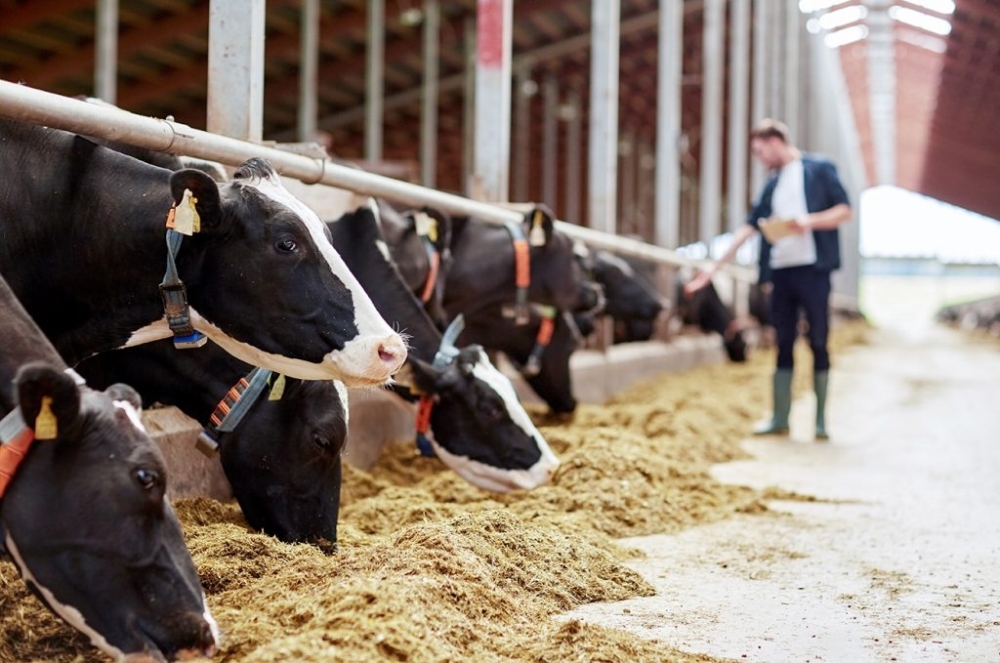





WINNIPEG: When Canadian dairy farmer Ben Loewith's calves are born next spring, they will be among the first in the world to be bred with a specific environmental goal: burping less methane.
Loewith, a third-generation farmer in Lynden, Ontario, in June started artificially inseminating 107 cows and heifers with the first-to-market bull semen with a low-methane genetic trait.
The arrival of commercially available genetics to produce dairy cattle that emit less methane could help reduce one of the biggest sources of the potent greenhouse gas, scientists and cattle industry experts say.
Burps are the top source of methane emissions from cattle. Semex, the genetics company that sold Loewith the semen, said adoption of the low-methane trait could reduce methane emissions from Canada's dairy herd by 1.5 per cent annually, and up to 20 per cent-30 per cent by 2050.
The company this spring began marketing semen with the methane trait in 80 countries. Early sales include a farm in Britain and dairies in the US and Slovakia, said vice-president Drew Sloan.
If adopted widely, low-methane breeding could have a "profound impact" on cattle emissions globally, said Frank Mitloehner, professor of animal science at University of California Davis, who was not involved in developing the trait.
Some dairy industry officials remain unconvinced about low-methane breeding, saying it could lead to digestion problems.
Canada's agriculture department said in an email that it has not yet assessed the methane evaluation system underlying the product but that reducing emissions from livestock was "extremely important."
Livestock account for 14.5 per cent of the world's greenhouse gas emissions. Methane is the second-biggest greenhouse gas after carbon dioxide.
While farmers can feed additives to cattle to reduce methane production, their effects wear off once cattle stop eating them and they are not approved for use in the United States, Mitloehner said.
Semex is not initially charging extra for the methane trait, said Michael Lohuis, Semex's vice-president of research and innovation. He declined to provide sales projections but expects sales to remain slow until financial incentives emerge.
The Canadian government currently offers no incentives for low-methane cattle breeding, but the agriculture department said in an email that Ottawa is working to introduce offset credits for reducing methane through better manure management.
Some countries and food companies have begun to encourage farmers to move to lower-emitting cattle.
New Zealand will begin taxing farmers for methane from cattle in 2025.
Nestle and Burger King parent Restaurant Brands International are tackling the methane problem in their supply chains by changing what cattle eat.
Juha Nousiainen, senior vice-president at Valio, a Finnish dairy, warned that breeding cattle to burp less methane could create digestive problems.
Methane is produced by microbes in the cow's gut as it digests fibre, not by the animal itself, he said.
Back on his farm, Loewith is eager to see how the breeding decisions will play out.
"If it's something that you've doubled down on generation after generation, then the impact becomes more significant." — Reuters
Oman Observer is now on the WhatsApp channel. Click here