




JERUSALEM: The head of Israel's air force said on Friday the country's enemies might exploit a political crisis triggered by an overhaul of the judiciary, which Prime Minister Benjamin Netanyahu denied would undermine its democracy.
Tomer Bar said his forces needed to remain "vigilant and prepared" after parliament on Monday passed the first of Netanyahu's widely contested changes, removing the Supreme Court's authority to void what it deems "unreasonable" decisions by government and ministers.
"It is possible that at a time like this they (Israel's enemies) will try to test the frontiers, our cohesion and our alertness," Bar said in an address to his forces, according to a statement released on Friday. He did not elaborate.
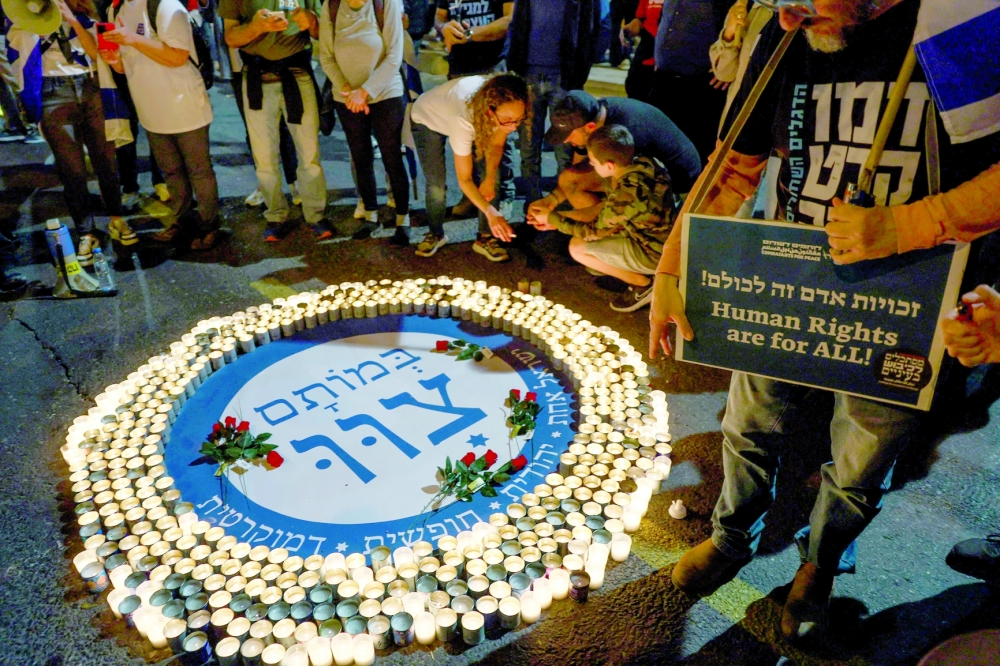
The overhaul being pursued by Netanyahu and his right-wing government has sparked a seven-month crisis, spurring unprecedented protests, opening up a deep social divide and straining the loyalties of some army reservists.
Protesters accuse Netanyahu of working to curb court independence even as he argues his innocence in a graft trial. One of their leaders, Eran Schwartz, said demonstrations would continue on Saturday, with actions planned in 150 locations.
As the crisis escalated following Monday's vote, Israel's Ynet news said Netanyahu received at least four letters from Military Intelligence warning of serious security ramifications due to the judicial overhaul.
According to the report, senior intelligence officials said Israel's enemies, particularly Iran and its proxy in Lebanon, Hizbullah, view the crisis as a historic low point in the country's history.
A spokesperson for the prime minister declined comment.
FRAGILE FOUNDATIONS
Netanyahu earlier went on the offensive, giving several interviews to US media late on Thursday.
Speaking to ABC News, Netanyahu said the amendment to one of Israel's Basic Laws, which function as a formal constitution, was "a minor correction" to an "activist" court.
"It's described as the end of Israeli democracy - I think that's silly and when the dust settles, everybody will see it," he said.
On CNN, Netanyahu sidestepped a question on whether he would obey a potential Supreme Court ruling quashing Monday's amendment.
Opposition leader Benny Gantz said Netanyahu would be "implementing a judicial coup" if he failed to adhere to a ruling by the court.
Protesters say growing numbers of military reservists have decided to stop serving to express their opposition to the overhaul. The military has acknowledged an increase in requests to abstain from service, and said that damage would be done, gradually, to war-readiness if the no-shows proved protracted.
Protest leader Schwartz, referring to parliament's upcoming recess for the summer, told Army Radio that ministers and lawmakers "should not be allowed to rest when they are leading us towards such a horrible moment."
Political watchdog groups have appealed to the Supreme Court to strike down the new law, paving the way to a showdown among branches of government when it hears the arguments in September.
The legal tussle could begin next Thursday, when the top court will hear an appeal against a coalition bill ratified in March that limited conditions for removing the prime minister from office.
Israel's democratic foundations are relatively fragile and the Supreme Court is seen as crucial for protecting civil rights and the rule of law. It has no constitution, the government holds a 64-56 majority in the one-chamber Knesset, and the president's office is largely ceremonial.
The prime minister says the changes will balance government branches. He casts the protests as a bid to thwart his democratic mandate.
Netanyahu's plans have hit the economy, triggering foreign investor flight. The increasing domestic political uncertainty will lead to lower economic growth this year, S&P Global Ratings said in a report.
The judicial reform drive, along with an expansion of Jewish settlements on occupied land where Palestinians seek to establish a state, have also weighed on relations with Washington. - Reuters
Oman Observer is now on the WhatsApp channel. Click here