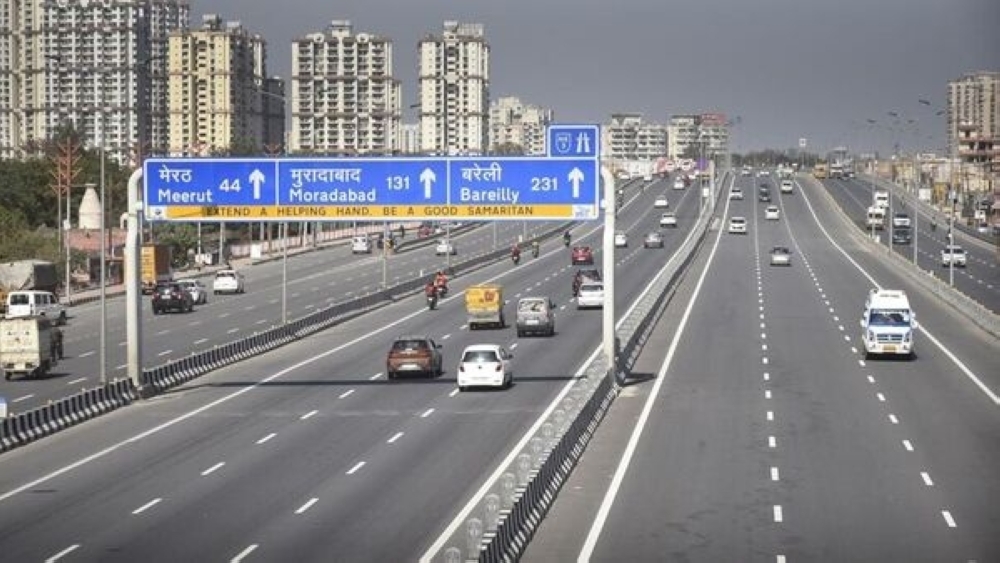





New Delhi: Road infrastructure in India is making longer strides, and it can be gauged from the fact that the country's road network has grown by around 60 percent in less than a decade.
India’s success is not restricted to just increasing the overall length of roads in the country. Road building has helped reduced distances and travel time, connected new areas, stimulated commercial activities, and thus accelerated India’s growth story. Now, aircraft can land on major Indian highways. At the same time, due attention has been given to building road infrastructure in rural parts and remote areas with difficult terrain.
The government of India gave priority to the use of world-class technology, especially, indigenously developed, which ensured optimum quality and longevity of the road. Soon after taking the reins of the country, Prime Minister Narendra Modi doubled the budget for road infrastructure knowing it would speed up the economy. The total length of national highways has already increased by 59 percent in the past nine years to 145,240 km in 2022-23.
India has the second largest road network after the US and has plans to build roads worth USD 1.35 trillion in the next five years.[3] In March 2023, India clocked the speed of building 78 km of roads every day, surpassing the average of 30 km per day by a huge margin.
Under the Bharatmala scheme, the government of India has been building highways between major towns, ensuring connectivity to border, coastal, and remote areas, and integrating economic hubs. One of the signature projects is the Eastern Peripheral Highway, which along with the Western Peripheral Highway, encircles the capital city of New Delhi and allows smooth, faster, signal-free, disruption-free traffic flow. It is India’s first smart and green highway, thanks to the plantation of hundreds of thousands of trees along it, and the installation of solar panels that power streetlights
The 701-km long Samruddhi highway that allows travel between India’s financial capital Mumbai and central parts in just eight hours does not have signals or toll gates. It has a state-of-the-art traffic surveillance system and underpasses to allow free wildlife movement.
At least, 28 highways in India can be used for emergency airplane landing.[9] This speaks volumes about the turnaround of India's mission to boost road infrastructure.
In order to make it eco-friendly way, durable, and cost-effective, the government of India has adopted sustainable alternatives. Green alternatives to cement and steel are being found.
India has built highways measuring 703 km using waste plastic to reduce environmental impact.[11] Now, the use of waste plastic has been made mandatory in road construction.
Northern and northeastern parts of India, especially, those near the China border were inaccessible as there were no roads in treacherous areas or they remained inaccessible during harsh weather conditions. In the past few years, the government of India resorted to the best engineering and technological solutions to build all-weather roads as well as tunnels in these areas.
India has an aim to build 60,000 km of world-class national highway by 2024.
Oman Observer is now on the WhatsApp channel. Click here