




MUSCAT: Oman's economic landscape has recently presented a mixed picture, with the country experiencing a decrease in currency issued but witnessing an expansion in money supply. According to a preliminary statistics issued by the National Centre for Statistics and Information (NCSI), the currency issued has declined by 3.7%, while both narrow and broad money supplies have registered positive growth.
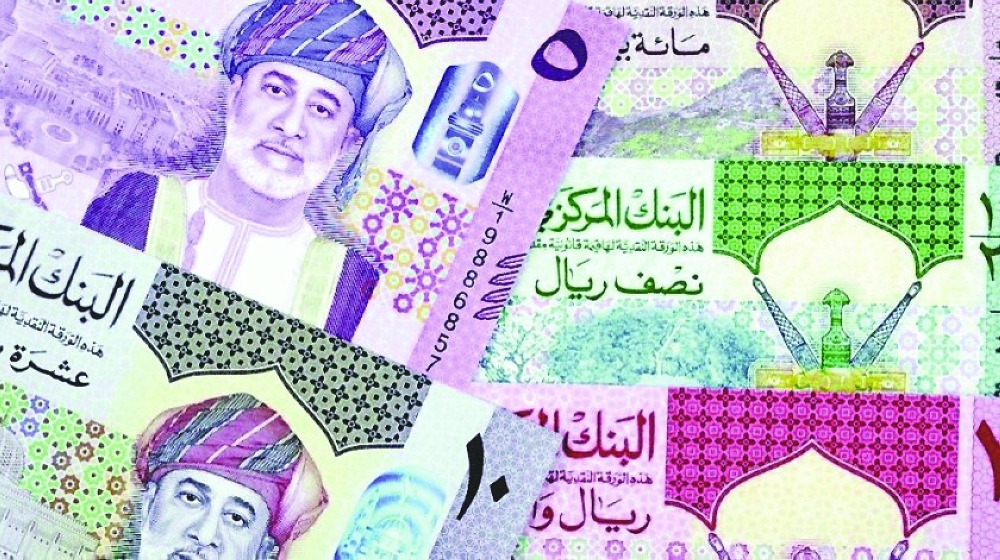
The currency issued in Oman experienced a 3.7% decrease from RO 1.72 billion recorded until the end of May 2022 to RO 1.65 billion until the end of May 2023. This decline may be attributed to various factors, such as changes in demand for money, fiscal policies, and external economic influences.
On the other hand, the narrow money supply (M1), which includes currency in circulation and demand deposits, showed a 1.1% increase to reach RO 5.84 billion until end-May 2023 compared to RO 5.78 billion during the same period last year. This growth in M1 suggests that the availability of cash and demand deposits has expanded during the specified period. It can be an indication of increased economic activity and consumer confidence.
Furthermore, broad money supply (M2), which includes M1 along with time and savings deposits, exhibited a more significant increase of 4.5%. M2 expanded from RO 20.37 billion until end-May 2022 to RO 21.28 billion until end-May 2023. This surge in M2 reflects a broader measure of money in circulation and indicates that individuals and businesses in Oman have been saving and investing more during the specified period.
In terms of the Central Bank of Oman's foreign assets, there was a 0.9% increase from RO 6.70 billion to RO 6.76 billion. Foreign assets play a vital role in a country's economic stability, as they provide a cushion to offset external shocks and help maintain the balance of payments. The growth in foreign assets indicates a steady accumulation of reserves, which can contribute to strengthening Oman's economic resilience.
In addition to the money supply indicators, the NCSI data also reveals positive trends in the private sector. Commercial banks and Islamic windows' private sector deposits increased by 4.3% from RO 17.15 billion until end-May 2022 to RO 17.87 billion until end-May 2023. This rise in deposits indicates growing confidence in the banking sector and suggests that businesses and individuals are saving more.
Moreover, total loans and financing of commercial banks and Islamic windows expanded by 6.4% from RO 28.30 billion until end-May 2022 to RO 30.11 billion until end-May 2023. This increase in lending indicates a willingness of banks to provide credit, which can stimulate economic growth and investment.
The average interest rate on total credit experienced a slight decrease of 0.9% from RO 5.493 to RO 5.444. This decline suggests a slightly more favorable borrowing environment, which can incentivize businesses and individuals to take on loans for investments or consumption.
Lastly, effective exchange rate index of Omani rial rose by 3.8% from 111.0 until end-May 2022 to 115.2 until end-May 2023. This means that the Omani rial has strengthened against other currencies by 3.8%. The effective exchange rate index is a measure of the value of a currency against a basket of other currencies.
Oman Observer is now on the WhatsApp channel. Click here