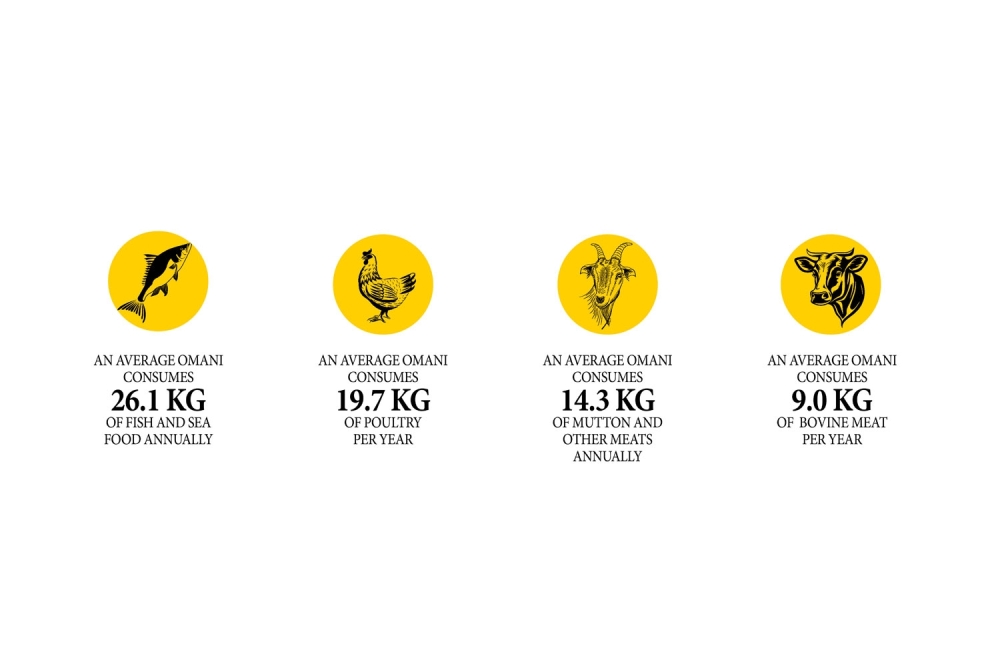





MUSCAT: The Sultanate of Oman is known for its rich cultural heritage and stunning landscapes. However, behind the scenes, a quiet transformation is taking place in the country’s culinary preferences, particularly in the realm of meat consumption. As per data from Visual Capitalist, Omanis have been exploring diverse options, with poultry, fish and seafood, bovine, mutton and other meats all playing significant roles in their diets. Let’s delve into the fascinating world of Oman’s evolving meat consumption patterns.
Fish and seafood: A coastal nation’s bountiful catch
As a nation blessed with a long coastline, it comes as no surprise that Omanis have a deep appreciation for fish and seafood. The data reveals that the average Omani consumes around 26.1 kg of fish and seafood annually. With the Arabian Sea and the Gulf of Oman as their playground, Omanis have a vast array of seafood options to savour, including hammour (grouper), kingfish, shrimps, and shellfish. Grilled, fried, or incorporated into aromatic stews, fish and seafood are integral to Omani cuisine, reflecting the country’s close relationship with the sea.
Poultry: A feathered delight reigns supreme
When it comes to poultry, Omanis have developed a penchant for its succulence and versatility. According to the data, the average Omani consumes approximately 19.7 kg of poultry per year. Poultry has become a staple in the country’s cuisine, always finding its way into Omani dishes. The popularity of poultry can be attributed to its relatively affordable price, lean meat, and ease of preparation.
Mutton and other meats: A savoury spectrum
The Omani culinary landscape would be incomplete without the inclusion of mutton and other meats. The data indicates that Omanis consume approximately 14.3 kg of mutton and other meats annually. The data noted that other meat includes less frequently farmed animals like rabbit, horse, and camel, as well as game — meat from wild animals.
Mutton, with its distinct flavour and tenderness, is a popular choice in traditional Omani dishes like Shuwa and Kabsa. Additionally, other meats, such as camel and venison, are also relished by adventurous eaters seeking unique flavours. The consumption of mutton and other meats showcases Oman’s rich gastronomic heritage and the willingness of its people to embrace a wide range of meat options.
Bovine: A growing taste for red meat
While poultry and seafood dominate the Omani palate, the data also highlights the country’s increasing appetite for bovine meat. Omanis consume an average of 9.0 kg of bovine meat per year, signalling a shift towards a more diverse meat selection. Juicy steaks, tender roasts, and hearty burgers are finding their way onto Omani dinner tables, complementing traditional dishes like Mashuai (roasted whole lamb or goat) and Harees (a meat and wheat porridge). This growing preference for bovine meat reflects changing dietary habits and a desire for culinary exploration.
Oman’s meat consumption patterns are undergoing a fascinating transformation, driven by evolving tastes, economic factors, and cultural influences. Poultry stands as a firm favourite, while fish and seafood celebrate the country’s coastal abundance. The increasing inclination toward bovine meat reflects a desire for variety and culinary exploration, while mutton and other meats showcase Oman’s rich gastronomic heritage.
As Oman continues to develop and its population becomes more exposed to global influences, it is likely that meat consumption patterns will continue to evolve. The culinary journey of Omanis, driven by a desire for exploration and a celebration of their cultural heritage, will shape the future of the country’s meat consumption landscape.
Oman’s meat consumption trends are experiencing a notable shift, with poultry, fish and seafood, bovine, and mutton and other meats all finding their place on Omani dinner tables. As Omanis embrace a wider range of meat options, their culinary preferences reflect a blend of tradition, diversity, and a growing curiosity for global flavours. With every bite, Omanis are not only savouring the richness of their own gastronomic heritage but also embracing the world on their plates.
Oman Observer is now on the WhatsApp channel. Click here