Fires are burning across Canada, blanketing parts of the eastern United States with choking, orange-gray smoke. Puerto Rico is under a severe heat alert, as are other parts of the world. Earth’s oceans have heated up at an alarming rate.
Human-caused climate change is a force behind extremes like these. Although there is no specific research attributing this week’s events to global warming, the science is unequivocal that global warming significantly increases the chances of severe wildfires and heat waves like the ones affecting major parts of North America.
Now comes a global weather pattern known as El Niño, which can drive up temperatures and set heat records. On Thursday morning, scientists announced its arrival.
Taken together, the week’s extremes offer one clear takeaway: The world’s richest continent remains unprepared for the hazards of the not-too-distant future. A sign of that came when Canadian Prime Minister Justin Trudeau said his government may soon create a disaster response agency in order to “make sure we’re doing everything we can to predict, protect and act ahead of more of these events coming.”
The recent fires have also punctured the notion that some places are relatively safe from the worst hazards of climate change because they’re not near the equator or they’re far from the sea. Almost without warning, smoke from faraway fires upended daily life.
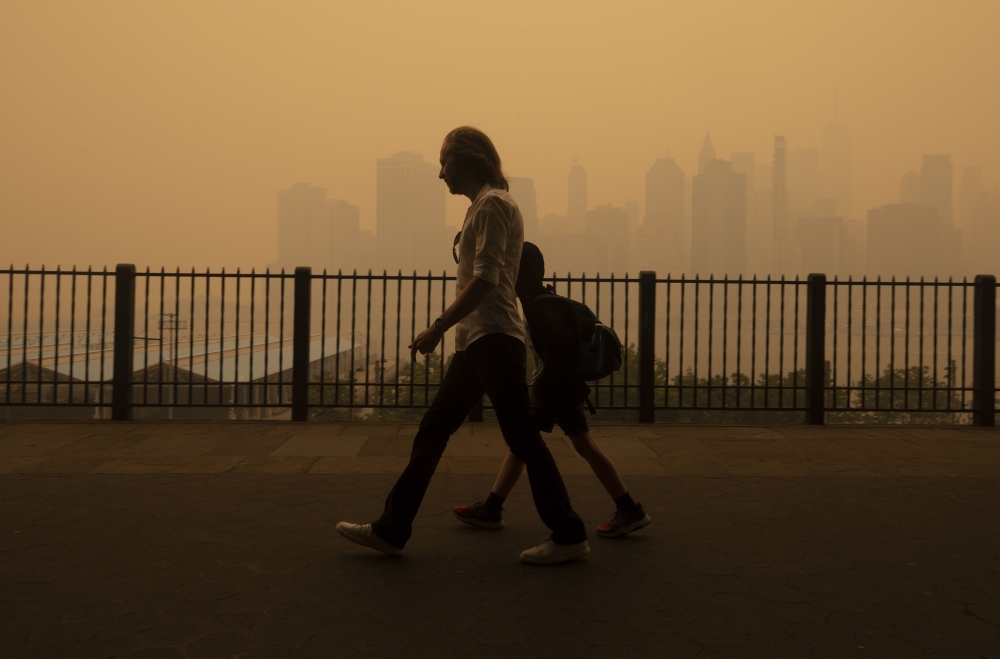
So much wildfire smoke pushed through the border that schools in Buffalo, New York, cancelled outdoor activities. Detroit was suffocated by a toxic haze. Flights were grounded at airports in the Northeast.
“Wildfires are no longer a problem just for people who live in fire-prone, forested areas,” said Alexandra Paige Fischer, a professor who studies fire adaptation strategies at the University of Michigan.
In the United States, more people are already living with wildfire smoke. A 2022 study by Stanford researchers found that the number of people exposed to toxic pollution from wildfires at least one day a year increased 27-fold between 2006 and 2020.
The two countries experiencing these extremes, the United States and Canada, are major producers of oil and gas, which, when burned, produce the greenhouse gases that have significantly warmed the Earth’s atmosphere. The average global temperatures today are more than 1.1 degrees Celsius higher than in the pre-industrial era.
The boreal forests of western Canada offered ready fuel. The trees and grasses of eastern Canada turned to tinder. “Under warmer temperatures, those dry years will cause things to dry out and become flammable more quickly than they would have otherwise,” Williams said.
Other parts of the world have felt the scorch this year. Vietnam broke a heat record in May, with temperatures soaring past 44 degrees Celsius, or 111 Fahrenheit. China broke heat records in more than 100 weather stations in April. The boreal forests of Siberia are also burning.
As in the North American boreal forests, climate change is making the Siberian fire season longer and more severe. It has also increased lightning ignitions, said Brendan Rogers, a boreal forest fire expert at the Woodwell Climate Research Center. There are different conditions in different years, to be sure, he said in an email, but “the common denominator is warm / hot and dry conditions that prime the ecosystems for burning.”
Where does all that excess heat in the atmosphere go? Much of it is absorbed by the oceans, which is why ocean temperatures have been steadily rising for the past several decades, reaching records in 2022.
But this spring, something strange happened. Scientists announced with uncharacteristic alarm that ocean temperatures were the hottest they had been in 40 years.
Scientists haven’t settled on a reason, though some have said the increase could signal the coming of El Niño. That weather pattern, which typically lasts several years, brings heat up to the surface of the eastern Pacific Ocean. We have been living with its cooler cousin, La Niña, for the past few years. — The New York Times
Oman Observer is now on the WhatsApp channel. Click here