





Summer comes with several health reminders from experts. The rise in temperatures causes loss of body fluid and energy. The season requires light yet nutritious food that provides our body with energy and keeps it hydrated to avoid fatigue, tiredness, and dehydration problems.
Nutritionist Dr Fatema al Zaabi stresses the importance of consuming food that provides the body with energy and hydration. She highlights the importance of tailoring diets to meet the changing needs of body during summer.
During the autumn season, the body’s immunity weakens. Therefore, consuming foods rich in vitamins, particularly vitamin C, is essential to avoid falling ill. In the winter, energy-rich foods are recommended to keep the body warm. The spring season is known for colds and allergies. Consuming fruits and vegetables rich in vitamins is preferable.
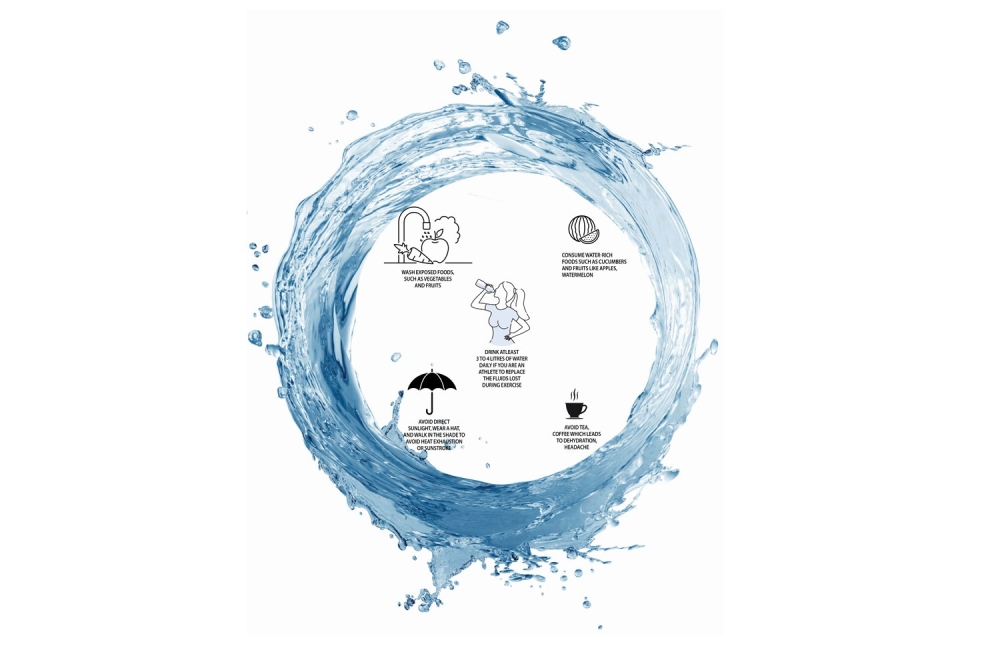
In the summer, Dr Fatema emphasises the need to consume water-rich foods such as cucumbers and fruits like apples and watermelon to combat dehydration caused by high temperatures. Experts recommend a litre and a half of water daily during normal days. However, due to sweat during summer, water intake should double to avoid fatigue and dehydration.
Dr Fatema advises athletes to consume 3 to 4 litres of water daily to replace the fluids lost during exercise, distributing the intake over close and equal hours.
Drinking large quantities of stimulants like tea and coffee can lead to dehydration and headache during summer. Hence, Dr Fatema advises moderate consumption of these substances during the season.
People should avoid direct sunlight, wear a hat, and walk in the shade to avoid heat exhaustion or sunstroke. Exposure to the early morning sun provides the body with vitamin D. In contrast, exposure to the midday sun can increase the risk of heat exhaustion or sunstroke.
During the summer, the spread of bacteria and fungi increases, making food hygiene and storage more critical.
The nutritionist advises thorough washing of exposed foods, such as vegetables and fruits, covering food properly, and storing any leftovers in the refrigerator. Lastly, she recommends eating healthy foods rich in vitamin C to avoid influenza during summer. Vitamin C strengthens the immune system, making the body more disease-resistant.
Oman Observer is now on the WhatsApp channel. Click here