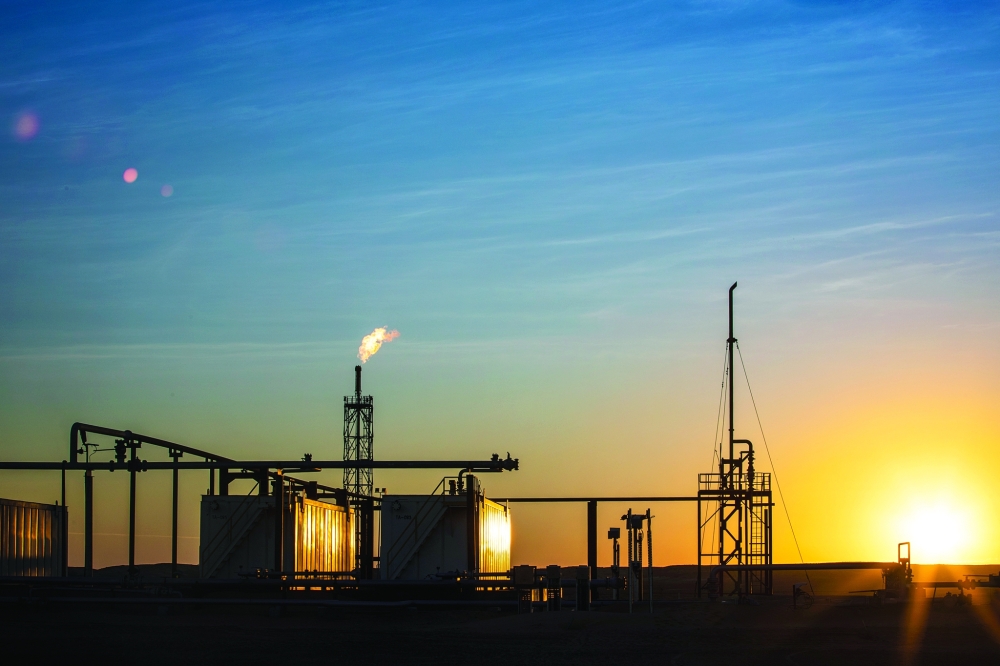





MUSCAT: In line with Oman’s goal to eliminate all routing flaring by 2030, upstream energy firm CC Energy Development (CCED) has embarked on a number of initiatives to cut greenhouse gas (GHG) emissions from its operations in Blocks 3&4 in the mid-east of the country.
Notable is a Gas-to-Power project that aims to utiiise associated gas, produced as a byproduct of crude oil production, for power generation, thereby reducing the current use of diesel power at well-sites and production facilities.
By harnessing waste gas, which is presently flared, the project will contribute not only to an overall reduction in emissions from Blocks 3&4, but also yield significant savings by curtailing diesel consumption and related rental costs.
According to Swedish energy firm Tethys Oil, which has a 30 per cent non-operating interest in the blocks, the Gas-to-Power project will have both environmental and economic benefits.
“The aim of the project is to comply with Oman’s regulation to prevent any routine flaring by 2030, as well as to reduce some other process-related and power generation-related emissions, to decrease the carbon intensity of oil production in Blocks 3&4,” it noted in its latest Sustainability Report.
“GHG emission should decrease significantly driven by elimination of emission from routing flaring and drastic reduction of diesel consumption for stationary combustion. Positive impact from the project is expected to take effect relatively early, as the project gets commissioned by the end of 2023,” Tethys Oil further stated.
A trial power generation facility that was launched in 2019 at one of its productions sites is still operational, according to CCED. Generation facilities will be built at two more sites as part of the Gas-to-Power project, providing enough electricity to power the company’s operations, facilities and camps via an overhead distribution network.
Also as part of its GHG mitigation efforts, a new reed-bed development is planned on an area of around 13,650 sq metres at Shahad for the treatment of sewage. This is in addition to a 5,000 sq metre reed bed development already in operation at Farha.
Furthermore, CCED is planning to ramp up its use of solar panels for electricity generation at some of its remote production wells. Around 15 solar panels have been installed at various locations, helping save around 700 litres/day of diesel for power generation. A further 200 solar panels are planned for installation for wellhead remote monitoring over the next five years.
Also under consideration is a plan for the construction of a solar farm for power generation, Tethys Oil added.
Mitsui E&P Middle East holds the remaining 20 per cent non-operating interest in Blocks 3&4.
Oman Observer is now on the WhatsApp channel. Click here