Erika Solomon
The writer is a correspondent
with NYT
It began as a movement of pacifists chaining themselves to fences outside nuclear power plants.
Five decades later, the effort to close German nuclear power plants will end with echoes of the Cold War era in which it began, as Russia’s war in Ukraine is a reminder of both the risks and promise of nuclear energy.
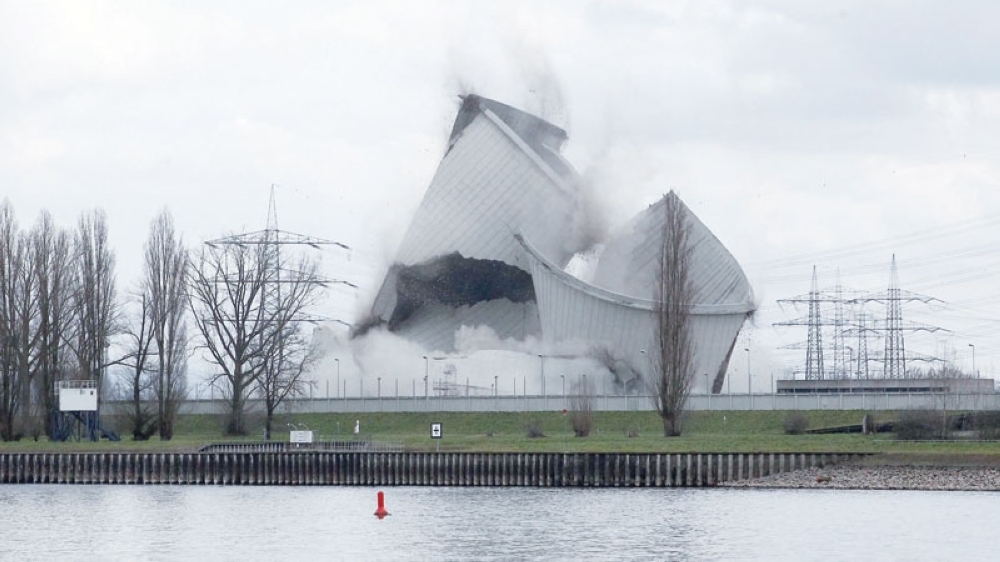
Germany’s three remaining reactors will be shut down by Saturday — ending nuclear power generation in Europe’s largest economy. But it comes as the continent grapples with questions over whether it can secure enough energy to drive its economies and keep homes warm while also reaching ambitious climate targets.
Germany’s move makes it an outlier in much of the industrialised world. Britain, Finland and France are doubling down on nuclear energy as a source of reliable electricity and extremely low carbon emissions.
Last year, Poland signed with Westinghouse Electric to build its first nuclear power plant, some 200 miles east of the German border.
In the United States, the Biden administration is backing technology to build a new generation of smaller nuclear reactors as a tool of “mass decarbonisation.”
Some polls suggest that even Germans, once largely behind the shutdown in their country, are having doubts: In a survey commissioned by Germany’s largest daily, Bild, 52 per cent opposed ending nuclear power, given that the country is pivoting from its dependence on fossil fuels from Russia.
Robert Habeck, the economy minister and a member of the Greens party, insists that Germany can manage the nuclear exit.
The country’s natural gas storage tanks, he pointed out, are more than half full — a significant cushion with the heating season almost over. And Germany has rapidly built liquefied natural gas terminals that allow it to import gas from cargo ships instead of through the Russian pipelines that once provided some 55 per cent of Germany’s supply.
“Energy supply security in Germany has been ensured during this difficult winter and will continue to be ensured,” Habeck said in an interview with the Funke Media Group.
In contrast, new European nuclear plants have been a “fiasco,” he argued, plagued by soaring costs, construction delays and maintenance issues.
“Our energy system will be structured differently: We will have 80 per cent renewable energies by 2030.”
Nuclear power has been a long-standing fault line of German politics.
Peace activists appalled by the Cold War fought atomic energy since the 1970s, with some becoming founding members of the Greens, which is now in Germany’s three-party coalition government. The anti-nuclear movement grew after the 1986 Chernobyl disaster created a cloud of nuclear fallout that reached West Germany, leaving scarring memories among that generation.
By 2000, a left-leaning government had approved a plan to shut down German nuclear power, only to have a conservative government led by Angela Merkel roll it back.
Yet the Fukushima nuclear disaster in Japan in 2011 caused German sentiments to shift strongly against atomic energy once more, and Merkel abruptly reversed course. Her government passed a law to phase out Germany’s 17 nuclear reactors by the end of 2022.
The nuclear debate took another twist last year when Germany faced its first winter without fuel from Russia.
As officials urged businesses and consumers to reduce energy consumption or face rationing, Chancellor Olaf Scholz extended the lives of the last three plants until April 15 to ensure sufficient energy at a reasonable price until spring.
— The New York Times
Oman Observer is now on the WhatsApp channel. Click here