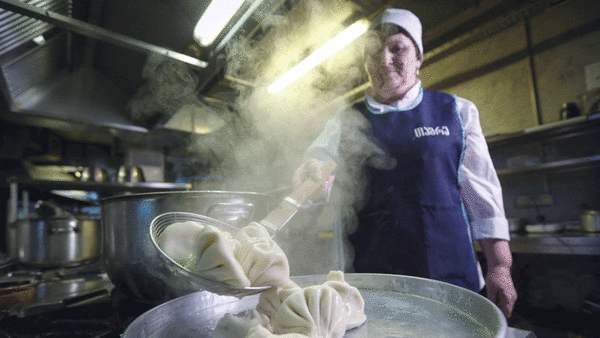


In the mountainous Caucasus nation of Georgia, dumpling-eating is a serious affair.
“I’m not Georgian, but the first rule I learnt when I came to Georgia was how to eat khinkali,” says Sergei Shirinsky, who dubs himself a connoisseur.
Typically filled with a mix of raw ground beef and pork, herbs and spices, then boiled and served steaming hot in platters by the dozen, Georgian khinkali is a national symbol, source of pride, and reason behind many a dinner table debate.
“You should know that it’s eaten with hands only. That’s the first rule,” Shirinsky says.
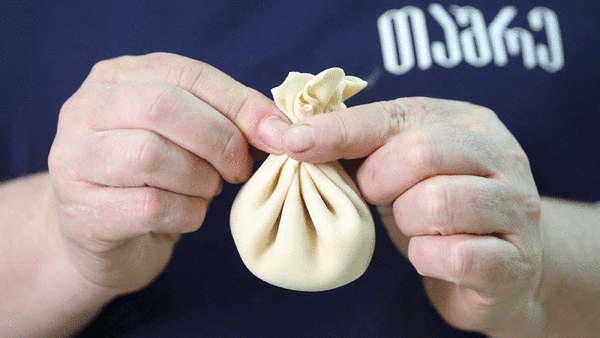
Typically, eaters hold a single khinkali by its tough stem - a clump of dough pinched together during the folding process to bring the dumpling together - and then bite into the soft underbelly, being sure to catch any escaping juices in the process.
The second rule is no condiments.
“If you add something other than pepper you can go to prison in Georgia,” Shirinsky jokes as he manoeuvres the fluffy parcel past his moustache, completing a demonstration of how khinkali should be eaten.
The exact origins of the dumpling in Georgia are unclear, but it has been prepared in towns and villages across the country for centuries and different regions still bicker over who invented it and who makes it best.
Modern versions include an array of different stuffing options such as the elastic Georgian sulguni cheese, mushrooms and potatoes.
Khinkali making has also become a hit among tourists - who flock to the country in their millions every year, in no small part to savour Georgian cuisine.
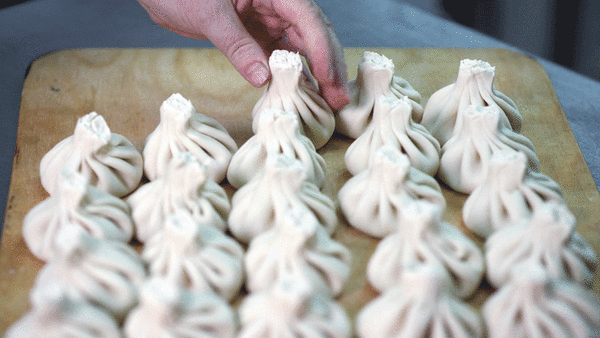
In the capital Tbilisi, retired doctor Irina Djandieri offers cooking classes in her living room.
“It’s fun, it’s fascinating and in the end it is very tasty,” she says.
“Every week we have a khinkali day in our family... It’s a great excuse to gather with friends and relatives,” says Christine Mamasakhlisi, a dance teacher from Tbilisi, as she picks up an order of uncooked khinkali to boil at home.
“Everything revolves around khinkali here. This is not just a dish, it’s an integral part of Georgian culture and identity.” —Reuters
Oman Observer is now on the WhatsApp channel. Click here