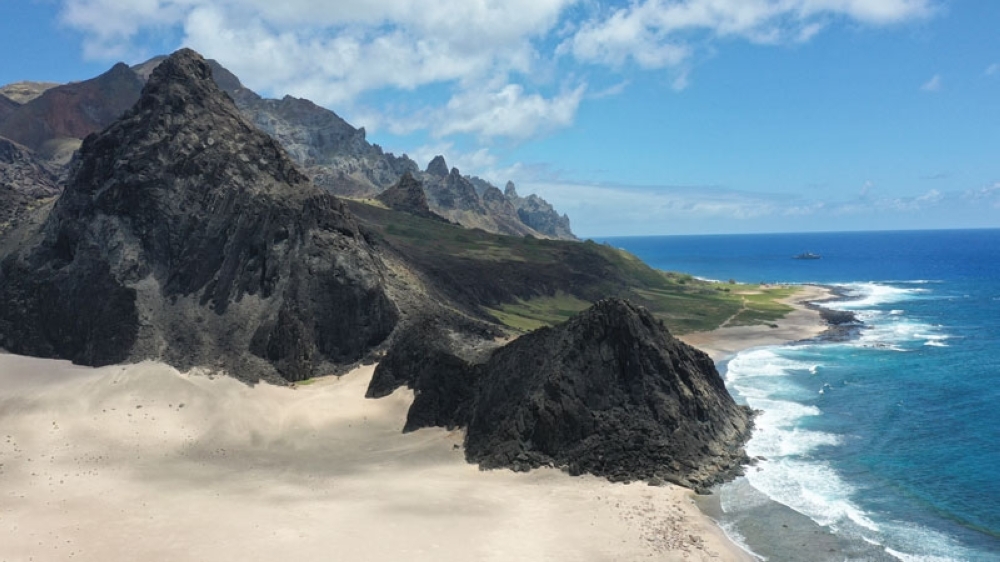





The geology of Brazil’s volcanic Trindade Island has fascinated scientists for years, but the discovery of rocks made from plastic debris in this remote turtle refuge is sparking alarm.
Melted plastic has become intertwined with rocks on the island, located 1,140 km (708 miles) from the southeastern state of Espirito Santo, which researchers say is evidence of humans’ growing influence over the earth’s geological cycles.
“This is new and terrifying at the same time, because pollution has reached geology,” said Fernanda Avelar Santos, a geologist at the Federal University of Parana.
Santos and her team ran chemical tests to find out what kind of plastics are in the rocks called “plastiglomerates” because they are made of a mixture of sedimentary granules and other debris held together by plastic.
“We identified (the pollution) mainly comes from fishing nets, which is very common debris on Trinidade Island’s beaches,” Santos said. “The (nets) are dragged by the marine currents and accumulate on the beach. When the temperature rises, this plastic melts and becomes embedded with the beach’s natural material.”
Trindade Island is one of the world’s most important conservation spots for green turtles, or Chelonia mydas, with thousands arriving each year to lay their eggs. The only human inhabitants on Trindade are members of the Brazilian navy, which maintains a base on the island and protects the nesting turtles.
“The place where we found these samples (of plastic) is a permanently preserved area in Brazil, near the place green turtles lay their eggs,” Santos said.
The discovery stirs questions about humans’ legacy on the earth, says Santos. —Reuters
Oman Observer is now on the WhatsApp channel. Click here