





Nimet Kirac
The writer is a freelance journalist based in Türkiye's southern province of Adana
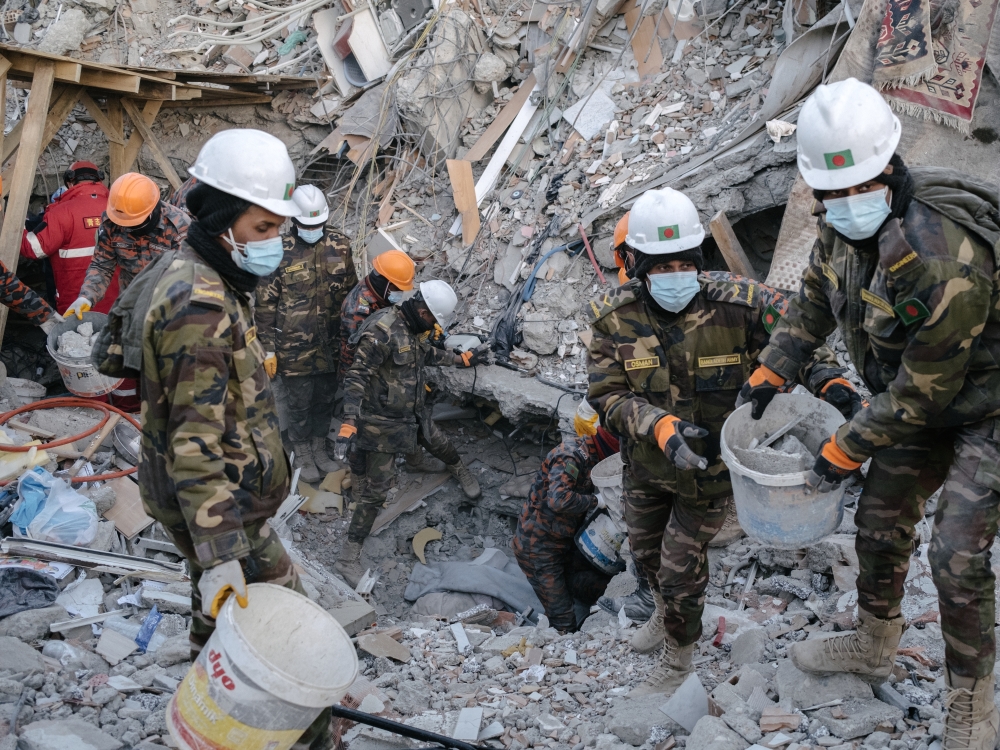
AFTER powerful earthquakes struck southern Türkiye, Eylem Sahutoglu and her family endured two weeks of freezing nights under a blue tarpaulin.
Then word came from government engineers who had inspected their building: They could return home.
But on Monday night, before they could move back into their house, in Hatay province, the earth began shaking again. Another powerful quake had hit the region.
“My legs went numb,” Sahutoglu said, recalling how she had fainted in her front yard as the house crumbled at her feet.
Sahutoglu’s ordeal is emblematic of the plight of thousands of Turks who were preparing to return home — only to be thrown deeper into uncertainty, lurching from one calamity to the next.
Hatay is a tableau of life at extremes, shaped by devastated infrastructure and pressing human need after a 7.8-magnitude earthquake struck February 6, followed by a very strong aftershock the same day. The quakes killed more than 43,000 in Türkiye and more than 5,500 in Syria. Then on Monday’s 6.3-magnitude earthquake struck.
Despite the flow of international aid into Türkiye, the nearly 1.7 million displaced people in the quake zone face the almost impossible challenge of rebuilding their lives in squalid conditions.
About 750,000 are sheltering in tents, breathing air thick with pollutants unleashed from tombs of rubble as tectonic plates continue to rumble, reminders that a fresh disaster could strike at any moment. The extensive damage to infrastructure is swiftly turning hard-hit communities into petri dishes for disease, according to health care officials and residents.
More than 800,000 people have fled the quake zone Türkiye since the first earthquake, according to Yunus Sezer, head of Türkiye's emergency management agency, AFAD. About 350,000 others have been evacuated from the affected zone via trains, planes or buses supplied by the government.
“Even when we are standing still, we feel like we are moving,” said Sahutoglu’s son, Ahmet, 20. He added that the unpredictability of the aftershocks, coupled with the harsh living environment, had prompted families to vacate land they have owned for generations and to move to coastal cities such as Antalya, Mersin or Konya, in central Türkiye.
The exodus of residents from Hatay has turned the constellation of historic cities along the Mediterranean into ghost towns.
Thousands of engineers have fanned out across the wrecked areas to assess the safety of buildings left standing, as residents wait in shelters, many too afraid to enter their homes even if they are intact.
Recalling how the two engineers from the Ministry of Urbanization told her family to move back in, Sahutoglu said, “It was a moment of hope.” But “they were barely here for two minutes,” she added.
The inspectors had briskly hammered chunks of plaster from the walls of the 45-year-old building to reveal the concrete underneath, before deeming it safe.
“They did not even ask me my name — they just told me that the building was strong,” she said.
She decided to trust them.
Her family of 14 was impatient to vacate the crowded tent pitched in the yard, which sits on the main street of Samandag, one of a series of hamlets that dot the coastal road meandering south through the region of Hatay.
Sahutoglu began preparing the house for their return: She scrubbed the floors and countertops, which were coated with dust; she washed blankets and laid them on her rooftop to dry; and she sent her son out to collect tomatoes for a warm breakfast the next morning.
“Finally, I felt like I was at home,” she said. But hours later, she heard a familiar rumble from the mountains, and the walls began to shudder. The new quake had struck near Samandag.
When she regained consciousness, the washed blankets were slanted toward her from atop the caved-in ceiling, just as she had left them; the crate of tomatoes, miraculously intact, was perched outside her son’s bedroom door.
“They told us we were safe,” Sahutoglu said. “Now what can we do — we are back to living with the chickens.”
The Turkish government has been criticised for the slow pace of its recovery effort, which is being overseen by AFAD. It has confronted logistical complexities in removing mountains of debris and identifying safe relocation sites for those displaced.
The Sahutoglus’ house is one of many buildings that crumbled into a desolate moonscape, replacing the spirited main road of ramshackle buildings and storefronts that ran through the district.
Big natural disasters such as this month’s earthquake can release toxins into the air from soil, homes, industrial-waste sites and other sources, which are inhaled by residents who crowd into emergency shelters. This could breed an array of ailments, according to experts, who say they are increasingly worried about outbreaks of flu and respiratory illnesses in the quake zone.
Doctors at a field hospital of 50 beds in Antakya, about 25 miles north of Samandag, say they have seen an uptick of people with gastrointestinal infections this week.
“Portable water systems have not been entirely set up yet, and access to toilets and sheltering problems are substantial,” said Alpay Azap, a professor of microbiology and infectious diseases at Ankara University, who warned of an increase in bowel infections and skin rashes throughout the disaster zone. -- The New York Times
Oman Observer is now on the WhatsApp channel. Click here


