


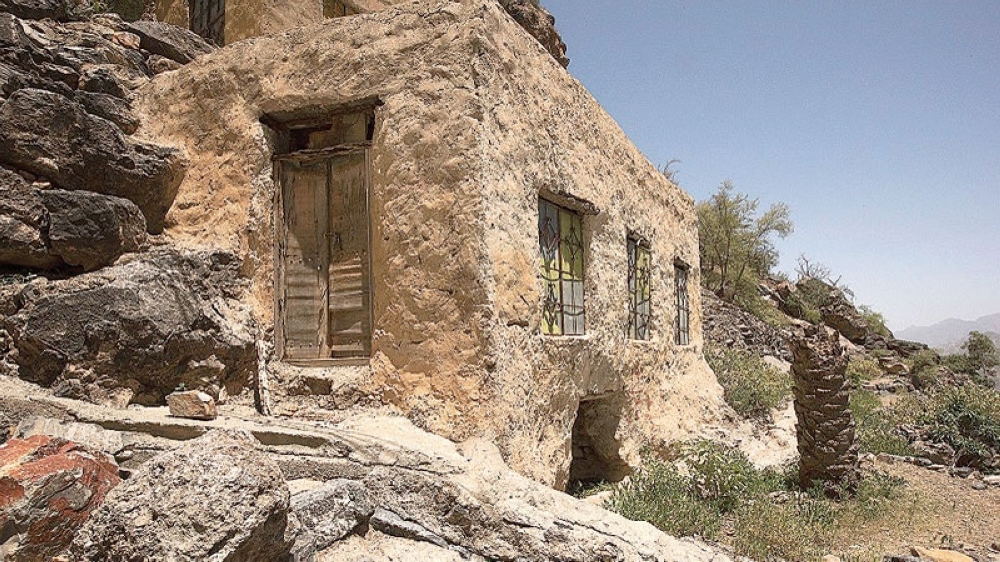





Well-known in the past as ‘Mandus Oman’, Wadi Al Sahtan is famous for its green orchards and water springs flowing from the mountain slopes.
The valley is adorned with many agricultural villages. ‘Ain Al Khadra’, is one such which is characterised by hot water springs seeping from the high mountains. It takes the visitor on his journey to the villages of Al Huwaijer and Al Tawyan.
This leads to spacious village of Fasah, which serves as an outlet for the people of Wadi Al Sahtan, where trade has been active for many years.
Delving deeper into exploring natural and archaeological secrets of this valley, a visit to the village of Amq, one of the largest village, is an absolute necessity. Schools, health centre, municipality branch and other institutions, in addition to shops that provide essential goods and merchandise can be found here.
Exploring further, one can pass by villages such as Al Jaw, Al Sawa, Al Mazraa, Al Bashouq and Salama.
Each of these villages has its own tale of beauty. The village of Wajma at the top of the mountain is considered one of the most beautiful villages due to its mild climate in summer and winter.
While the village of Al Faraa remains the most beautiful of all because of the abundance of water throughout the year. It is also characterised by lush green trees that offers a panoramic views and is characterised by mild climate unlike the rest of the villages in the valley.
Wadi Al Sahtan is named Mandoos Oman because it is rich in agriculture, where corn and wheat are grown, in addition to garlic, onions, lemons, fodder and others.
These are mainly sold in Rustaq market, which in the past was the trading location between Rustaq, the Green Mountain and the Al Batinah coast.
Most of the villages of Wadi Al Sahtan are famous for breeding honeybees, which made the valley famous for the quality of honey of all kinds due to the presence of natural pastures, especially Sidr and Samar trees.
Wandering around this beautiful valley, one notices the inhabitants of the mountain villages who practice jobs like weaving, making swords and daggers which are found at the ‘Palm Center’ in Rustaq, which supports the craft.
What distinguishes the villages of this valley are the historical towers and forts that confirm the architectural nobility, the most important of which are the ‘Al Safil’ fort, ‘Sharia’ fort, ‘Owl’ fort, and ‘Hubeish’ fort.
Many ancient inscriptions dating back to the third millennium BC are scattered in this valley, and these inscriptions are writings and drawings that embody the events.
BLURB: Due to the abundance of castles, forts, and old houses, the designs of doors and windows vary according to the geometric shapes of the old buildings and forts that still exist in the valley
The doors of Wadi Al Sahtan differ in their shapes and colours, but they are all similar in the raw materials which were used.
Oman Observer is now on the WhatsApp channel. Click here


