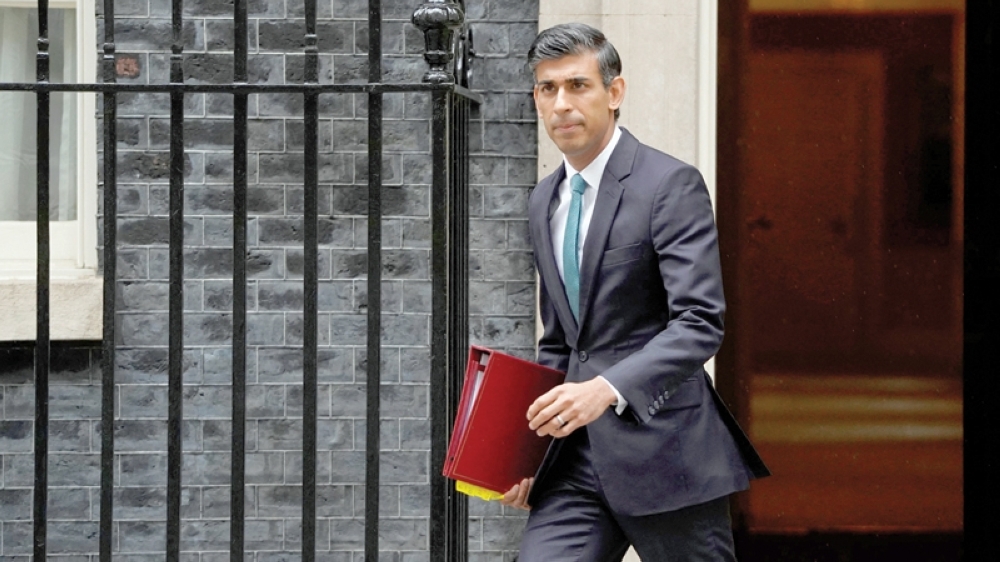
As Rishi Sunak made his rapid ascent in British politics, campaigning for Brexit and greater immigration controls to preserve jobs for Britons, the company that made his family exceedingly wealthy was becoming a political lightning rod as one of the world’s biggest outsourcing firms.
Infosys, the Indian outsourcing giant founded by Sunak’s father-in-law, became notorious among both American political parties for helping companies replace their workers with thousands of Indian immigrants or move their positions to the sprawling Infosys complex in Bangalore.
As the company grew to a market value of nearly $80 billion, it also paid record fines and faced repeated accusations that it broke immigration laws and helped companies discriminate against American workers.
At a perilous time in British politics, with markets on edge, his party in turmoil and inflation rising, Sunak’s financial ties to Infosys blend two volatile political issues: immigration and inequality. Although Sunak’s family members are no longer company directors, they are major shareholders, and the company’s outsourcing history does not neatly fit with his party’s stance on limiting immigration to protect jobs. And his wife’s $800 million stake in the company is the biggest source of his wealth, which has emerged as an early source of unease at a time when the government appears ready to cut benefits for working-class families and the poor.
Infosys is also a British government contractor that has made more than $120 million in public sector deals since Sunak entered government, according to an analysis of records from Tussell, a research firm that tracks public spending.
That includes an $8.6 million technology contract with the Home Office, the government department responsible for immigration. The contract, which has not previously been reported, was made public only this May, years after it was signed, despite rules requiring contracts to be made public within 30 days.
Sunak, who was a member of Parliament when the deal was signed and became chancellor of the Exchequer later in the contract term, did not disclose his wife’s stake in the company. British financial disclosure rules do not uniformly require disclosure of spousal earnings, but lawmakers are supposed to reveal financial interests that might “reasonably be thought by others to influence” their actions.
“After years of sleaze and scandal, public confidence in the UK standards system is already at rock bottom,” Angela Rayner, deputy leader of the opposition Labour Party, said. “There has been a worrying lack of transparency over what processes were put in place in the case of Infosys.”
The revelations add to a growing picture of Sunak’s closely guarded wealth, one flecked by tax controversies, offshore accounts and millions of dollars in potential conflicts of interests that went undeclared. He and his wife, Akshata Murty, have a net worth of $845 million, according to the Rich List, the annual catalog of British wealth published in The Sunday Times.
Robert Ford, a University of Manchester political scientist, said Infosys represented a “fairly obvious potential conflict of interest.” Coming after the scandals of Boris Johnson’s administration, he said, “you would think Sunak would want to avoid even the mildest hint of anything like that.”
“Yet we do have a situation where he is married into a family that has government contracts, has an interest in extending those contracts and in extending trade with Britain,” Ford said.
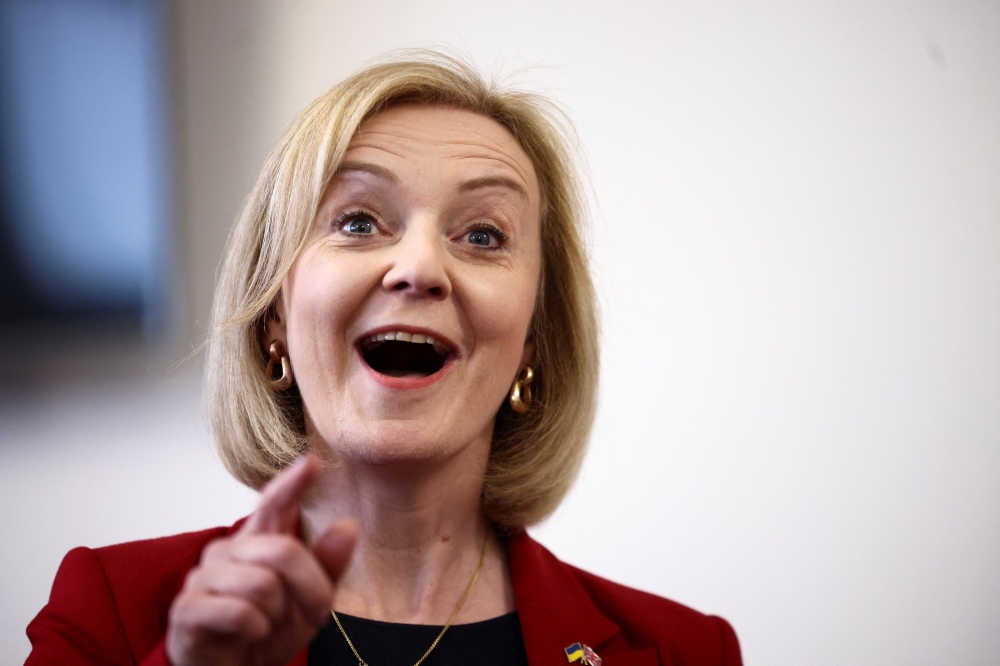
Sunak, a former Goldman Sachs banker and hedge fund manager, is wealthy in his own right. His early fiscal policies and his finance background have helped steady British markets after his predecessor, Liz Truss, so unsettled the markets that she resigned after 44 days in office.
A FAMILIAR STORY
Sunak represents many firsts, including the first prime minister of color and the first Hindu prime minister. But in other ways, his is a familiar story in British politics.
The eldest son of immigrants of Indian heritage who moved to Southampton, on the southern English coast, Sunak’s father was a family doctor and his mother ran a pharmacy.
Sunak was educated at private schools, including the prestigious Winchester College, which today is one of the most expensive in the country, with fees of roughly $50,000 a year. When his political allies briefed reporters about his early life, they said he attended on scholarship. But his parents had described saving up to pay the fees.
He went on to study politics, philosophy and economics at Oxford University — where six of the past seven prime ministers and more than half of all British prime ministers since 1721 also studied.
Earlier this year, footage emerged of a 20-year-old Sunak telling documentary filmmakers: “I have friends who are aristocrats. I have friends who are upper class. I have friends who are, you know, working class, but — well, not working class.”
His parents helped him buy his first apartment, in an affluent London neighborhood, at age 21, and he worked as an analyst for Goldman Sachs for nearly four years — something he makes no mention of in his public resume.
Around 2006, Sunak, by then living in the United States, joined Children’s Investment Fund Management as a partner, a hedge fund known as TCI that was owned by a Cayman Islands company and co-founded by billionaire Christopher Hohn.
Sunak moved next to Theleme Partners, another offshore-linked hedge fund. The fund launched with an initial investment of more than $620 million, and partners were paid a share of the offshore funds they managed, according to corporate filings first reported by Channel 4 News.
His time at the two funds made Sunak wealthy. But his net worth was tiny compared with the fortune he married into in 2009 with his wedding to Murty at a Bangalore hotel.
Oman Observer is now on the WhatsApp channel. Click here