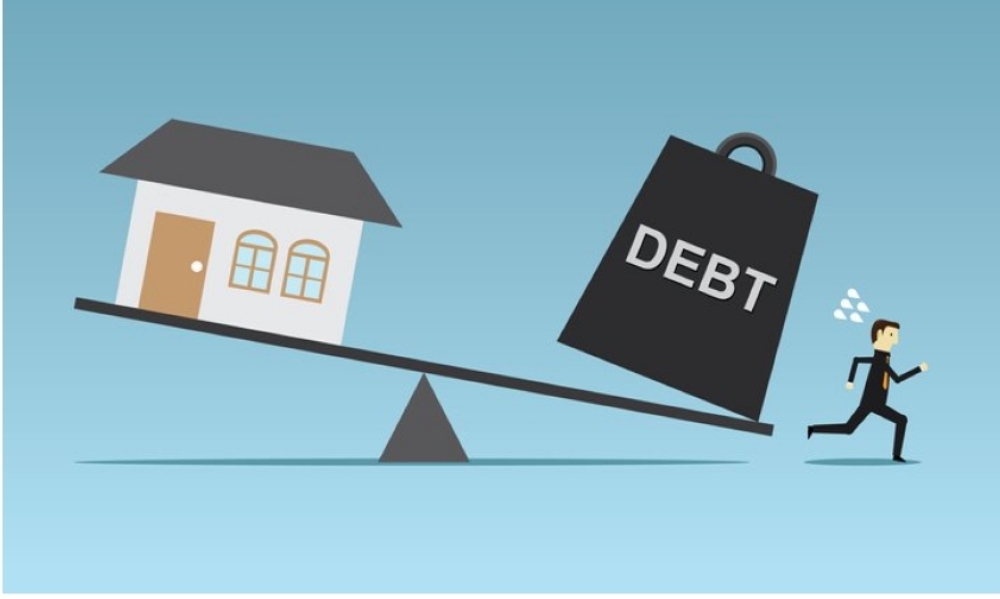





Muscat: The debt of households owed to the banking sector declined for the second consecutive year, according to the Financial Stability Report of the Central bank of Oman (CBO).
Lending to households forms about 38 percent of the total lending portfolio of the banks at the end of 2021, the report said.
In the pre-pandemic period, it grew steadily from RO 7.3 billion in 2014 to over RO 10.3 billion in 2019 (a 41 percent increase during the five years or a compound annual growth rate of 7.2 percent).
However, during the pandemic, despite regulatory relaxations, banks tightened their lending standards and were cautious in expanding their lending portfolios.
Household lending picked up somewhat in 2021 with a growth of 2.8 percent after staying largely flat (0.24 percent growth) in 2020. The relatively modest growth in lending to households during 2020 and 2021 reflected weaker demand due to rising household savings, lower discretionary spending amid uncertainty, changing risk appetite of the banks for fixed-rate longer-tenor loans, and stringent nonprice credit terms. While the removal of COVID restrictions and improving economic prospects would support lending growth, the monetary policy normalization may exert downward pressure on lending if the interest rates increased more than what is currently expected.
At the end of the spectrum, household deposits increased by 4.2 percent in 2021 as compared to 14.8 percent in 2020, due to a reduction in involuntary savings as mobility restrictions gradually eased during 2021.
Nevertheless, the net borrowings (loans minus deposits) of households further dropped by 1.1 percent in 2021 (39 percent drop in 2020), reaching RO 1.7 billion from RO 2.8 billion in 2019.
The rising cost of living and interest rates have raised concerns about the sustainability of household debt. Households with lower incomes are disproportionately more vulnerable to soaring inflation as they have narrower buffers to maintain their debt servicing capacity in the face of rising costs.
Nevertheless, risks from these developments remain contained in Oman due to moderate inflation expectations, targeted subsidies to protect the more vulnerable strata from inflation, and fixed-rate personal loans.
Moreover, prudential regulatory norms and prudent underwriting standards of banks ensured that lending to households remained concentrated among borrowers with better credit profiles while maintaining adequate provisions. As a result, the historically low non-performing loan (NPL6 ) ratio for the household lending portfolio in Oman indicates a high level of credit quality.
Oman Observer is now on the WhatsApp channel. Click here