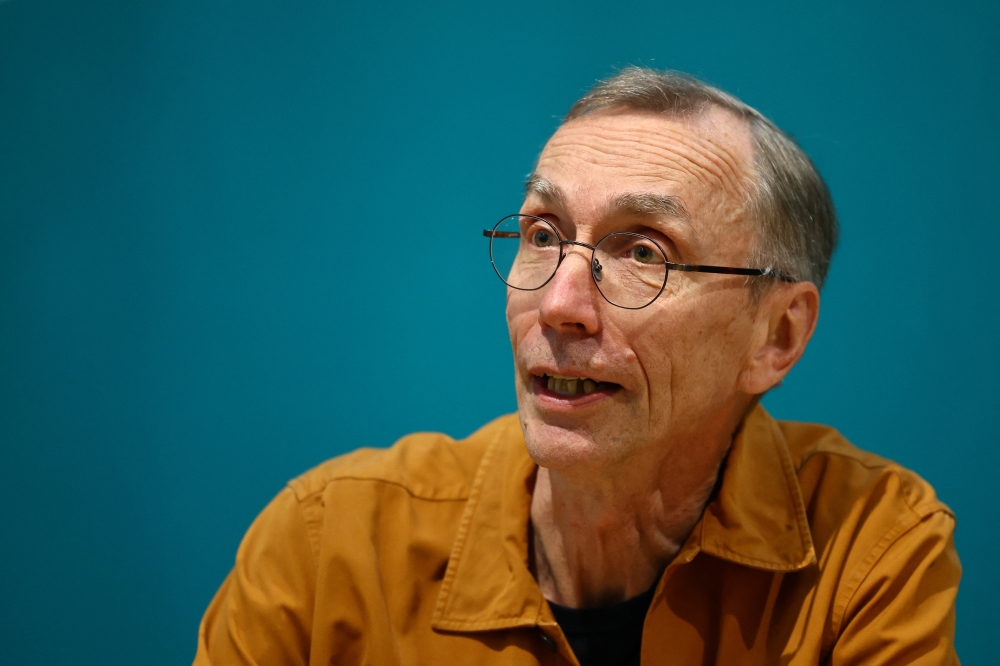





STOCKHOLM: Swedish paleogeneticist Svante Paabo, who sequenced the genome of the Neanderthal and discovered the previously unknown hominin Denisova, on Monday won the Nobel Medicine Prize.
Paabo's research gave rise to an entirely new scientific discipline called paleogenomics, and has "generated new understanding of our evolutionary history", the Nobel committee said.
"By revealing genetic differences that distinguish all living humans from extinct hominins, his discoveries provide the basis for exploring what makes us uniquely human," it said in a statement.
Paabo -- the founder and director of the department of genetics at the Max Planck Institute for Evolutionary Anthropology in Leipzig -- found that gene transfer had occurred from these now extinct hominins to Homo sapiens following the migration out of Africa around 70,000 years ago.
"This ancient flow of genes to present-day humans has physiological relevance today, for example affecting how our immune system reacts to infections," the jury said.
One such example is that Covid-19 patients with a snippet of Neanderthal DNA run a higher risk of severe complications from the disease, Paabo found in a 2020 study.
Paabo told prize organisers on Monday that he was "gulping down his last cup of tea" before picking up his young daughter when the committee called him on Monday to tell him his research was being honoured.
He was surprised, he said. "I somehow did not think that this would really qualify for a Nobel Prize".
Paabo, 67, takes home the award sum of $901,500. He is one of only a handful of Nobel science laureates to win the prize alone. Major scientific discoveries are usually awarded to two or three people to reflect large team collaborations.
Paabo is the son of Sune Bergstrom, a Swede who won the 1982 Nobel Medicine Prize for discovering prostaglandins -- biochemical compounds that influence blood pressure, body temperature, allergic reactions and other physiological phenomena.
In his 2014 memoir "Neanderthal Man: In Search of Lost Genomes", Paabo wrote that he was conceived as a result of a secret extra-marital affair.
He later told The Guardian outlet that Bergstrom's "official" family knew nothing of his or his mother's existence, the Estonian chemist Karin Paabo, until after Bergstrom's death in 2005.
Paabo also wrote in his memoir that he "had always thought of myself as gay" until he met the woman who would become his wife, primatologist Linda Vigilant, who also works at the Max Planck Institute.
Homo sapiens are known to have first appeared in Africa around 300,000 years ago.
Our closest known relatives, Neanderthals, developed outside Africa and populated Europe and Western Asia from around 400,000 to 30,000 years ago, when they became extinct. That means that about 70,000 years ago, groups of Homo sapiens and Neanderthals coexisted in large parts of Eurasia for tens of thousands of years.
"The last 40,000 years is quite unique in human history in that we are the only form of humans around. Until that time there were almost always other types of humans that existed", Paabo said in the interview with prize organisers. - AFP
Oman Observer is now on the WhatsApp channel. Click here