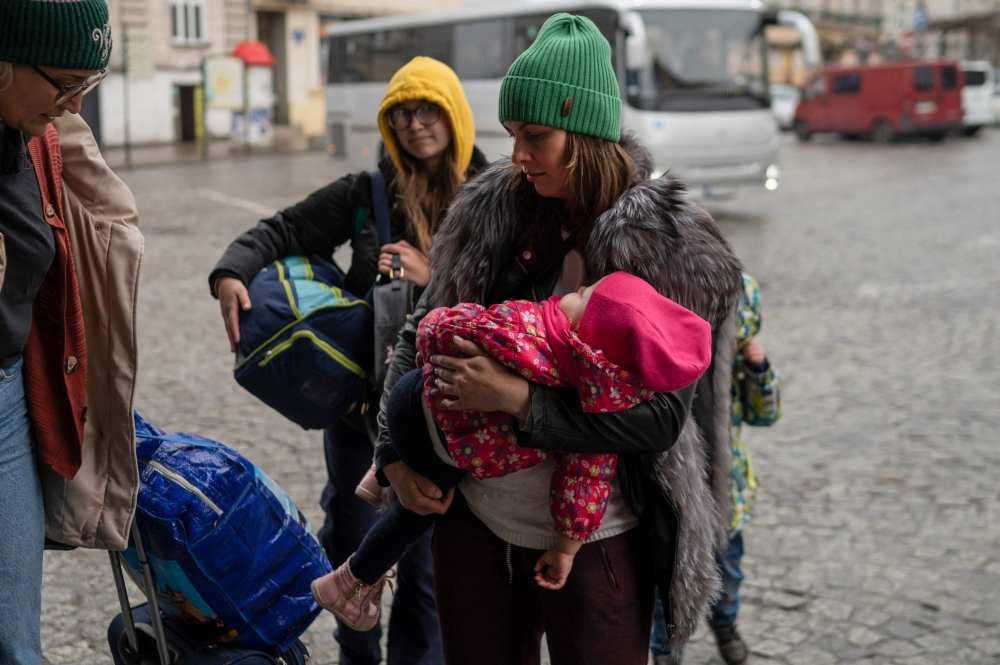





A month after the Russian army invaded Ukraine, photographer Roman Metelskiy stood on the platform of this western city’s domed art nouveau railway station, watching trains full of women and children evacuating from the east. But he was waiting for a carriage from the other direction. This one, from the west, was full of Bubble Wrap.
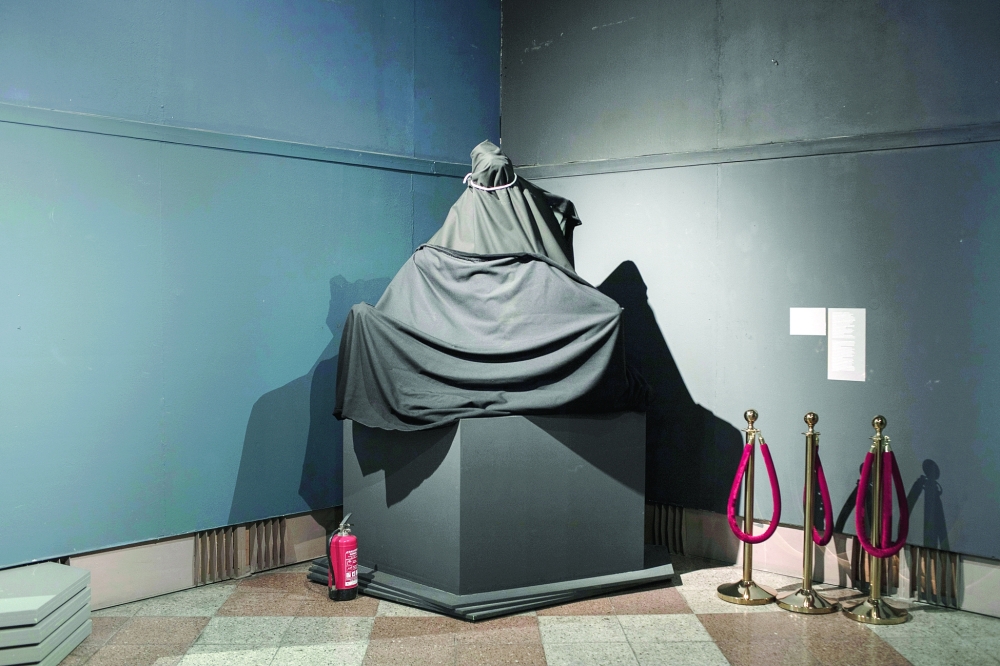
Few Ukrainian cultural institutions had prepared for a full-scale invasion. Museums, churches, castles and libraries had neither materials nor guidance on how to preserve the country’s valuable art.
“We had to start from scratch,” Metelskiy said. “We were asking for packaging materials. For financial support. For advice on how to preserve and package things.”
So with the government on war footing, he and other arts professionals formed an ad hoc preservation committee, the Center to Rescue Cultural Heritage, over coffee in early March. (In this Hapsburg city, Metelskiy said, “everything happens over coffee.”)
“We were pretty astonished,” he said. “We thought that instructions already existed.”
Ivan Shchurko, a member of Lviv’s regional parliament who was at the coffee meeting that first day, remembered feeling scared and disoriented as they hunted for help. “We were looking for people with the same interests, the same values,” he said.
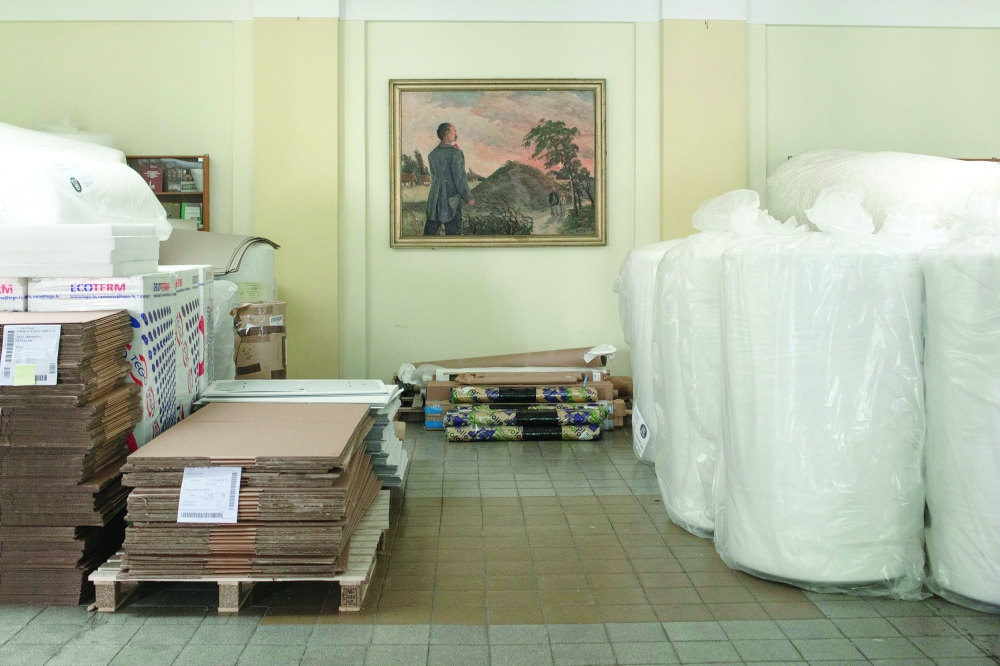
They contacted a dozen Polish museums and palaces, and March 27, a train arrived from Warsaw laden with cardboard boxes and bags of plastic foam beads. Another emergency shipment arrived April 4, with wrapping materials and protective gloves from Norway and Denmark. Other supplies arrived from libraries in Germany, Latvia and Estonia, and museums in Britain and Slovenia.
Teams in Lviv stuffed the packing materials into vans or the back of their cars, ferrying the supplies cross-country to vulnerable institutions in Chernihiv, Dnipro, Kharkiv and Zaporizhzhia. By June, Shchurko and Metelskiy were presiding over mountains of foam-core boards and reams of plastic film that filled the lobby of a university library: humanitarian aid of a more cultural kind.
“In times of war, there are two irreversible losses: people and our culture,” Metelskiy said. “The rest can be rebuilt.”
As the Ukrainian army steps up its counteroffensive in the east this summer, heritage specialists in the west are engaged in a related battle: to preserve Ukraine’s monuments, museums, historical collections and religious sites. The Russian invasion is a culture war to its core, and heritage sites have been damaged both from errant shelling and targeted destruction. Ukraine has accused Russian-led forces of looting in the occupied cities of Mariupol and Melitopol. Regional museums outside the capital, Kyiv, and the northeastern city of Kharkiv have burned to their foundations.
But where Ukraine’s soldiers have relied on a central chain of command, its civilian army of scholars, curators, archivists and architects say they have had precious little guidance.
Officials in Kyiv and in regional administrations have certainly taken steps to keep the country’s heritage intact. The national culture ministry has hosted workshops, won commitments from international partners, and kept a public database of damaged and destroyed monuments for future legal claims.
“Before the full-scale war, we were not ready for such a barbaric action, although the ministry was doing our best to protect our cultural sites,” said Kateryna Chuyeva, a deputy minister of culture, during a March briefing on the destruction of Ukraine’s churches and historical archives. “But what we are witnessing now in western Ukraine is people are very much engaged in defending and protecting cultural sites.”
The ministry has been sparing with details on how many collections it has had a hand in evacuating, citing wartime exigencies. Yet, interviews with museum directors and other heritage leaders in Lviv and Kyiv had a common refrain: If you wanted practical necessities, you had to find them yourself.
“Our officials who cut us off, and leave the cultural sphere with minimum resources, make us work even more,” Metelskiy said.
So, by coordinating via WhatsApp groups and WeTransfer files, and raising funds on crowdfunding platforms, they have made significant strides at preserving endangered icons and artworks — and they have done it mostly by themselves.
“It’s very hard, but it’s a very big chance to help my colleagues,” said Olha Honchar, the 29-year-old director of the Territory of Terror Memorial Museum, which documents the city’s Nazi and Soviet past. “From the first day of the war, we understood that the Lviv region would start to be a shelter, and Lviv museums would be mediators from donor countries.”
In early March, Honchar set up a nonprofit that has funneled financial support to more than 750 museum workers in eastern and southern Ukraine. The payments, mostly under $100 and delivered via smartphone app, have helped to keep employees of arts institutions above water as their salaries go unpaid.
While Ukrainian refugees were welcomed by European cultural institutions, those who stayed behind needed immediate humanitarian aid that those arts institutions were ill prepared to deliver. Foreign donors were reaching out — but they wanted spending controls that people caught up in war couldn’t provide.
“We need packing materials,” Honchar said. “But we also have to help people who work with these packing materials. We must support the human potential of culture in Ukraine.”--NYT
Oman Observer is now on the WhatsApp channel. Click here