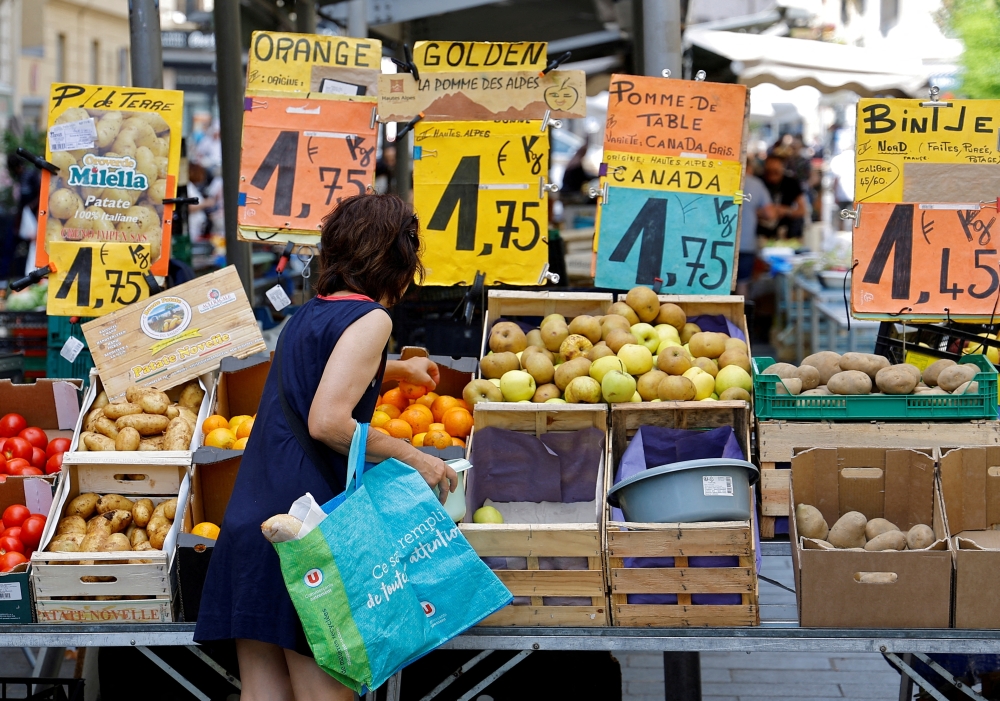





BRUSSELS: The economy in Europe is proving surprisingly resilient against soaring energy and food prices, official data showed on Friday, as tourism boosted France and Spain, but export powerhouse Germany stalled, keeping recession fears alive.
The EU's official data agency said that gross domestic product in the 19-country eurozone grew by 0.7 per cent in the second quarter, far stronger than expected by analysts.
The war in Ukraine has seen the price of natural gas and grocery items skyrocket, with inflation in the single-currency area inching up to yet another new record of 8.9 per cent in July.
Europe's industrial powerhouse Germany continued to be the worst affected by the war, which added to the country's woes from the continued Covid restrictions in China, a crucial market.
Stagnant German growth in the second quarter has led analysts across the board to predict a recession there that would spill over to the continent as a whole.
Russia has sharply reduced its gas flows to Germany, raising the fear that stock levels will be very low this winter and force some level of rationing that would be devastating for the economy.
The International Monetary Fund has warned that Germany, which serves as the engine of the wider European economy, is the most at risk against the war in Ukraine.
Economists agree that Europe's outlook for the coming months is extremely uncertain given the war.
Countries reliant on tourism showed even better-than-expected resilience, with France and Spain beating expectations as tourists took advantage of unrestricted travel to the world's top destinations.
The economies of France and Spain expanded from the previous quarters by 0.5 per cent and 1.1 per cent respectively.
RECESSION 'LIKELY'
Nevertheless, analysts warned that the tourism boost would be short-lived and said all countries faced a huge challenge to sustain growth in the second half of the year.
"The stronger-than-expected GDP data... do not alter the fact that a deepening energy crisis, soaring inflation and rising interest rates are likely to push the region into recession later this year," said Andrew Kenningham, economist at Capital Economics.
Italy, a major source of concern for analysts, also defied expectations by growing one per cent in the second quarter.
Italy is heavily indebted and fears are rife for a political crisis after the departure of Prime Minister Mario Draghi -- who is seen as a steady hand by the financial markets -- triggered snap elections in September.
The months of record inflation have tied the hands of policy makers in their fight to stimulate growth.
Major central banks have raised interest rates and cut off the money taps in order to bring down consumer prices, at the risk of slowing the economy or worse.
This has been the case in the United States, where data showed the world's top economy had entered a technical recession that was buffeted by the four-decade-high spike in inflation and rising borrowing costs.
The European Central Bank has followed a similar course than the US Federal Reserve and last week raised rates for the first time since 2011.
EUROPEAN STOCKS RISE
European stock markets rose robustly on Friday as official data showed eurozone growth holding up in the face of soaring inflation.
Stock markets in Asia ended the session lower after data showed that the US economy contracted again, reinforcing recession fears, but boosting expectations that the US Federal Reserve will slow its pace of interest rate hikes.
After an extended period of pessimism on trading floors, investors were beginning to speculate that the market may be bottoming out.
The EU's official data agency said the 19-country eurozone grew by 0.7 per cent in the second quarter, even though inflation rose to a new record of 8.9 per cent in July.
A day earlier, US data showed the world's biggest economy shrank by 0.9 per cent in the period from April to June after already contracting by 1.6 per cent in the preceding three months.
But the reading was taken as a sign of good news, since it could give the Fed room to take its foot off the pedal and treasury yields -- considered a barometer of future interest rates -- eased.
Officials were expected to continue raising US interest rates, but analysts estimate they would announce a half-point rise in September, compared with three-quarters of percentage point at the past two meetings.
"Stocks continued their rally in Europe on Friday, alongside US futures, as market sentiment improved following reassuring macro data in addition to positive corporate results," said ActivTrades analyst Pierre Veyret.
The prospect of US interest rates not rising as fast as previously expected has knocked the dollar slightly after soaring against other major currencies in recent months.
A second successive contraction in growth is widely considered a technical recession, although it is not officially considered so in the United States until identified as such by the National Bureau of Economic Research.
But while debate rages over that issue, the consensus is that the economy is struggling. - Reuters
Oman Observer is now on the WhatsApp channel. Click here