In one corner of Sri Lanka’s capital, the protest movement that forced out the island nation’s powerful political dynasty over the country’s financial ruin continued as it has for months. Speeches and music blared from the main stage, while protesters strategized in tents dotting the scenic seaside.
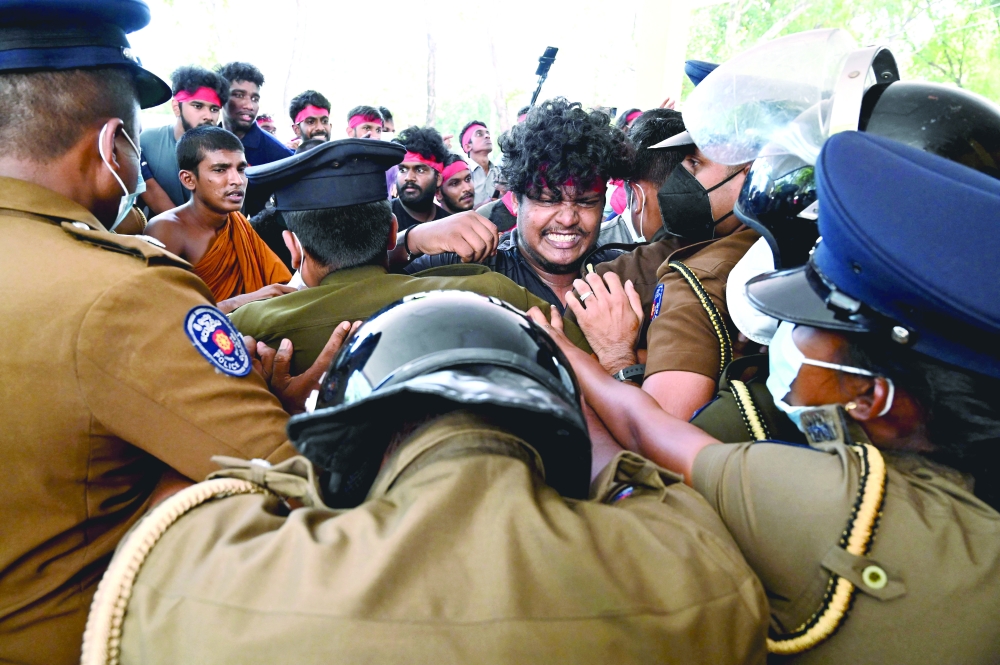
In another corner, tempers flared. A large number of protesters clashed with security forces overnight, seizing the weapons of at least two soldiers, as they tried to force their way into the Parliament, the focus for what appears to be a protracted political crisis.
Activists were struggling to keep things calm and ensure that a mass citizens’ movement does not help tip a country still grappling with the legacy of a decades-long civil war into outright anarchy. Over the three months of protest, they have doggedly protected their reputation as a peaceful movement. But the political elite’s infighting over the vacuum of power left by the fleeing of President Gotabaya Rajapaksa now tests their patience.
In an effort to reduce tensions, protest organisers on Thursday announced that they were pulling out of most government buildings that they had occupied, including the presidential mansion. They have taken care to keep the historic buildings intact, assigning volunteers to clean up after the hordes of visitors and discouraging rowdy youngsters from climbing the mango trees in the garden or damaging the antique furniture.
“We are moving out of the occupied buildings because we want to preserve these places, and we don’t want people to vandalise these places, nor do we want the state or other actors using vandalism as a reason to vilify us and the movement,” said Buwanaka Perera, an organizer of the protest camp that has operated for more than three months in an oceanside park.
“So it’s better to hand it over to the state,” Perera said.
“The state of Sri Lanka, not the president, not the prime minister, but the state.”
Rajapaksa, who fled on a military plane to the Maldives in the early hours on Wednesday, refused an orderly transition of power in the face of mounting protests, handing over the reins to the deeply unpopular Prime Minister Ranil Wickremesinghe. Succession plans have been complicated by the fact that Rajapaksa still has not sent his promised resignation, which would end his time in office.
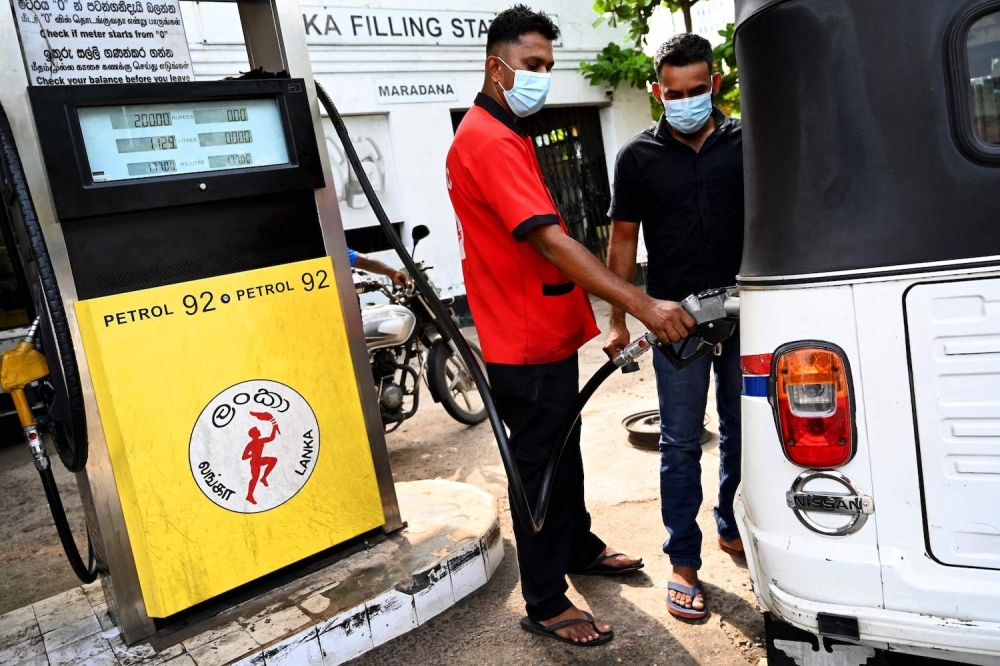
Protesters blame the Rajapaksa dynasty for the mismanagement of the country’s economy, which is essentially out of money and running low on fuel, food and essential medicine.
Protests followed Rajapaksa to the Maldives as well.
In the capital, Malé, around 100 Sri Lankan migrant workers gathered, carrying signs and placards urging officials not to protect him. “Dear Maldivian friends, please urge your government not to safeguard criminals,” read one banner. “Throw him out of here,” read another.
Officials in the Maldives confirmed that Rajapaksa had departed around noon on a Saudi airline flight to Singapore, a regular commercial flight between the two countries that transits through the Maldives. They could not say whether Rajapaksa’s final destination was Singapore or Saudi Arabia.
Singapore’s foreign ministry confirmed that Rajapaksa had been allowed entry into Singapore on a private visit.
It said he had neither been granted nor had asked for asylum, and that this is a request that Singapore seldom grants.
Either destination — one the location of Islam’s holiest site, and the other an economic powerhouse — proves uncomfortable for Rajapaksa, social media users were quick to point out. He was accused of bad policies during his time in office, while he fell far short of turning Sri Lanka into another Singapore, a goal he had mentioned in speeches.
In Rajapaksa’s absence, the prime minister, Ranil Wickremesinghe, has stepped into the role of acting president. But protesters have long demanded his resignation as well, and he is a deeply divisive figure in the Parliament, where he lacks support. A successor to complete the remaining two years of Rajapaksa’s term must go through a parliamentary vote.
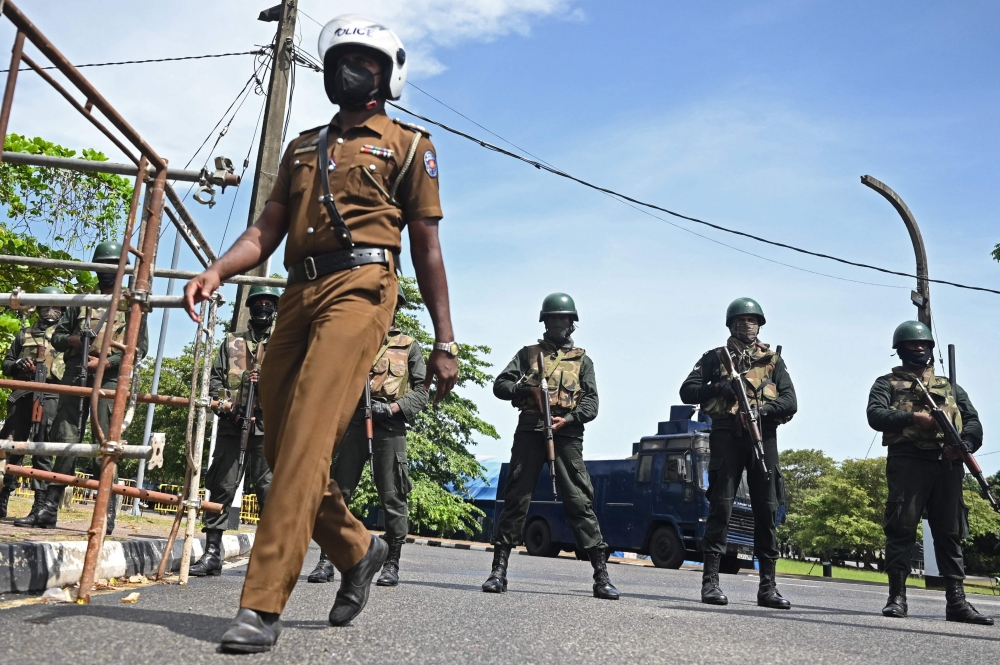
Upon taking charge, Wickremesinghe, whose private residence was set ablaze, ordered a state of emergency to rid the country of what he called “a fascist threat.” He also asked the security forces to restore law and order.
The defence ministry said in a statement that the two army soldiers whose weapons were stolen outside Parliament were “brutally attacked” with iron rods and poles, and that the armed forces would work together to “ensure national security.”
-The New York Times
Oman Observer is now on the WhatsApp channel. Click here