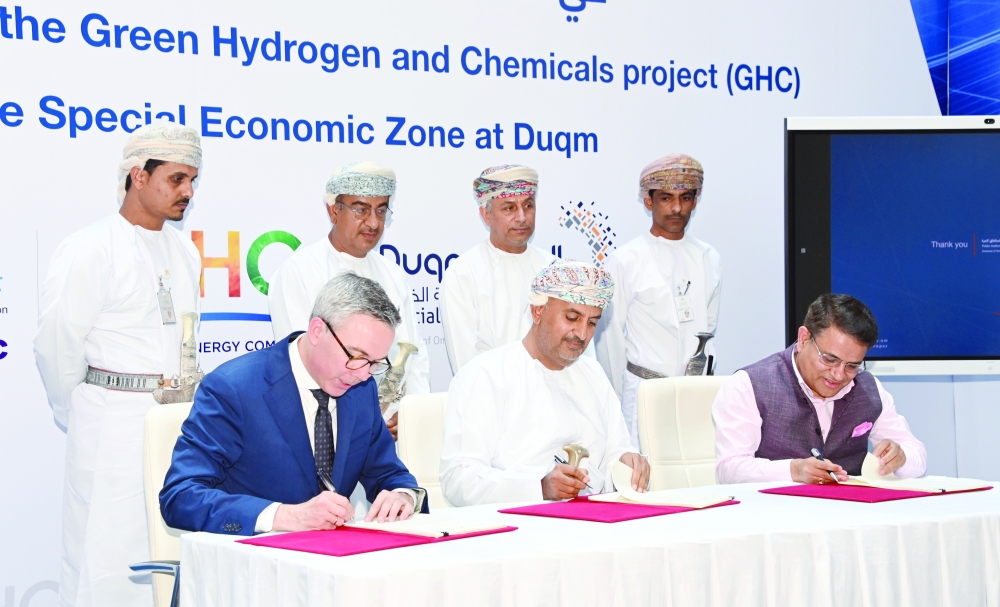
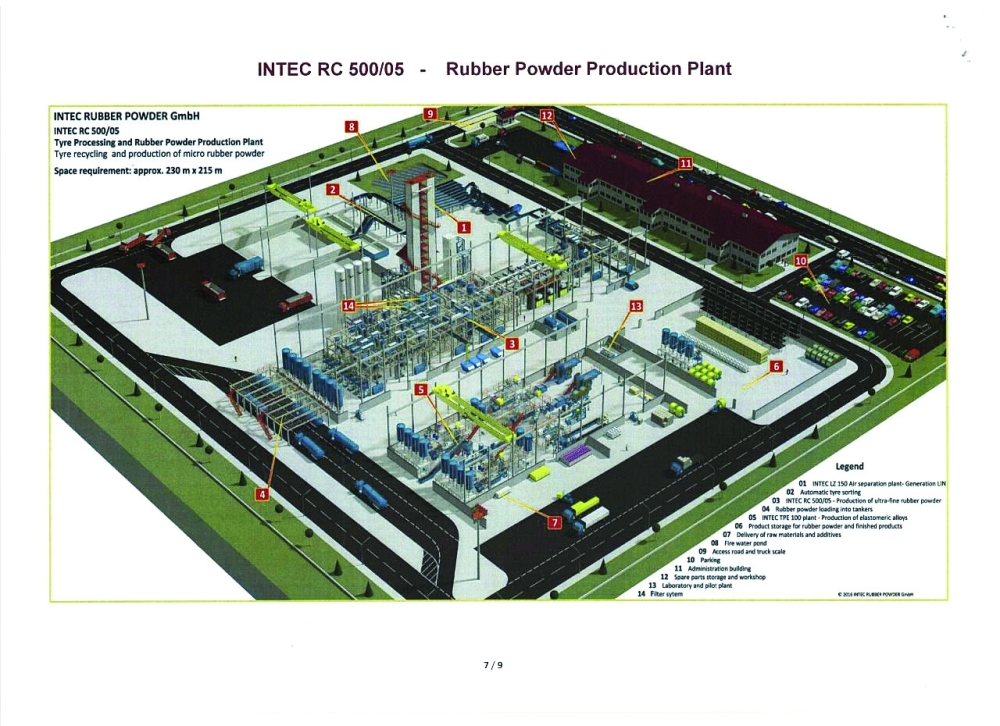





A contract was signed on Monday for the establishment of a major project that will recycle used automotive tyres into rubber powder – a vital feedstock for biofuel production and other commercially valuable ingredients. Total investment in the project, which will come up in Sur Industrial City, is about RO 83 million in the first phase.
The agreement was signed by Sur Industrial City – part of the Public Establishment for Industrial Estates (Madayn) - with Al Fairuz Projects and Investments.
Commenting on the project, Eng Abdulqadir bin Salim al Balushi, Director General of Sur Industrial City, stated that this eco-friendly project will be developed on an area of 230,000 sqm and will adopt cutting-edge tyre recycling technologies.
“The tyre recycling project is expected to generate 212 job opportunities, of which 75% will be for Omanis,” Al Balushi stated.
Eng Ahmed bin Mohamed Washah, Executive Director of the project, pointed out that the rubber powder production plant will be beneficial for the manufacturing industries that use biofuel and carbon, as they will be extracted utilising advanced and environmentally friendly technology rather than harmful tyre burning.
Design work on the plant is expected to commence during the last quarter of the current year, and the two-year planned construction phases will kick off in the first half of next year.
An estimated 45,000 tonnes of scrap tyres are generated every year in the Sultanate of Oman – a figure that is projected to rise in line with population growth and urbanisation. For want of environmentally safe ways of disposing of this waste, these tyres have been piling up at two major dumpsites. The biggest is in Dhofar Governorate where several millions of waste tyres are currently being amassed.
In addition to their potential use in the production of biofuel, waste tyres are also widely used as a fuel resource in cement kilns in a number of countries around the world, either as the primary fuel or in combination with natural gas and coal. Once stripped of their metal reinforcements, such as wires, the waste tyres are then shredded into chips, known as ‘Tyre Derived Fuel’ (TDF). These chips are typically used in high heat operations, such as cement kilns, waste-to-energy schemes, and power plants.
Oman Observer is now on the WhatsApp channel. Click here