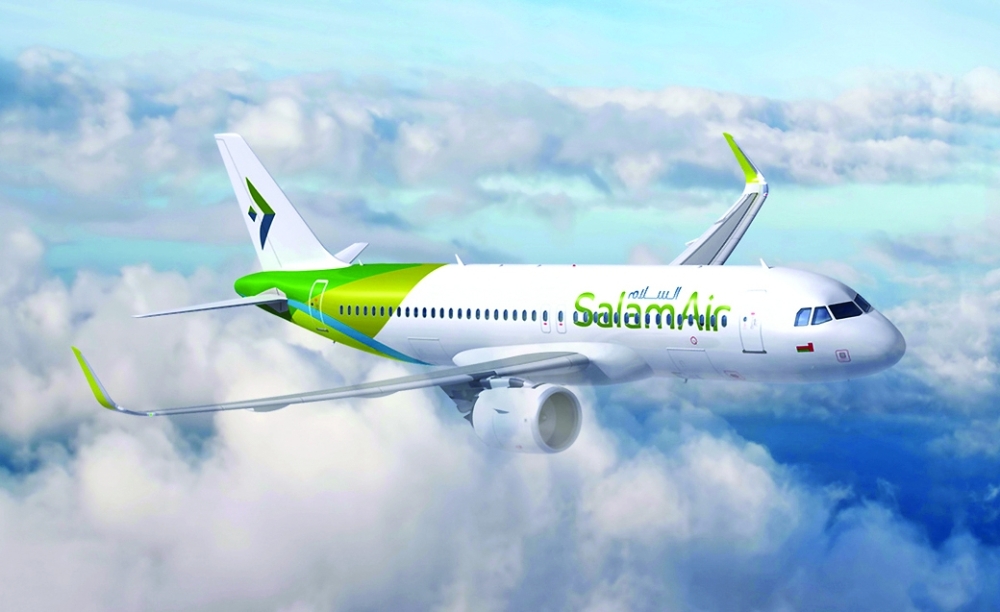





MUSCAT: Budget airline SalamAir will launch five new stations in the second half of this month, including some of the key tourist destinations.
Captain Mohamed Ahmed, the CEO of SalamAir, said the airline will start, on June 15, its first direct three flights per week to Bursa in Turkey.
He said the company will operate direct flights to Phuket in Thailand and Baku in Azerbaijan, and there is an intention to operate direct flights to Prague in the Czech Republic and the Chinese city of Taishan in the winter schedule from October.
During the summer, SalamAir will operate direct flights from Suhar Airport to Salalah, Shiraz and Trabzon.
It also started operating direct flights from Salalah Airport to Kozhikode in the Indian state of Kerala.
Consultations were held with the authorities to accommodate larger numbers of passengers through Suhar Airport, the company said.
The company will receive two new planes, bringing the number of the company's fleet to 10 aircraft.
Captain Mohamed Ahmed said that the company has passed the pre-Covid 19 levels in passenger traffic and was able to transport 1 million passengers in 2021, and it is expected to transport about 2 million passengers in 2022.
The company will increase its flights to Salalah Airport to four daily flights from Muscat International Airport, with the possibility of increasing them if there is a large turnout of travellers wishing to go to the governorate. It will also operate five flights per week from Suhar Airport to Salalah.
He added that with the inauguration of these stations, the number of stations operated by SalamAir will reach 32 this summer, explaining that the occupancy rate in the company during the current year has reached 71 per cent, as the company's fleet consists of six Airbus 320neo aircraft and two Airbus 321 aircraft.
SalamAir said the on-time performance has reached 86 per cent as the new aircraft played a major role in the commitment to time.
The CEO said that the Trabzon station, which was very popular with Omani passengers, has been returned, with an occupancy rate of 99 per cent, which necessitated an increase in the number of flights from two flights per week to seven, explaining that the company is currently studying several new contracts, including code sharing with airlines operating in the region to cover the increasing demand for these stations.
He said the Omanisation rate has reached 65 per cent, and a large group of Omanis are under training in training programmes to occupy important positions in the company.
Oman Observer is now on the WhatsApp channel. Click here