Provision of health is often disrupted in fragile and conflict-affected settings, leaving thousands of people without life-saving services. Lack of health cascades into a lack of durable solutions to bring peace, contributing to social exclusion and other factors driving the conflict.
The WHO constitution acknowledges a strong connection between peace and health, emphasising that “the health of all peoples is fundamental to the attainment of peace and security and is dependent upon the fullest co-operation of individuals and States.”
The connection between peace and health reiterated in 1981 during the 34th World Health Assembly with WHO members-states underlying “the role of physicians and other health workers in the preservation and promotion of peace as the most significant factor for the attainment of health for all.”
WHO member-states themselves have played a prominent role in advancing the health for peace agenda along with WHO institutions.
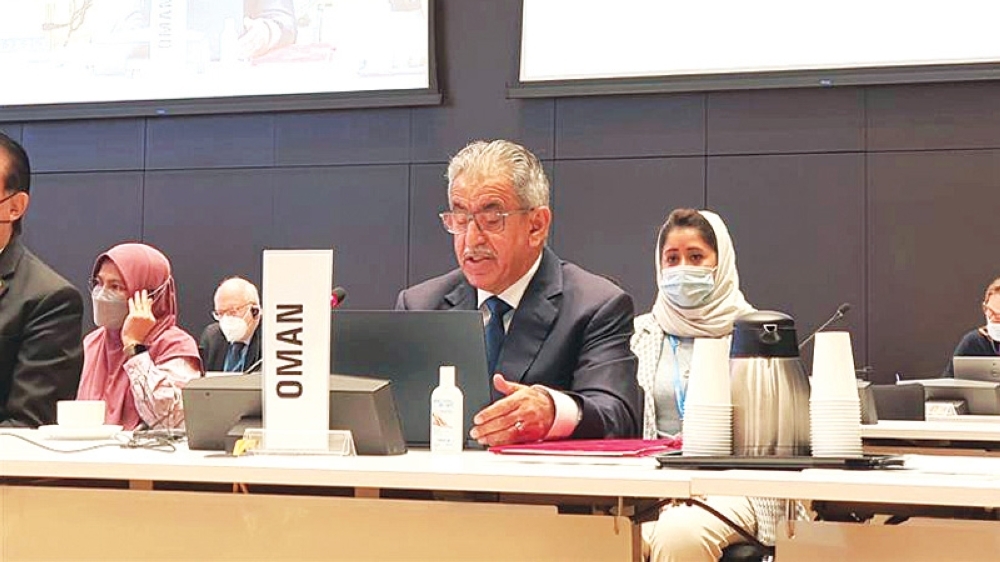
A more recent collaboration that started in 2018 between the health ministries of the Sultanate of Oman and Switzerland and the WHO Regional Office for the Eastern Mediterranean resulted in a refined conceptualisation of the health and peace agenda.
This was later developed into the Global Health and Peace Initiative announced by the WHO Director General, Dr Tedros Ghebreyesus in April 2022.
This new initiative complements WHO work and encourages a new kind of dialogue on health and peace.
As stressed by Dr Ghebreyesus in his recent article, “peace is foundational to all our work on health, development and tackling the challenges of conflict, the climate crisis and Covid-19.”
Examples of WHO’s work around health and peace include the provision of psycho-social support to people with conflict-related disabilities (Sri Lanka, 2016), reintegration of former combatants with health expertise into the health system through medical training (Colombia, 2016), promoting participatory mechanisms in building trust and developing national health policy in post-revolution Tunisia (2012-2014).
In Syria, WHO has leveraged its unique position as a global public health agency to implement various interventions through health diplomacy and collaboration on health governance and response.
WHO promoted an inter-regional dialogue through high-level delegation visit from the Ministry of Health of Syria to the Sultanate of Oman in 2021. Building upon the agendas of health for peace and health for all by all, this visit enabled officials from Syria to learn from their Omani counterparts how to develop public health emergency operation centres and manage various public health emergencies.
Other examples of WHO’s health diplomacy and regional solidarity for health for people of Syria include bilateral donations of kidney dialysis sessions by the Ministry of Health of Egypt facilitated by WHO in 2021 and WHO-negotiated arrangements for testing Covid-19 samples in a WHO referral laboratory in the UAE.
Furthermore, since the beginning of Covid-19, a strong solidarity of nations has been observed in the past two years, with Syria benefiting from bilateral and multilateral partnerships facilitated by WHO.
These partnerships have been instrumental in Syria’s fight against the pandemic: the European Union member-states, China, Cuba, Iceland, Japan, Norway, Sultanate of Oman, Russian Federation, Switzerland and the UAE donated Covid-19 vaccines for Syria, be it through bilateral donations or as part of the global multilateral Covax mechanism.
Going beyond interaction on the central level, in both northwest and northeast Syria – conflict areas where the governance remains fragmented WHO has enhanced the access to health services and supplies using the ‘all modalities’ approach and facilitated crossline collaboration on health governance and provision of health services in highly vulnerable places such as camps and camp-like settings.
WHO was also able to guarantee and support the delivery of Covid-19 vaccines to northeast Syria when they became available through diplomacy and a ‘health first’ approach.
Through these and other initiatives, WHO promotes intraregional and global collaboration in advancing the health agenda, be it through training, connecting referral institutions for public health surveillance, or triangular cooperation and support for immediate relief.
Conceptually originated from the WHO Constitution, after over 70 years since its adoption, the relevance of the health and peace agenda is all the more indisputable.
Dr Akjemal Magtymova
The writer is the WHO Representative and Head of Mission, Syrian Arab Republic Health diplomacy, health-first approach in delivering WHO programmes in Syria
Oman Observer is now on the WhatsApp channel. Click here