Heritage is what we inherit from the past and is of use and value in the present day. In broad terms, heritage consists of cultural assets (cultural heritage) and nature (natural heritage). Cultural heritage is the past created by human-kind and its various tangible and intangible elements. And comes in the form of material objects (tangible cultural heritage) such as archaeological remains, villages, buildings, cities, landscapes, museums, handicrafts, art collections, historic gardens and antiques.
However, it also encompasses non-material elements of culture (intangible cultural heritage) including folklore, beliefs, music, rituals and dance. Intangible cultural heritage is playing an important role in soft power of the country. It also contributes to the government’s international cultural strategy and creates robust cultural tourism that secures long-term economic growth and heritage preservation.
Power in general is the ability to affect others to get the outcomes one prefers. And that can be achieved by payment, coercion, or persuasion and attraction. “Soft power” is the ability to obtain preferred outcomes by attracting others rather than payment or coercion. Countries use military power to issues which are related to threats or fight and to achieve desired results within a reasonable period. While economic power is frequently a straightforward matter with some possible acts from the governments such as bank account freezing, bribes distributing or aid promptly. In this type of power, economic sanctions could take a long time to produce desired outcomes.
Soft power is more difficult to wield than military and economic powers. Many of soft power’s critical resources are outside the control of the government, because they work indirectly by shaping the environment for policy, and occasionally take long time to produce the desired results (Nye J, 2004). It is difficult to talk about hard power without touching on the soft power.
Despite building up the capabilities of hard power is unavoidable, countries should pay more attention to soft power and make it their ideal tool of nation branding. This anecdotal comment recounts the origins of the concept as an analytical tool, and its gradual development as an instrumental concept used in political discourse in the United States, China and Europe. Nowadays soft power plays an important role in building of a nation's brand image, identity, value, influence and attractiveness (Global Soft power, 2021).
Nye (2007) states that soft power is based on three resources: its culture, its political values and its foreign policy. However, culture either tangible or intangible is one of the pillars of soft power. Nowadays, countries attempt to have enormous soft power resources to use them effectively to accomplish outcomes they wanted.
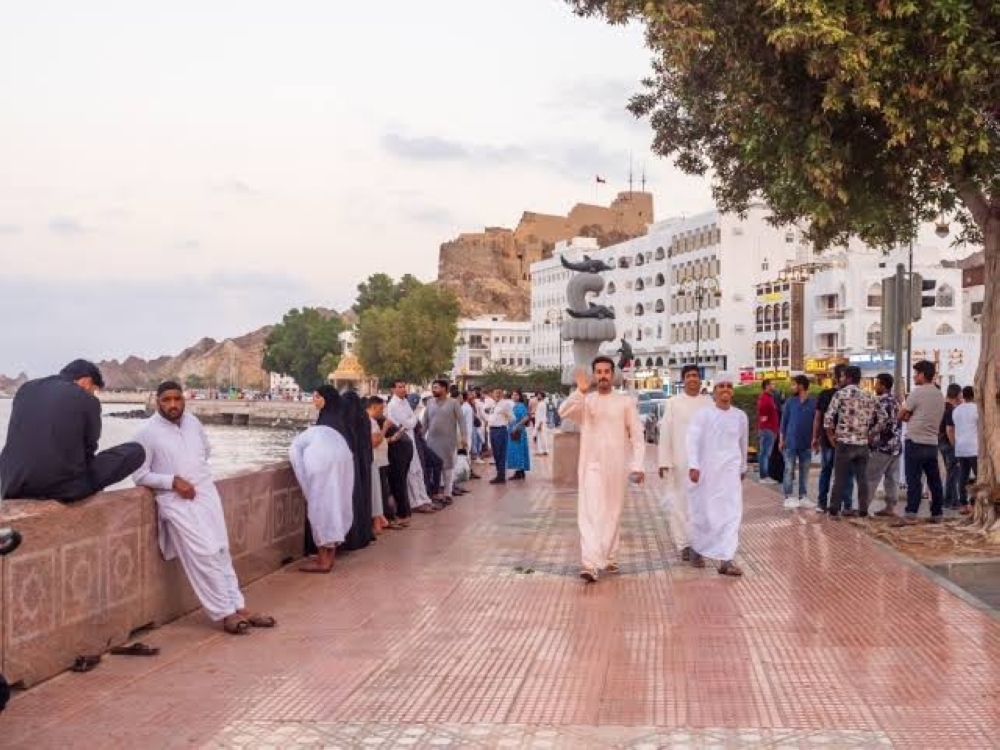
Over its long history, the Sultanate of Oman has been something of a cross-cultural entrepot, an outward-looking and highly evolved society interacting freely with other civilisations both at home and on its explorations overseas. Oman is proud of its deep-rooted history and its cultural heritage.
According to the World Soft Power Index by (Brand Finance, 2022), Oman was ranked the 49th globally comparing to 51st in 2021. The index was determined through a series of measures across seven ‘pillars’ in which pillar research explores various aspects of business and trade, governance, international relations, culture and heritage, media and communications, education and science, and people and values. The study also measures the contribution of the favourable or unfavourable perception of the nation brands. Furthermore, Omanis are characterised by tolerance and generosity. The warmth and kind nature of the Omanis are the main characteristics that visitors can feel it in the country.
Thus, how Oman gained benefits from using intangible cultural heritage (ICH) as a soft power. And does the strength of ICH indeed reflects and directly influences the soft power of a country? Also, how does the indicator of ICH influences the outcomes achieved by any country in the given ranking of soft power?
The Sultanate of Oman, which has already launched the government initiative programme “Tanfeedh” in 2016 which is leading to Oman's Vision 2040. This programme aims generally at linking the main vital sectors’ strategies with the purpose of diversify the national income resources. There are many examples of countries using cultural heritage as an effective tool to strive for soft power.
Assuming that cultural heritage in Oman today is well-maintained and has good soft power sources, but it needs more efforts. However, by enhancing the cultural heritage, Oman will increase the international cultural relationships as this will get more benefits economically and socially.
However, does the strength of cultural heritage indeed reflect and directly influence the soft power of Oman, or could it be compensated by others such as non-cultural elements? Also, how does the indicator of cultural heritage tourism influences the outcomes achieved by any country in the given ranking of soft power?
Oman Observer is now on the WhatsApp channel. Click here