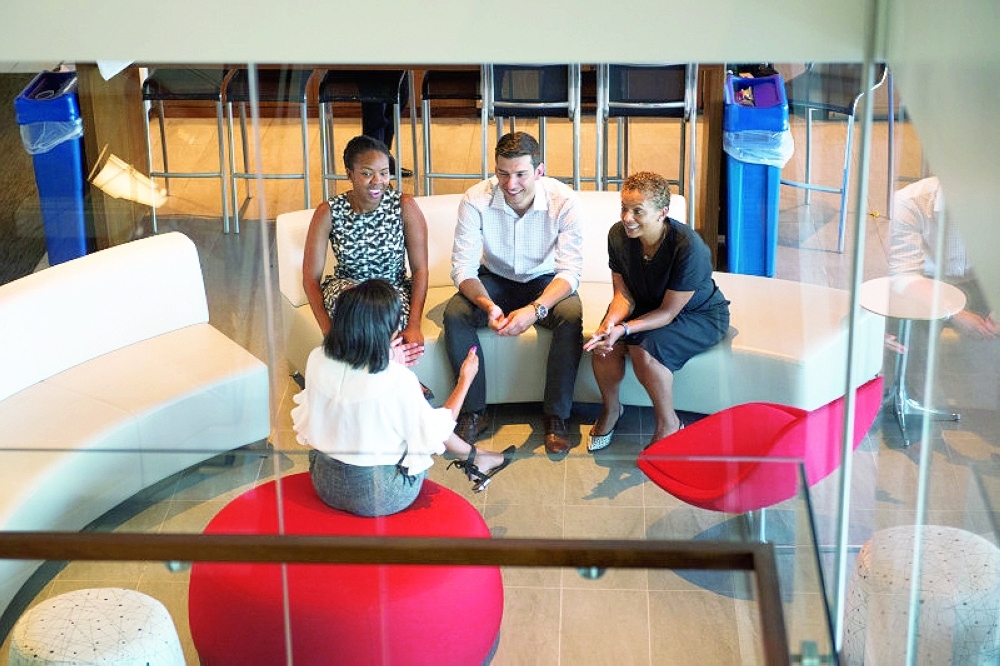





We all know what it feels like to belong somewhere—to be included—and naturally, we want all team members in our organisations to feel that way. Besides being the right thing to do and stimulating better individual and team performance, building inclusive teams pays off for companies by helping them attract and retain the most diverse and talented employees. Despite the clear benefits, however, most companies struggle to foster feelings of inclusion for the majority of their people.
It is hardly surprising that organisations find it difficult to determine which specific changes they must make to promote greater inclusion for their diverse employee bases. So we at Bain & Company surveyed 10,000 individuals—across diverse industries and demographic backgrounds at all levels of seniority and organisational size—to learn what actually makes employees feel the most included.
When asked what inclusion feels like, employees across all demographics say it is being treated with dignity, able to bring their authentic selves to work, able to contribute and feeling connected to others—which is our definition of inclusion. How an organisation helps all its people feel included in these ways, however, gets complicated. Rigorous analysis of our data has also shown us that the specific paths to that universal sense of inclusion are unique to an individual’s identity. Our research has also found that the enablers of inclusion are highly textured and varied across every population, but that this heterogeneity can be addressed by combining systemic change with more inclusive behaviours.
Why inclusion matters?
Many companies today pursue diversity by itself as a priceless asset. But our research shows that they cannot realise and sustain the full value of that diversity—enabling diverse talent to thrive, fully contribute, progress, and want to stay—without a truly inclusive culture. Organisations understand that having a diverse workforce pays off—or should pay off—by stimulating innovation and challenges to the status quo from different points of view. But the only way to realise these and other benefits of diversity is to continuously progress toward a more inclusive environment for all team members.
Inclusive organisations have an easier time attracting talent across demographics: Approximately 65 per cent of people across identity groups view an inclusive environment as “very important” when considering new roles. But recruiting a diverse group of employees is only the beginning. A truly inclusive environment is critical for retention and provides a variety of other tangible, measurable benefits.
To truly maximise retention, performance, innovation and comfort in challenging conventional thinking, organisations should aim for both diversity and inclusion. But while diversifying a workforce can take time, there are tangible benefits to working on inclusion immediately, even if an organisation isn’t currently as diverse as it could be.
Fostering inclusion is deceptively difficult
Although everyone wants to build inclusive organisations, few (if any) companies have “cracked the code” for consistently fostering inclusion for employees. Leaders who are members of majority groups may also gravitate to narrow, behaviour-focused solutions such as “acting nicer” or giving employees more opportunities to socialise, or they may rely heavily on team members belonging to under-represented groups to tell them what they should do.
Every demographic population has a unique “texture” when it comes to enablers of inclusion. Even though the feeling of inclusion is fundamentally the same across groups, our research shows that the lived experience of inclusion is driven for various groups by a diverse variety of factors. In our research, we tried to determine which of a wide range of organisational enablers of inclusion—which we broadly classify as “behavioural” and “systemic”—were most effective in making people feel included. To do this, we ran thousands of regressions across populations to understand what really increases feelings and experiences of inclusion across many distinct populations.
Every employee’s sense and experience of inclusion benefited from both behavioural and systemic enablers, but the mix of effective enablers—what we might call the texture of inclusion—varied across groups with respect to identity, geography, and level within their companies.
Cutting through the complexity
Because every demographic group has its own unique texture with respect to what enables members to experience inclusion, and because people do not always understand what precise actions will make them feel included, it can be complicated to sort out what makes inclusion real for a particular group. One piece of good news, however, is that there is a common denominator that boosts inclusion for virtually everyone: opportunities for professional development and growth.
This still leaves a great deal of complexity for organisations to navigate. Because no single demographic variable cleanly predicts lower levels of inclusion in companies, targeting broad categories of people with reference to single factors is much too blunt a strategy for increasing feelings of inclusion. But there is a method for cutting through the complexity: looking at employees through an intersectional lens that incorporates geography, demographics, and seniority. Properly applied, this intersectional approach can show an organisation where, and with what groups, it can take specific actions that will actually advance the goal of greater inclusion for all.
In identifying such actions, is it essential to note that employees’ feelings of inclusion are grounded in everyday experiences, which consist of their encounters with both the mindsets and behaviours of others and a company’s systems, structures, and processes—what we have classified as behavioural and systemic enablers, respectively. Our analysis, moreover, reveals a bedrock “hierarchy of needs” according to which almost everyone requires underlying systemic support to feel fully included, with people’s focus shifting to behaviours once systems more fully support them.
Weaving the fabric: Making inclusion a reality
Our findings tell us that creating genuinely more inclusive organisations, while challenging, is something companies can actually do. Moreover, organisations that want all their people to feel included need not—and indeed cannot—rely on some combination of lofty aspirations, sincere intentions and the right messaging. Real, sustainable change comes from doing. Making a more inclusive organisation is about employees—and leaders—throughout the organisation adopting new mindsets, changing behaviours and learning to operate in and adapt to new and different systems.
People are looking to see if their organisation understands and cares about their unique needs for inclusion and is prepared to make a real commitment to addressing them. Meaningful analysis, authentic listening, visible action and feedback are all key to demonstrating deep commitment. In practice, this means starting out by understanding the organisation’s current state, establishing its ambitions and goals and developing an inclusion game plan that prioritises target populations for specific initiatives and sets up a leadership team with clear roles and responsibilities for execution.
Weaving the fabric of belonging is work for both the heart and the head. Done successfully, it makes both people and organisations better by making inclusion not just something we talk about but something we live—thus bringing us all closer to realising our potential as both diverse individuals and members of teams.
[Jointly authored by Julie Coffman, Global Chief Diversity Officer, and Anne-Laure Malauzat, Middle East Chief Diversity Officer, Bain & Company]
Oman Observer is now on the WhatsApp channel. Click here