




Complementing the dramatically improved fiscal outlook for the Sultanate of Oman are a number of non-hydrocarbon sectors that promise to drive economic growth already buoyed by sky-high crude prices, according to a key report.
Fitch Solutions Group Ltd (FSG), an affiliate of international credit ratings agency Fitch Ratings, listed economic diversification, surging petrochemical and plastics exports, plans for new industrial and economic hubs, and the effective positioning of Port of Duqm as key factors that would help power Omani non-hydrocarbon exports over the coming years.
“(..) we anticipate non-hydrocarbon exports will continue to sharply increase as diversification efforts bear their fruits,” said the UK-based country risk and industry research think-tank. “After rising by 91.1 per cent in 2021, we expect non-hydrocarbon exports will grow by 14.4 per cent in 2022, driven by strong exports of plastics and chemical products.”
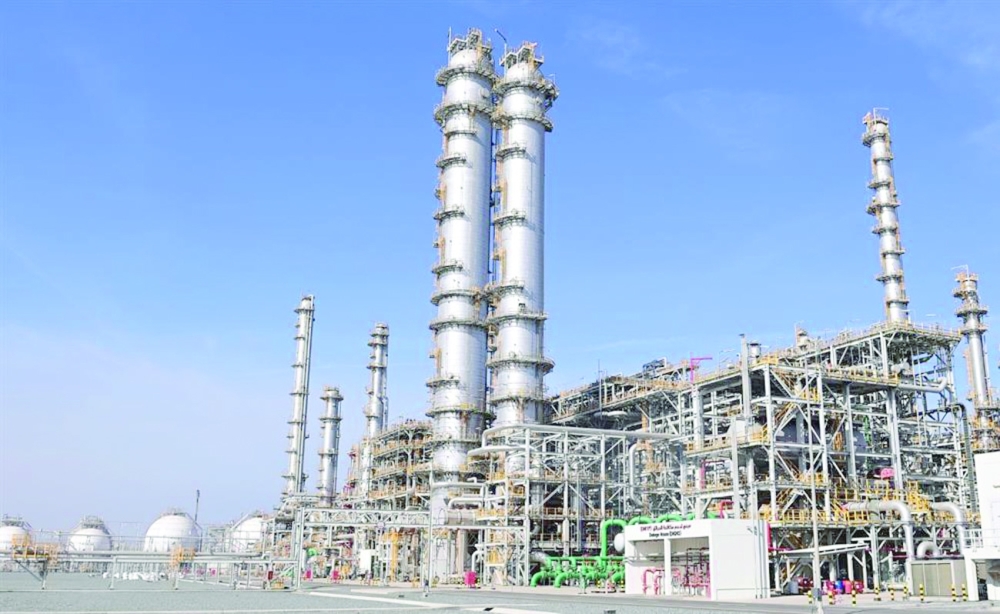
The Oman Vision 2040 roadmap, launched in 2020, has provided new impetus to the country’s economic diversification efforts, says FSG. This is exemplified by energy giant OQ’s Liwa Plastics Industrial Complex in Suhar, which is poised to ramp up polyethylene and polypropylene productions – key ingredients in the manufacture of a wide range of commonly used products – by more than 40 per cent in 2022.
Indeed, the value of plastics exports from the Sultanate of Oman roughly doubled to $368.2 million during December 2021 versus a monthly average of $186.5 million over the remainder of the year, said FSG, noting that OQ is anticipated to boost chemical exports as well.
Also boding well for higher revenues from non-hydrocarbon exports are current global inflation trends which are likely to buoy prices of key mineral exports, notably chromite ores and copper, according to FSG.
Importantly, the report sees Port of Duqm, which celebrated its full-fledged commercial launch earlier this year, playing a key role in accelerating re-exports. As a result, re-exports are forecast to grow by 12.2 per cent in 2022 as compared to a contraction of 22.2 per cent in 2021, FSG noted in its report.
“The Duqm port will serve as a storage park for the country’s hydrocarbon production and as a global trade hub as part of a special economic zone. The port’s strategic location - close to international trade routes - puts it at an advantageous position to continue boosting re-exports in the medium term. We also forecast global growth will come in above-trend at 3.6 per cent, which will help support global trade and in turn re-exports in Oman,” the think-tank stated.
Furthermore, imports which grew by around 50 per cent in 2021 will be further strengthened this year on the back of strong investment activity and higher global commodity prices, according to the report.
Contributing to this trend will be the development of key infrastructure and economic projects, such as Khazaen Economic City and new industrial cities planned in Al Mudhaibi, Shinas, Khasab, Ibri and Thamrait. Rapidly easing Covid restrictions will also fuel import growth, it said.
In particular, the post-pandemic recovery will support the reopening of the economy and the resumption of international air travel, thereby contributing to the growth of service exports, FSG said.
“We forecast services exports will grow by 24.8 per cent in 2022 as we expect a solid rebound in tourism activity. Data from Oman’s National Centre for Statistics & Information shows a 52.5 per cent y-o-y increase in the number of hotel guests in the first two months of 2022. We expect this trend will continue amid a rebound in international travel, improving Oman’s services deficit from an estimated 8.3 per cent of GDP in 2021 to 7.7 per cent of GDP in 2022,” the report added.
Oman Observer is now on the WhatsApp channel. Click here