




Vladimir Putin’s attack on Ukraine has sent the prices of many commodities skyrocketing. And it is not just oil and gas. From a humanitarian point of view, the soaring price of food, especially wheat, may be an even bigger problem.
Before the war, Russia and Ukraine produced almost a quarter of the world’s wheat, much of it exported. Both the direct effects of the war and the sanctions imposed on Russia are disrupting that supply.
Nobody knows how long this disruption may last or how much suffering high food prices will cause around the world, especially in poor countries.
But how and when did the world become dependent on wheat from parts of the former Soviet Union? (The US Department of Agriculture refers to the major wheat exporters as KRU, for Kazakhstan, Russia and Ukraine.) That is a more interesting story than you might think, for KRU became the world’s breadbasket not once, but twice.
Communism did many things badly, but one of the things it did worst was produce food. Josef Stalin’s collectivisation of agriculture led to the Ukraine famine of 1932-33 — the Holodomor — which killed millions. In its final years, the Soviet Union wasn’t starving, but it was dependent on large-scale imports of grain.
After the Soviet collapse, however, this turned around.
Starting around 20 years ago, KRU, taking advantage of the fertility of its famous “black soil” and the rise of globalisation in general, began to export ever-larger quantities of grain.
But while this was something new, it was also something old. As students of economic history know, globalisation actually began in the 19th century, made possible by the revolutionary technologies of railroads and steamships. If we think of globalisation as something more recent that is only because world trade went into retreat in the face of world wars and the Great Depression, recovering to pre-World War I levels only around 1980. And KRU initially became a huge wheat producer during that first era of globalisation.
What was the epicentre of this great agricultural complex? The city of Odesa, which in an economic sense became more or less the Chicago of the East, the place where railways gathered the abundance of a vast agricultural heartland and shipped it to the world. The city wasn’t even founded until 1794 — by Catherine the Great — but it mushroomed along with the region’s foreign trade, becoming the fourth-largest city in the Russian Empire, after St Petersburg, Moscow and Warsaw.
And the Odesa of 1913 seemed well on its way to becoming one of the world’s great cities, and not just economically. As a gateway to the world, it attracted an unusually diverse population. As part of the Pale of Settlement — the part of the Russian empire in which others were allowed to reside — it was especially attractive to thousands of young people seeking escape from the confines of the town.
This mixing of people seeking freedom as well as opportunity led to a cultural efflorescence. Odesa was famed for its cafes, its literature, its music. Then history intervened.
I don’t think it is silly or anachronistic to say that the things that made Odesa special, that should have made it one of the world’s great metropolises, were precisely the things that ethno nationalists, then and now, hate: ethnic and religious diversity, intellectual curiosity, openness to the world.
On the eve of the Russian war, it looked as if Ukraine was finally managing to recover some of those things — which is, in turn, surely part of the reason Putin decided it had to be conquered. And maybe remembering what Odesa might have become will help remind us how important it is that this attempt at conquest fail. - New York Times
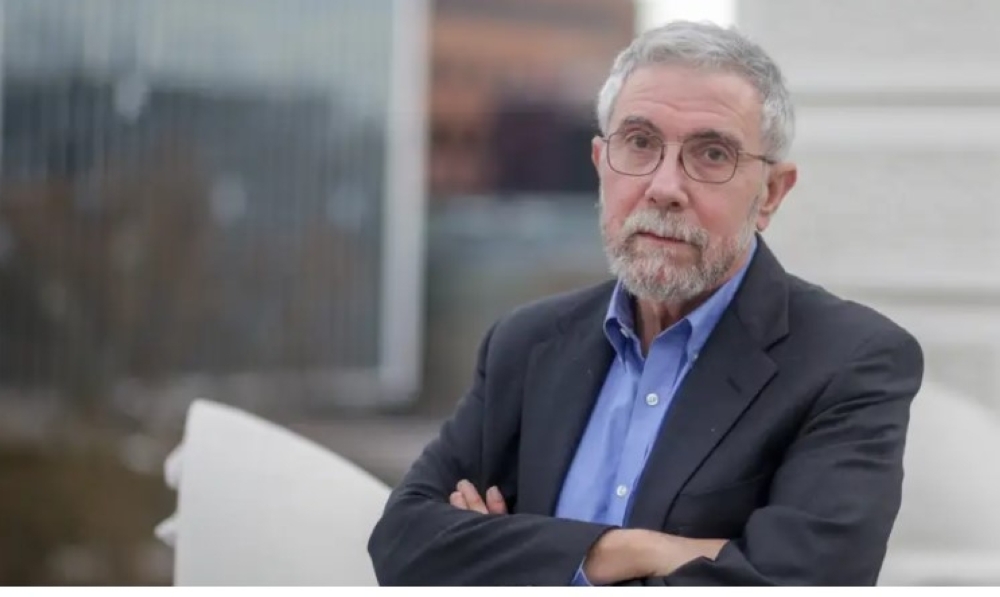
Paul Krugman
The writer is an American economist, public intellectual and a columnist
Oman Observer is now on the WhatsApp channel. Click here