Russian President Vladimir Putin has brought Europe back to a place we thought had been consigned to an unrepeatable past. We find ourselves confronting a leader whose foreign policy has been degenerating since the day, in 2001, when US president George W Bush looked him in the eye and said he had found a man he could trust.
The risk of a third world war is no longer within the realm of the impossible. Russia is now staging attacks just a few kilometres from Nato’s borders, and, given Putin’s unpredictability, we cannot dismiss the possibility of a direct confrontation between Russia and the Alliance. That would raise the almost unimaginable possibility of a nuclear conflict, which our leaders have the duty to avoid.
Because Russia and Europe are part of an uninterrupted land mass, stability at the edge of the continent is fundamental to regional peace. But diplomatic barriers between Russia and Nato are multiplying. Rarely have the post-World War II international organisations been so absent, or even helpless, in the face of conflict. Even the Organization for Security and Cooperation in Europe, which was established with the aim of guaranteeing stability between Russia, the United States, and Europe, is proving to be inadequate to today’s challenge.
The European Union has responded firmly to Russia’s war, demonstrating its unity by imposing severe financial and economic sanctions. But the war in Ukraine has shown that Europe is insufficiently prepared to address its most immediate challenges. The EU must now sharpen its focus on four priorities.
First, the EU must expand its security and defence capabilities, and the “Strategic Compass'', which was adopted this week in the Council of the EU, should serve to guide policy in this domain. While Europe clearly must invest in its military capabilities, this means not only spending more money but also undertaking such efforts as Europeans rather than as individual states. According to the European Defence Agency, EU member states spend a total of about €200 billion ($221 billion) annually on defence, more than India, Russia, and the United Kingdom combined.
The task now is to improve efficiency rather than merely increasing military spending at the national level. And this requires adopting a European vision in national military planning.
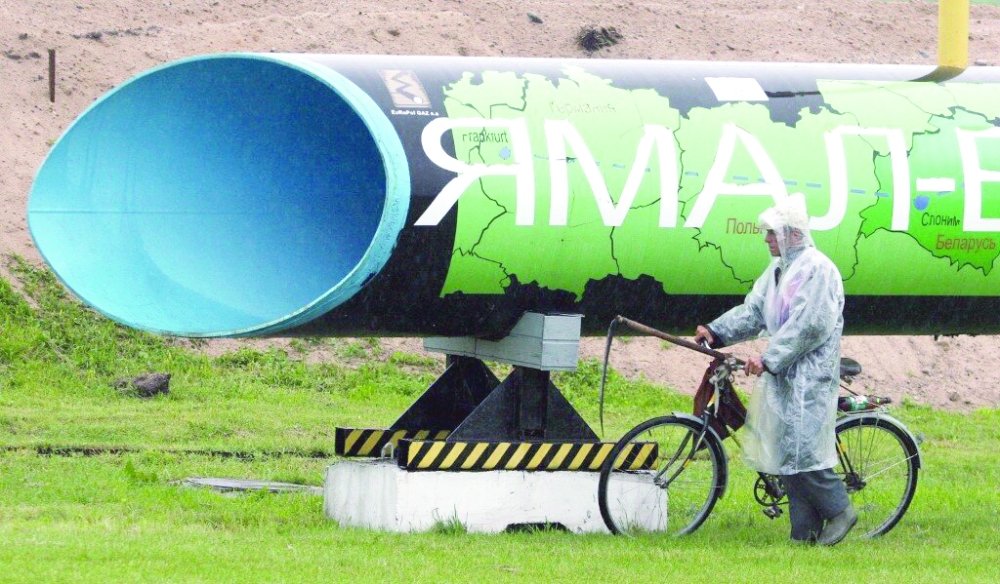
Second, the EU must rethink its energy dependence on Russia. Europe has been relying on Russian gas for too long and may have to pay a price for turning off the tap, as Germany has begun to do by suspending the Nord Stream 2 pipeline. As Nathalie Tocci of the Istituto Affari Internazionali says, no economic calculation should trump what is needed for European unity.
Third, Europe must develop a common migration policy with a geographic division of responsibility for accepting refugees from our respective neighbourhoods to the east or south. Starting in 2015, then-German Chancellor Angela Merkel unilaterally accepted hundreds of thousands Syrian refugees, while the rest of Europe mostly looked the other way. Today, EU member states must show a common willingness to help those fleeing war.
The exodus of two million Ukrainians to Poland since the war began has highlighted the incongruities of European migration policy. Europe’s solidarity with the Ukrainian refugees is a positive gesture that has shown our citizens at their best; but it should also make us reflect on our far less welcoming attitude towards refugees from other parts of the world.
Lastly, Europe must help to mitigate the war’s effects on global food security. Because Ukraine and Russia together supply 19 per cent of the world’s barley, 14 per cent of its wheat and 4 per cent of its corn, the conflict is also affecting many other economies. For example, Kenya, with a population roughly the same size as Ukraine’s, sources half of its wheat imports from Russia and Ukraine. With 276 million people globally suffering from severe hunger, poorer regions in particular will suffer as a result of the current conflict.
As the EU tackles these immediate priorities, the Union’s founding mission of building peace and preventing war must remain at its core. A world that is still suffering from the Covid-19 pandemic and its fallout, and currently seems unable to reverse the consequences of climate change, cannot afford a conflict of this type.
Europe must therefore use the means at its disposal, including sanctions, to try to change Putin’s behaviour. Above all, it must play a key role in preventing the hostilities in Ukraine from escalating into a war between major powers.
The role of China, which is allegedly considering selling arms to Russia to help Putin’s war effort, will likely be crucial to averting a global conflict. The most recent meeting between Putin and Chinese President Xi Jinping, on the eve of this year’s Winter Olympics in Beijing, seemed to suggest a near-alliance between the two powers.
Many have drawn parallels with US president Richard Nixon’s 1972 visit to China, which heralded a Sino-American rapprochement aimed at countering the threat posed by the Soviet Union. But while China may be tempted to form an alliance with Russia, a world war would not suit Xi and becoming part of such a conflict even less so.
Preventing a China-Russia alliance from taking root is fundamental to preserving the current balance in international relations. Europe can and must urge China to play a role in seeking a negotiated end to the Ukraine conflict. To that end, it is vital that the US, the EU, and Nato not be perceived as weak and divided in either domestic or foreign policy.
Despite the tragedy of the Ukraine war, I feel proud of what Europe has done over the past few weeks. The responses in Brussels, Paris, Berlin, Warsaw and Madrid have been unanimous: Putin’s aggression must not go unpunished. A more assertive, decisive EU must reflect not only resonance between national governments, but also citizens’ awareness that their security, interests and principles are being threatened. Only with this mindset will Europe realise its aims. @Project Syndicate, 2021
The writer is a former EU high representative for foreign affairs and security policy, secretary-general of Nato, and foreign minister of Spain, is President of EsadeGeo
Oman Observer is now on the WhatsApp channel. Click here