




This last week marked Oman Sustainability Week, a national platform hosted by the Ministry of Energy and Minerals (MoEM) that focuses on finding sustainable solutions to energy and water demands and the protection of environment in the Sultanate of Oman, in close alignment with the UN Sustainable Development Goals (SDGs) and Oman Vision 2040.
The economy and development of Oman is heavily dependent on oil and gas, accounting for up to 85% of all government revenue. In order to ensure the long-term sustainability of Oman’s economy, the late HM Sultan Qaboos established the Oman Vision 2040 as a path to utilising the country’s fossil fuel revenues to invest in new technologies and diversify Oman’s economy.
This is a journey in which Oman has made rapid progress under His Majesty Sultan Haitham bin Tarik, with a focus on building sustainable cities and clean energy resources, enabling a circular economy and aiming to rank among the top 20 countries in the global Environmental Performance Index.
Veolia, which has operated in the Sultanate of Oman for more than 15 years, is a significant partner in this journey, working hand-in-hand with its stakeholders in the country to create sustainable economic, social and environmental solutions.
Oman Sustainability Week not only highlights a wide gamut of such successful partnerships, but also brings together the government, the industry, and policy experts in their quest to forge new ones.
Ensuring water security
The 17 UN SDGs provide a blueprint for peace and prosperity for people and the planet, whilst simultaneously reversing climate change and working to preserve our oceans and forests. As a company offering solutions for water, waste and energy management, Veolia is uniquely positioned to contribute towards many of the UN SDGs, especially with regards to clean water and sanitation (SDG 6), which is a pertinent issue for Oman.
With its population nearly doubling over the last decade, demand for water in Oman is anticipated to grow at 8 per cent annually – underscoring the importance of providing access to safe and affordable water supply and sanitation through Oman’s National Water Sector Master Plan, which Veolia supports through several sustainable projects.
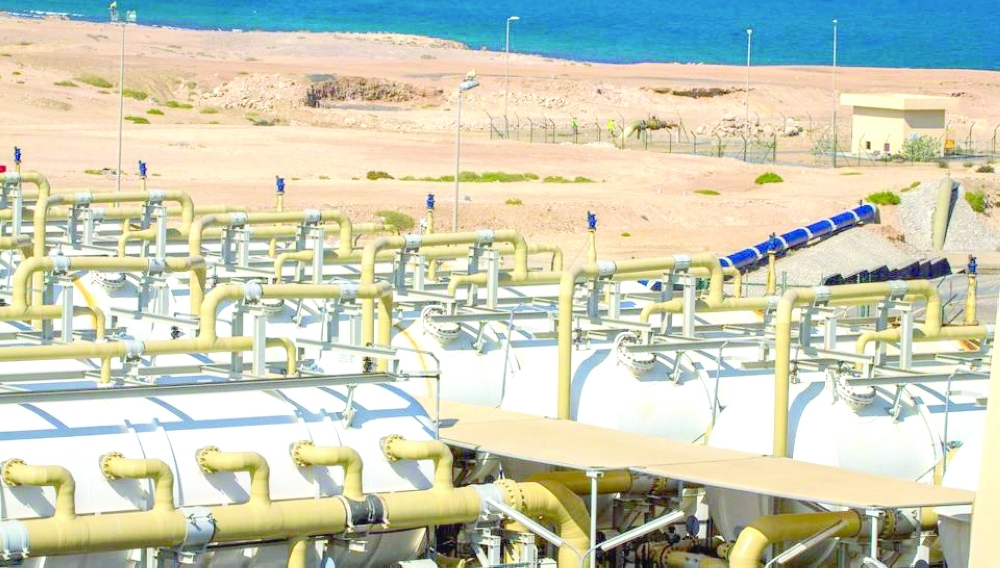
This includes its management of the operations and assets of Sur Desalination Plant (SDP) in Al Sharqiyah; the raw and wastewater treatment plants of BP Khazzan Gas Field; the Salalah Independent Water Project (VFN); and several packaged reverse osmosis solutions in Tiwi, Qalhat, Adam, Owiefiya, Al Zahiya, Burhan, Qarn Al Alam and Khowayma & Quhaid, that bring high quality water to customers in remote and rural areas.
Protecting Oman’s rich biodiversity
Apart from water resources, SDG 15 – dedicated to preserving natural ecosystems and reducing biodiversity loss – is also directly relevant to the country. Oman is one of the most biodiverse countries in the region, which contributes significantly to the Sultanate of Oman's economy and must be robustly protected.
Projects such as Veolia’s Sur Desalination Plant, which produces 130,000 m3 per day of drinking water, offer great examples of marine biodiversity conservation through regular monitoring and eco-conscious design of the built-in underwater infrastructure, while ensuring abundant supply of one of the region’s most precious resources. Studies regularly carried out around the desalination plant site found that concentrations of marine life were actually higher near the site than in the surrounding environment, with the underwater infrastructure acting as an artificial reef.
But Veolia’s commitment to Oman’s sustainable growth doesn’t stop there. By renewing its partnership with the Environment Society of Oman (ESO), Veolia is proud to equip Omani youth to actively contribute to a sustainable future and raise awareness of environmental protection with the Namat School challenge and capacity building activities. These and more best practices and innovative strategies to mitigate future environmental challenges form the core foundation of Oman Sustainability Week.
Building a circular economy
Locally and globally, Veolia is also dedicated to pushing towards a circular economy through the recycling and reuse of waste products to create an economic system of closed loops. Recycling is crucial to reducing the amount of litter in natural environments and minimising its negative impact on animal and plant species, especially in large water bodies such as the Arabian Sea, Sea of Oman, and Arabian Gulf that border the Sultanate of Oman.
A key pillar of development that OSW seeks to highlight is supporting education within communities (SDG 4) through internal training programmes, internships and scholarships for local talent. Veolia has already taken the lead on this, investing in apprenticeship programmes for Omanis in electromechanical training and developing the skills necessary to operate plants. For example, 92 per cent of management staff at the water and waste treatment plants for the BP Khazzan Gas Field are Omani.
By convening a wide spectrum of private and public organisations, Oman Sustainability Week offers the opportunity for everyone to work towards fulfilling Oman Vision 2040 and the UN SDGs – a spectacular ecological transformation in which Veolia has emerged as a key catalyst.
Oman Observer is now on the WhatsApp channel. Click here