





A high-level national committee with representatives from 32 stakeholder entities has been constituted to oversee the nation’s drive to combat and mitigate the effects of climate change that threaten the menace the Sultanate of Oman as a result of global warming.
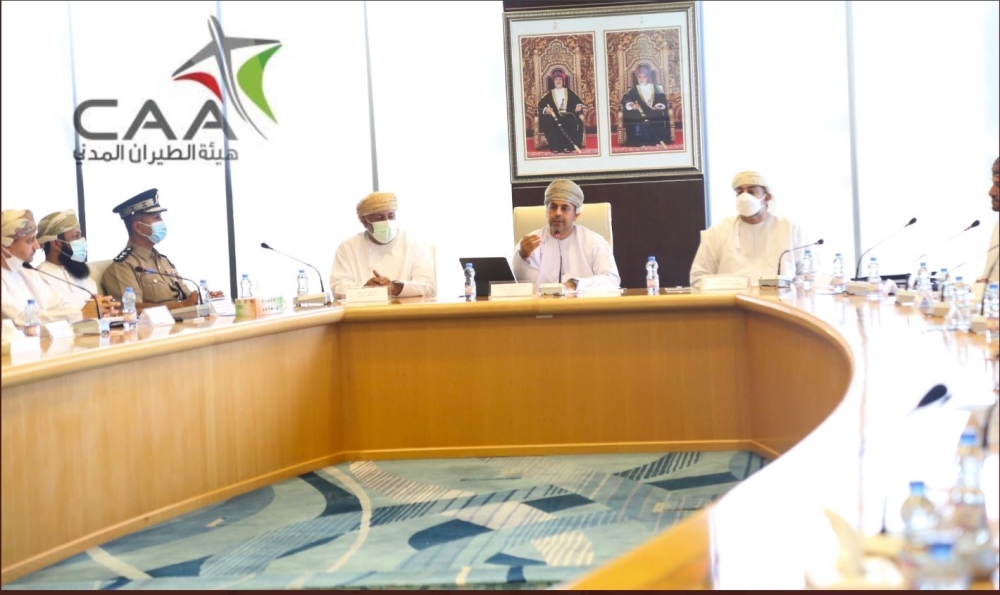
The National Committee for Climate Change and Protection of the Ozone Layer, set up under the auspices of the Civil Aviation Authority (CAA), held its maiden meeting recently to coordinate multi-sectoral efforts prepare the nation for the perils of global warming, Eng Nayef bin Ali al Abri (pictured), President – CAA (the designated authority for climate change issues) said.
Speaking at the ISRTC Conference on Monday, held as part of Oman Sustainability Week (OWS) events, Eng Al Abri said the national task force will support a “collaborative” response to climate change challenges in place of the current “scattered” efforts mounted by assorted agencies.
“Climate change poses a huge global threat, and Oman is not an exception. On the contrary, Oman has been very much impacted by climate change. The most recent example was Tropical Cyclone Shaheen in October 2021, but prior to that, seven cyclones scored a direct hit on Oman. Therefore, climate change is a reality, and we need to plan for and counter, this (phenomenon).”
According to the official, the Sultanate of Oman has made some headway in recent years in leveraging technology to offset impacts from greenhouse gases (GHG), alongside its planned large-scale pursuit of renewables to meet the country’s energy requirements. Examples of such progress include the rollout of smart energy metres, planned introduction of building codes, labelling of appliances based on their energy efficiency, mandates on use of LED bulbs and other initiatives.
“Thus, sector-wise, there is evidence that huge progress is being done – whether in energy (renewables and green energy), waste management (circular economy) and power (energy efficiency). Now’s the time to connect the dots – hence the intention behind the establishment of the National Committee for Climate Control. As a subset of that, we are creating a committee focused on finance, capacity building and tech transfer'', Eng Al Abri stated.
Part of the new high-level panel’s mandate is to chalk out concrete initiatives and programmes to achieve the goals of the National Strategy for Adaptation and Mitigation of Climate Change for the 2020-2040 period, said the official. That strategy, adopted by the Council of Ministers in 2019, is essentially a framework that needs to be underpinned by specific programmes to achieve climate mitigation commitments.
One such commitment, enshrined in the 2nd Nationally Determined Contributions (NDCs) submitted by the Omani government to the UN Framework Convention on Climate Change (UNFCCC), pledges a 7 per cent reduction in GHG emissions (compared to the Business As Usual scenario). This equates to a commitment to offsetting an estimated 9 million tonnes/year of CO2 annually by this date, he said.
Contributing to this target are a number of ongoing initiatives, notably the National Energy Strategy which seeks to secure at least 20 per cent of the nation’s energy requirements from renewable sources by 2027. The energy sector (encompassing Oil & Gas, power and water desalination) accounts for around 64 per cent of GHG output in the Sultanate of Oman, said Eng Al Abri, followed by industry, with the waste sector and agriculture in the third and fourth positions respectively.
Oman Observer is now on the WhatsApp channel. Click here