




BRUSSELS: European Union leaders are set to agree on Thursday to phase out their reliance on Russian fossil fuels, although countries are divided over whether to immediately sanction oil and gas imports as Moscow wages war in Ukraine.
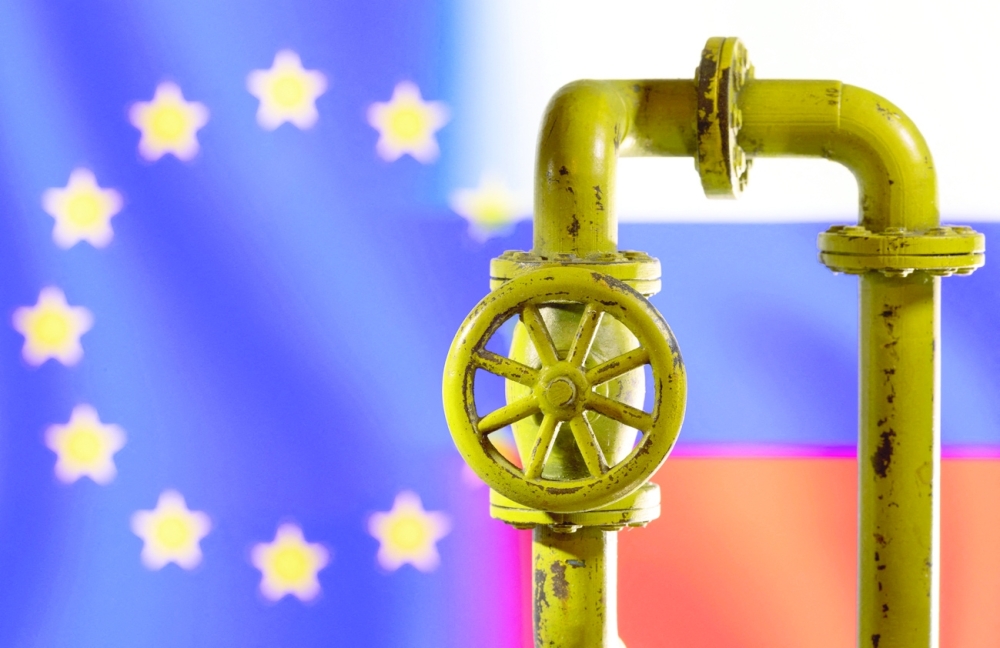
Russia's attack prompted Brussels on Tuesday to publish plans to cut reliance on Europe's top gas supplier this year and end it within the decade.
As part of a two-day summit in Versailles, France, the leaders are expected to agree to phase out the EU's dependency on imports of Russian gas, oil and coal, without a fixed date, according to a draft statement.
One EU official, asking not to be named, said some nations were asking for 2030, others 2027, and some now.
The leaders will agree to take steps to cut reliance on Russian energy, including by increasing liquefied natural gas (LNG) imports and deploying renewable energy faster. They will also ask the European Commission to draw up a detailed plan on how to implement such measures, the draft said.
Countries are split, however, on whether to sanction Russian oil and gas. The United States, which is a leading exporter of LNG, banned imports of Moscow's oil and gas on Tuesday.
EU countries are far more dependent on Russian energy, relying on Russia for 40 per cent of their collective gas needs, 27 per cent of oil imports and 46 per cent of imported coal.
So far, the EU has focused its sanctions on banks and oligarchs, banned Russian aircraft from EU airspace and halted technology exports.
Some countries are pressing for an energy embargo. "If we were to stop the purchase of Russian energy, that would stop the funding of the Russian military machine,” Latvian Prime Minister Krisjanis Karins said on Thursday. "If not tougher sanctions now, then when?" Karins said.
A Polish diplomat said: "Ukrainians are paying with their own blood" for Europe's energy purchases from Russia.
Germany and Hungary are among the countries opposing a fossil fuel embargo, which would cut off hundreds of millions of euros per day to Russia, but would also thump Europe's economy and push soaring energy prices even higher.
"While we condemn Russia's armed offensive and we also condemn the war, we will not allow Hungarian families to be made to pay the price," Hungary's prime minister Viktor Orban said on Tuesday.
Russian gas flows to Europe have continued at a steady pace since the attack, which Russia calls a "special military operation", began on February 24, but Moscow has said Western sanctions on its oil could prompt it to close a major gas pipeline to Europe.
Thursday's draft statement also said Brussels should produce a plan this month "to ensure security of supply and affordable energy prices during the next winter season".
With energy prices soaring across Europe, some countries want more action to contain them. "There must be a cap, a European ceiling, on wholesale gas prices," Belgian Prime Minister Alexander de Croo told the De Standaard newspaper on Thursday.
Other countries say capping energy prices would undermine the incentive to invest in renewable energy or LNG projects to help countries quit Russian gas. (REUTERS)
Oman Observer is now on the WhatsApp channel. Click here