




SMEs in Oman is entering a distinct zone as entities are moving from strictly trade to professional services.
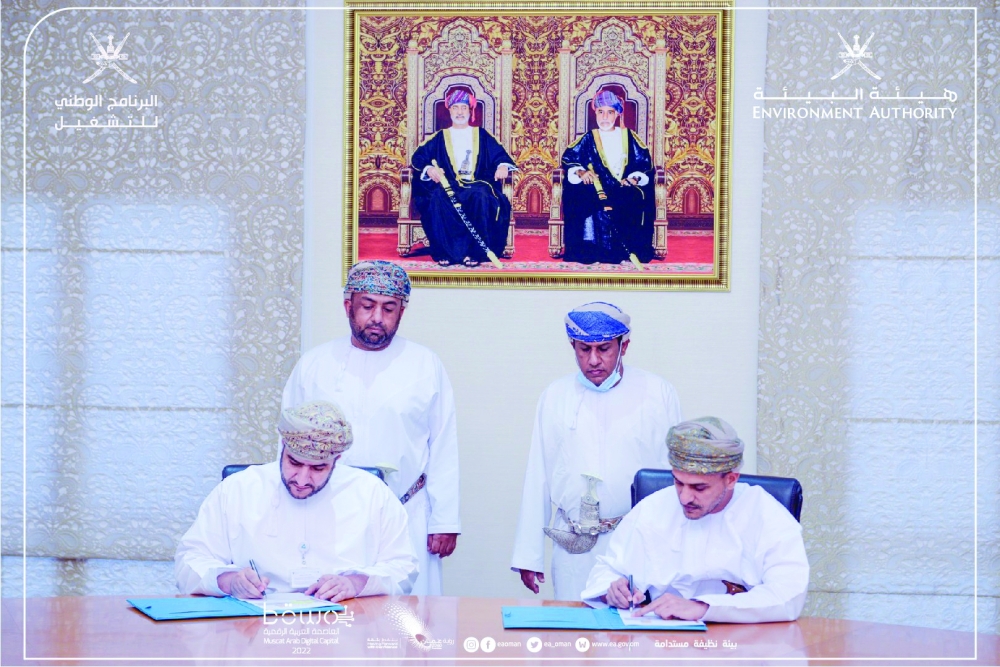
On Wednesday, the Environment Authority Oman and the National Employment Programme signed an agreement to privatise the Environmental Inspection in the concession areas.
Dr Abdullah al Omari, President of the Authority, signed the agreement with Dr Mansoor bin Talib al Hinai from the National Programme for Employment.
The signing of the agreement aims to launch an initiative to privatise the first phase of the environmental regulatory inspection sector, whereby the oil and gas inspection sector will be privatised and assigned to small or medium sized enterprises to provide job opportunities for environmental specialists to carry out oil and gas inspections.
According to the Authority sources, the latest development is to enhance the operational efficiency of environmental control and in line with Oman Vision 2040 vision as per governance and institutional performance. As per the plan, the specialists from the Authority will also periodically follow up with the concerned institutions assigned with the duty and its operational team to ensure they are on track as per the regulations and objectives.
Experience of SMEs
There are SMEs by qualified individuals who have been successful in securing projects opting to go independent after gaining experience in their chosen fields. The path has not been easy with the offset of the pandemic for two years.
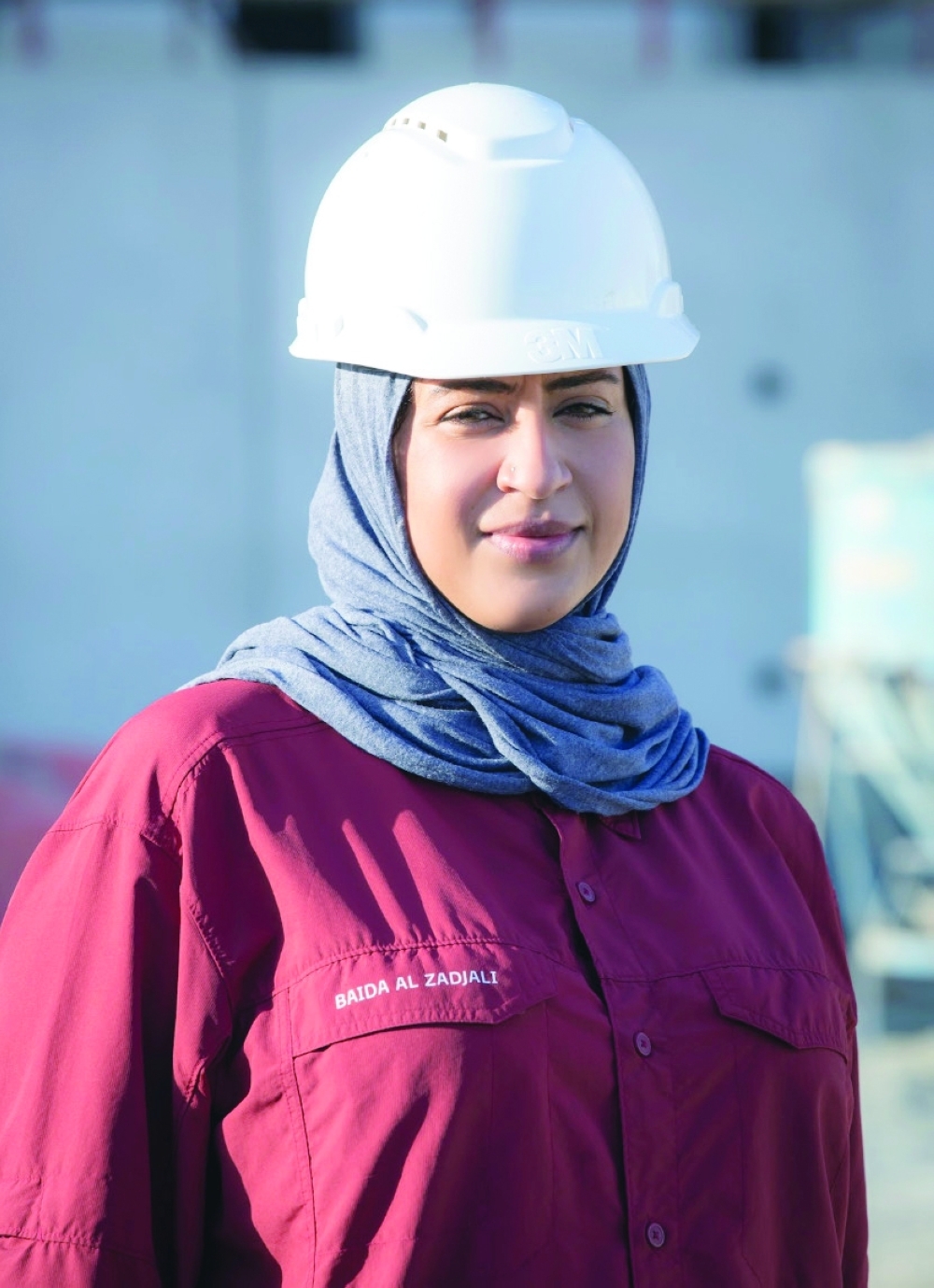
Baida al Zedjali studied electronics and communication engineering in the UK. After graduation, she moved on to attain a master in engineering project management at the University of Leeds.
She just felt natural to be a project manager, specifically in the construction industry, and when she returned to Oman, she continued working in a lot of organisations as a project manager.
And when she felt it was time to take this a step further, she teamed up with her sister, who was an architecture engineer. Thus began their project MEEZAH.
Baida, the partner and senior project manager at MEEZAH Engineering and Project Management Consultants, said, “We do project management consultancy for construction and specifically for cultural projects. It's very specialised and we really enjoy delivering successful projects. And it's interesting because both of our professions complement each other. Actually this is what happens in the business. There are a lot of technical aspects of the business in terms of leading the project teams, working specifically on the cultural projects. Being an entrepreneur is like I am working as a project manager, but I'm also working as a business owner. You are not like a big corporation where you have a marketing team, a business development team and a finance team. As entrepreneurs, we have to do everything ourselves.”
However, she points out that it is a very quick learning curve.
“It is very interesting because it's very different to what I experienced previously in the corporate world.”
The sisters’ project management company was responsible for delivering the Pavilion Expo 2020.
“We are very proud of this project because it is obviously a project of national importance and it is an international project. We are also working on the archaeological center with the Ministry of Heritage and Tourism. It is another very exciting project because it is an archaeological center that will obviously be open for visitors at some point in the future."
Would she recommend entrepreneurship to others?
“I would say that it doesn't work for everyone, but if it does work for someone it is perfect. It is really good for me personally. I always knew that I wanted to be self-employed because I always felt that I was not working to my full capacity in a lot of the places that I was working in. It is not necessarily anyone's fault but just the way things are set up in the corporate world. You have a specific job and you have to deliver your job. Now, obviously, saying that, one has to realise that there are a lot of challenges because he/she has to be self-disciplined. If you are a person that likes jobs, security, obviously being self-employed is not something that would work for you.”
Covid-19 proved out to be one one of the biggest challenges business models had not thought about.
“Before deciding to go down the route of entrepreneurship you need to know if this is something that they really want to do and also study the market. Now, you have some interesting concepts. What is important is - accept, assess and maximise. Even within ourselves, I think that, you know, for us to develop, to improve, to grow, I think the first thing is that we need to accept our failures. A lot of people find it difficult because it hurts your ego a little bit. But I think this is necessary, you know, to accept that,” she said.
The second part is assessing why one is not good at this?
“We also need to know what we are good at and need to maximise our skills. And then the anything that is falling in between, we need to find a way to develop that skill and maybe employ someone that can do that to fill the gap and to do that we need to maximise on what we have and ensure that whatever is not covered we would find a solution for it because if we do not, then we can never grow and develop.”
According to her, what people need to realise is that SMEs include a huge sector of businesses.
“And we're not talking only about the micro businesses and I feel there's a lot of emphasis on these businesses that are selling stuff. Food, clothes etc. There is a lot of support for that segment. But then people like us return to service, business or supplies may not be visible at first,” she said.
“We need to be given the opportunity to prove ourselves to get the experience to ensure we do not get caught in Catch-22 like situation which the fresh graduates fall into - we cannot give you the job because you do not have much experience.”
She said that the business community itself must be ready to take this initiative and not just wait for the government to bring up more opportunities.
“So our idea is that since we're working in the government project, I think it's only fair that we take someone to work with from the respective area where the project is located. If I cannot employ them, at least I give them training and they work on a project in their governorate, and it has a different feel because, you know, they are more connected to this project," she pointed out.
@lakshmioman
Oman Observer is now on the WhatsApp channel. Click here