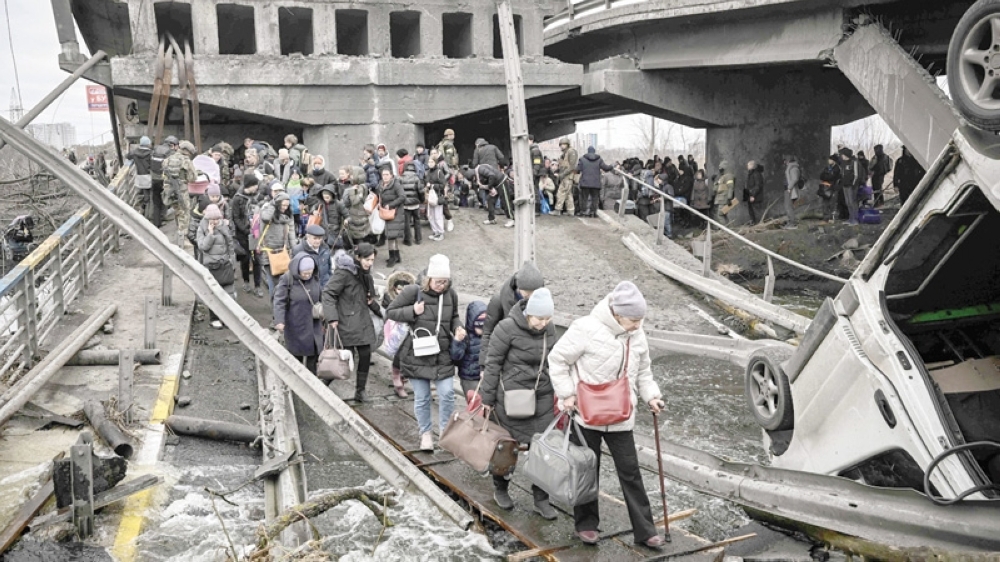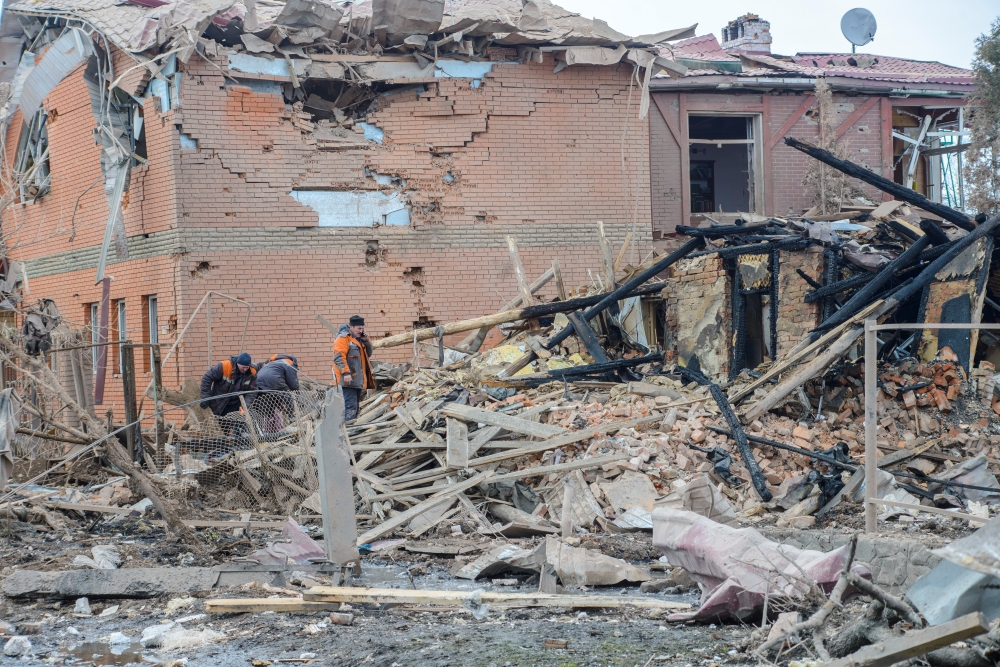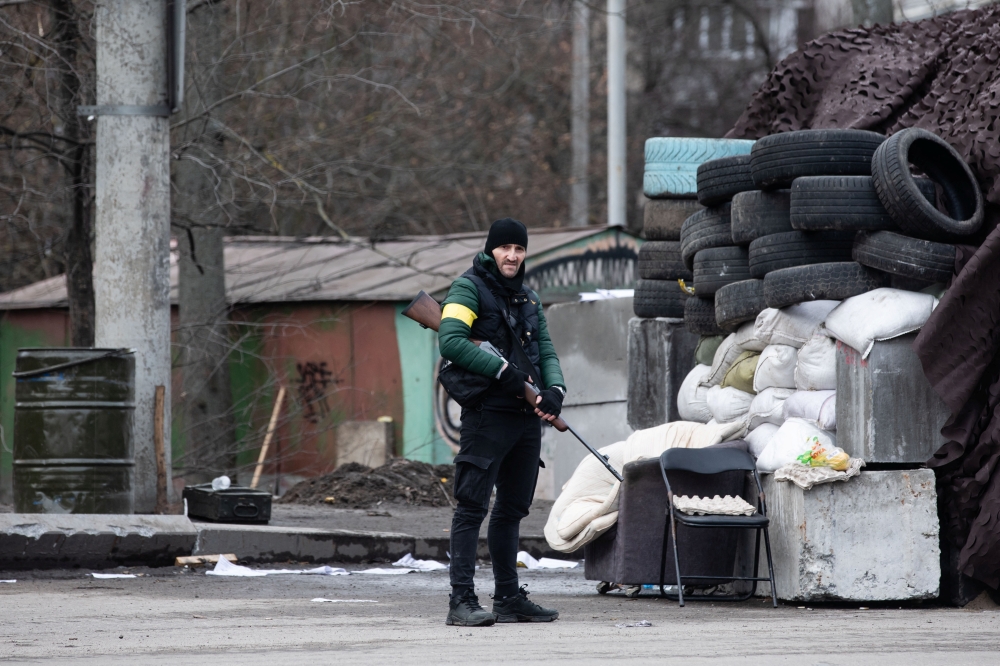





Russia said on Saturday that its forces would stop firing around two Ukrainian cities to allow civilians to leave. Following is what we know so far.
* Russia's defense ministry said on Saturday that a "regime of silence" would be observed on Saturday around Mariupol and Volnovakha to allow civilians to leave. It said it had been agreed with Ukraine.
The phrase used in Russian is slightly different from the accepted translation of ceasefire but means essentially the same. Russian news agencies translated it into English as "ceasefire".
"From 1000 am Moscow time (0700 GMT), the Russian side declares a ceasefire and the opening of humanitarian corridors to allow civilians to leave Mariupol and Volnovakha," Russian news agencies quoted the Russian defense ministry as saying.
It was not immediately clear why other Ukrainian cities were not involved.
An adviser to Ukraine's interior ministry said there would be agreements on humanitarian corridors for other cities.
* Ukraine said it planned to evacuate 200,000 people from Mariupol and 15,000 from Volnovakha. The Red Cross is the guarantor of the ceasefire, according to Ukraine.
Ukraine's Minister for Reintegration of Temporary Occupied Territories, Iryna Vereshchuk, said the government was looking into reports from the Ukrainian military that the Russian troops were using the ceasefire to advance towards Mariupol.
* Mariupol city authorities urged civilians to leave.
"When our home city is constantly under the ruthless fire of the occupiers there is no choice other than to allow residents - us - to leave Mariupol safely," Mayor Vadim Boichenko said on Telegram.
The route of the corridor is Mariupol - Nikolske - Rozivka - Polohy - Orikhiv - Zaporizhzhia.
* Russia's defense ministry spokesman said a broad offensive continued against Ukraine.
The ministry said 82 Ukrainian aircraft, 708 tanks and other armored vehicles, 74 multiple rocket launchers, and 56 drones had been destroyed, RIA said.
"The armed forces of the Russian Federation continued to carry out strikes on the military infrastructure of Ukraine," Defence Ministry spokesman Igor Konashenkov said.
He said forces from Donetsk were continuing to tighten the encirclement of Mariupol. Russia did not disclose combat losses.
* Ukraine said Russian combat deaths since the Feb. 24 start of the invasion were more than 10,000 and that it had destroyed 269 tanks.
*Russia blocked Facebook and some other websites and passed a law that gave Moscow much stronger powers to crack down on independent journalism, prompting the BBC, Bloomberg, and other foreign media to suspend reporting in the country.
* The Zaporizhzhia nuclear plant - Europe's biggest - was undamaged by what U.N. nuclear chief Rafael Grossi said he believed was a Russian projectile. Moscow blamed Ukrainian saboteurs for the attack.
* The Biden administration is considering cutting U.S. imports of Russian oil and ways to minimize the impact on global supplies and consumers.
* The eastern Black Sea port is without water and heating, and food is scarce, its mayor said, appealing for military help. "We are simply being destroyed." * Ukraine still has most of its warplanes Ukraine retained a "significant majority" of its military aircraft nine days after the invasion started, a U.S. defence official said.
* Bread prices to be forced up by war Russia's invasion of Ukraine, one of the world's biggest wheat growers, will drive up the price of bread, eroding food security for millions of people, the World Food Programme said.
* Ukrainians seek asylum at U.S.-Mexico border A growing number of Russians and Ukrainians are traveling to Mexico, buying throwaway cars, and driving across the border into the United States to seek asylum.
Singapore, in a rare move by the Asian financial hub, is sanctioning four Russian banks and banning exports of electronics, computers, and military items.
Microsoft Corp, Birkin bag maker Hermes, Cartier owner Richemont and Danish brewer Carlsberg all took steps against Russia.
Ambassador to the UN Linda Thomas-Greenfield said the world had narrowly averted a nuclear catastrophe. She warned an emergency Security Council meeting of "imminent danger", saying the attack reflected a "dangerous new escalation" in Russia's invasion.
After NATO rejected Ukraine's appeal for no-fly zones, President Volodymyr Zelenskiy said, "It was clear that not everyone considers the battle for Europe's freedom to be the number one goal."
Investors run for cover Stock prices weakened globally, and safe-haven assets were in demand. The rouble ended the week down more than 20% as Russia's economy buckles under the pressure of sanctions.
Oman Observer is now on the WhatsApp channel. Click here