




With sharp contrasts and unbelievable similarities, Romania has been attracting an increasing number of tourists from the Sultanate of Oman while Oman’s rugged mountains and plains and sands have proved to have an impact among the Central Eastern European country.
Just as Oman boasts of towering castles, breathtaking caves and ancient cities, Romania’s preserved medieval towns which include Sighişoara, and the fortified churches and castles, predominantly clifftop Bran Castle, long associated with the Dracula, are objects of global tourism curiosity.
While Oman’s traditional cities like Nizwa and Bahla are home to traditional pottery and artefacts, Romania has a rich pottery culture that is transcended from generations.
Contrastingly, the vast plains and expanse of the deserts distinguish the Sultanate of Oman, Romania is known for the forested region of Transylvania, ringed by the Carpathian Mountains.
These common features and contrasts that make the two which have long 48 years of relations stand out from the rest have indeed made them closer to each other, and the newly opened embassy of Romania in Muscat has been helping the relations flourish between the two.
“We believe that the opening of the Romanian Embassy in Muscat in 2018, represents a genuine proof of our willingness to enhance and diversify the friendly relations with Oman and we spare no stones unturned to promote bilateral boost tourism, visits to Romania by delegations of Omani businessmen and entrepreneurs and assure the possibilities of Omani students to study at Romanian Universities’’, said Mircea Mircea, Chargé d’affaires.
“I would like to re-emphasise that the Embassy of Romania in Muscat makes every possible effort to assure to Omani people the possibility to travel, study and research in Romania and the opportunity to improve their knowledge about Romania and to develop an economic partnership with Romanian contractors’’, Chitic added.
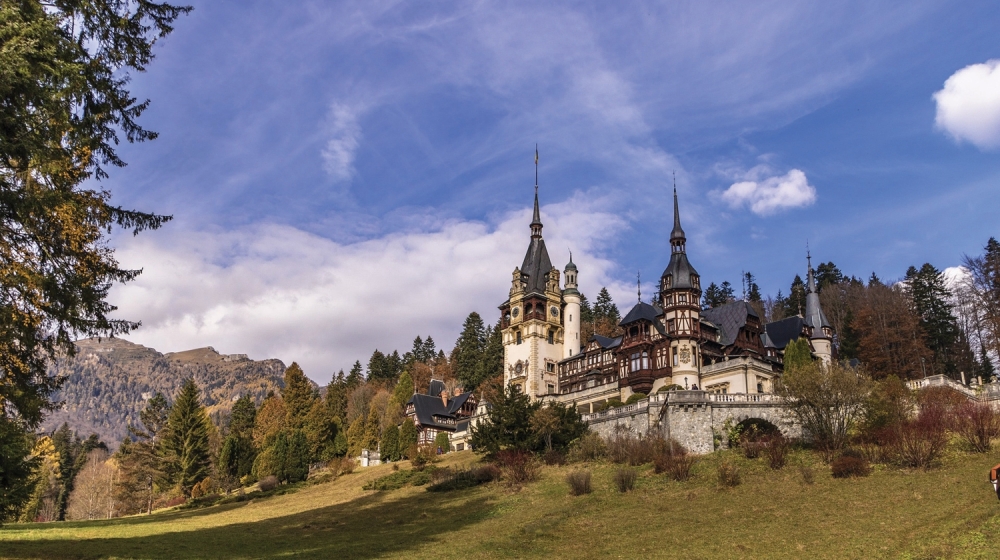
At the crossroads of Central and Eastern Europe, Romania is perhaps best known for its Black Sea resorts and the Danube Delta, listed by Unesco as a World Heritage Site for its rich wetlands and abundant bird-life. Besides that, Romania offers other great vacation experiences: medieval towns in Transylvania, the world-famous Painted Monasteries in Bucovina, traditional villages and churches in Maramures, the magnificent architecture of Bucharest, fairy-tale castles and the majestic Carpathian Mountains.
Romania is a country with rich biodiversity (ecosystems, species and genetic diversity) and a high percentage of natural ecosystems — 47 per cent of the land area of the country is covered with natural and semi-natural ecosystems. The natural integrity of forest ecosystems is indicated by the presence of the full range of European forest fauna, including 60 per cent and 40 per cent of all European brown bears and wolves, respectively. Europe’s largest wetland, the Danube Delta, also lies predominantly in Romania.
Rural tourism is a new phenomenon and an old one at the same time. Rural tourism represents one of the first ways of tourism manifestation in Romania. It was known since early times, along with travelling, horse or nautical tourism.
The Romanian community in Oman represents a bridge between the two nations, providing the impulse for economic, social and cultural exchanges with mutual benefit and according to him, Romania’s interest in the preservation of the cultural, linguistic and spiritual identity of the Romanian community in Oman.
@kabeeryousef
Oman Observer is now on the WhatsApp channel. Click here