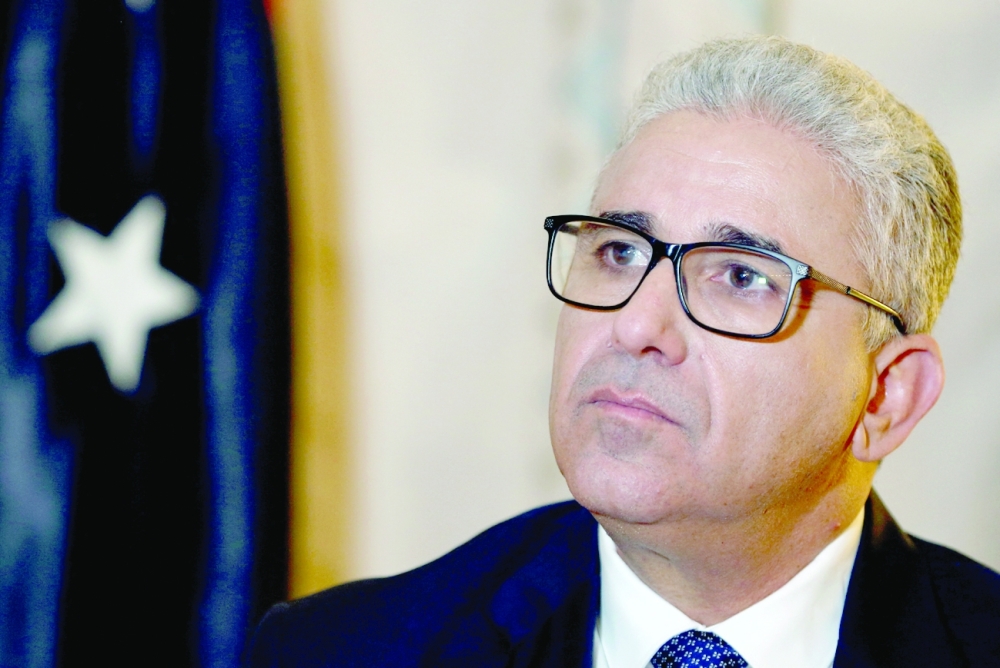





Tripoli: The parliament of war-torn Libya on Thursday appointed a former interior minister as prime minister, a challenge to interim premier Abdulhamid Dbeibah's administration.
"The House of Representatives unanimously approved Fathi Bashagha to head the government," the parliament's spokesman Abdullah Bliheg said in a tweet.
The move threatens to spark a new power struggle between the eastern-based assembly and Dbeibah's administration based in Tripoli, in western Libya.
The tycoon, appointed a year ago as part of United Nations-led peace efforts, has vowed only to hand power to a government produced by the ballot box.
His administration had a mandate to lead the country to elections on December 24, but they were cancelled amid bitter divisions over their legal basis and the candidacies of several controversial figures.
Parliament speaker Aguila Saleh, who like Dbeibah and Bashagha had been a presidential candidate, has since spearheaded efforts to replace the unity government.
The assembly had considered seven candidates to lead the administration, but shortly before Thursday's confirmation vote, Saleh had announced that Bashagha's only remaining contender, former interior ministry official Khaled al-Bibass, had withdrawn from the race.
The live television feed cut just before the vote took place.
In a televised address on Tuesday, Dbeibah had vowed he would "accept no new transitional phase or parallel authority" and declared he would only hand over power to an elected government.
Both Bashagha and Dbeibah have the support of rival armed groups in the Libyan capital.
The UN, western powers and even some members of parliament have called for Dbeibah to stay in his role until elections, for which a new date has not yet been set.
Thursday's vote threatens a repeat of a 2014 schism which saw two parallel governments emerge.
The parliament is seeking to take control of Libya's political future after the collapse of an election that was planned for December, saying Dbeibah's interim government is no longer valid and pushing any new election back until next year.
Dbeibah said on Tuesday he would cede power only to an elected government and rejected the parliament's moves to replace him.
Analysts say the result of Thursday's moves could be a return to the years of division that seemed set to end last March with the installation of Dbeibah's unity government.
Before that time, parallel governments operated in western and eastern Libya, backed by different warring factions.
However, while rival armed forces have mobilised inside Tripoli in recent weeks, analysts say the political crisis will not necessarily translate into fighting soon.
The UN Libya adviser and Western countries have said Dbeibah's Government of National Unity remains valid and have urged the parliament to focus instead on bringing elections forward.
Nearly 3 million Libyans signed up to vote in the December election, and the political jostling and delays that have followed have infuriated and frustrated many of them.
Critics of Parliament Speaker Aguila Saleh have previously accused him of chicanery in pushing through laws or decisions without proper votes.
Some 132 parliament members attended Thursday's session and they voted to confirm a move to redraft Libya's temporary constitution in consultation with another body, the High State Council.
However, as a vote on the new prime minister approached, Saleh said Bashagha's rival in the contest had withdrawn. The session was briefly suspended and the parliament spokesman then announced that Bashagha had been selected.
The move to appoint a new prime minister may not immediately trigger a confrontation with Dbeibah and the GNU, however, as it may take some time for Bashagha to form a government acceptable to a majority of lawmakers.
Still, it underscores the fragility of Libya's attempted transition as rival factions work to prevent any rival from growing too powerful.
A source close to Dbeibah said on Thursday night that he had survived an assassination attempt when bullets struck his car hours before the parliamentary vote, but there was no immediate official or public statement to confirm that. — Agencies
Oman Observer is now on the WhatsApp channel. Click here