




A whitepaper published by a leading regional strategic consultancy group has urged the Omani authorities to consider establishing a unifying body to help achieve a robust and sustainable water, energy and food nexus for the country.
The proposal is among 10 recommendations listed in the latest whitepaper of The Gulf Intelligence (GI), a Dubai-based think-tank, as part of a series of special reports focusing on different aspects of the Oman Energy Master Plan 2040.
The report, titled ‘The Water-Food-Energy Nexus: How to find Sustainable & Holistic Solutions for Oman?’ is based on discussions held with key decision-makers representing stakeholder organisations operating across the water, food and energy ecosystem in the Sultanate of Oman.
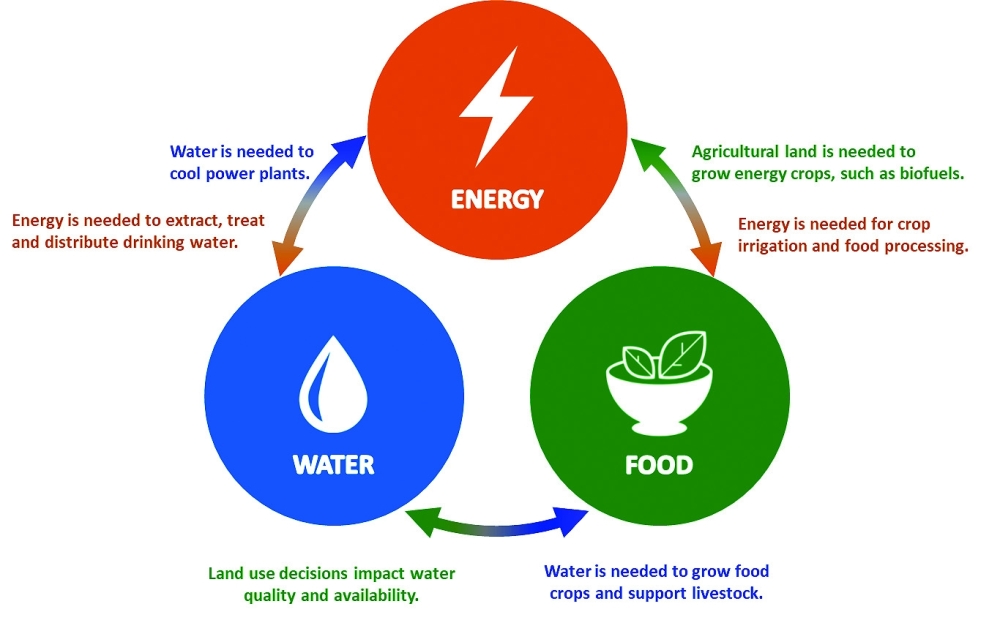
The water-food-energy nexus is built around the premise that water security, food security and energy security – all imperatives of sustainable development – are interlinked. Consequently, any actions taken in support of one goal will likely have an adverse impact on the others. Hence the need to achieve a balanced nexus between the three imperatives.
According to GI’s whitepaper, efforts to strengthen the water-food-energy nexus in the Sultanate of Oman are “siloed”, with each aspect of the nexus managed by different ministries and public entities that fail to collaborate with each other
To address this shortcoming, the whitepaper calls for the creation of a unifying body – essentially an “overarching framework that is created, monitored, and updated by the collaborative spirit of representatives of all three sectors would bolster knowledge-sharing, strengthen risk mitigation, and boost innovation”. A unifying body, the report further adds, will also make the Sultanate of Oman’s “international offering more competitive and it would help the Sultanate attract more international business”.
Importantly, the report stresses the need for water, food and energy systems to be redesigned to support investment in local circularity. “This must also promote local solutions: local production, local talent, and local off-takers. In part, this means gradually transitioning away from the dominant centralised system, where there is one supplier of power, one supplier of fuel, one supplier of water, and so on,” it stated.
In this regard, the Gulf Intelligence report noted the need for key stakeholder agencies, notably Oman Investment Authority, which has major investments in the food and fish processing sectors, and the Ministry of Energy and Minerals, to work more closely together to “develop joint policies that create a circular value chain”.
Further, with a view to strengthening water security, the report calls for enhanced efforts to track and map the nation’s groundwater reserves, while planning its water management processes.
In support of circularity, the report for waste to be relabeled as raw materials with the goal of encouraging recycling and reuse, and thereby creating new jobs, driving innovation and In-Country Value development, and job creation as well.
Among other recommendations, the report underlines the need for greater public awareness on strengthening the nexus. “This is especially crucial for Oman’s large youth population,” the whitepaper explained. “Crafting stronger ecosystems for training and job opportunities will help unleash more entrepreneurship and enable youngsters in classrooms and the workplace to “see” a career in supporting the nexus, which also feeds ICV back into the community.”
Participating in the discussions that contributed to the whitepaper were, among others: Eng Saleh al Shanfari, Group CEO, Oman Food Investment Holding Company (OFIC); Abdulrahman al Yahyaei, CEO, Oman Society for Petroleum Services (OPAL); Eng Zaher al Sulaimani, President, Oman Water Society; Steve Phimister, Managing Director, PDO; Walter Simpson, Managing Director, CC Energy Development (CCED); Steve Kelly, President & General Manager, Occidental of Oman; Dr Saif al Haddabi, Under-Secretary of the Ministry of Higher Education, Research and Innovation; Prof Saif Nasser al Bahry, Director, Oil and Gas Research Center, Sultan Qaboos University (SQU); and Dr Syham Bentouati, Managing Director, NAFAS International.
@conradprabhu
Oman Observer is now on the WhatsApp channel. Click here