


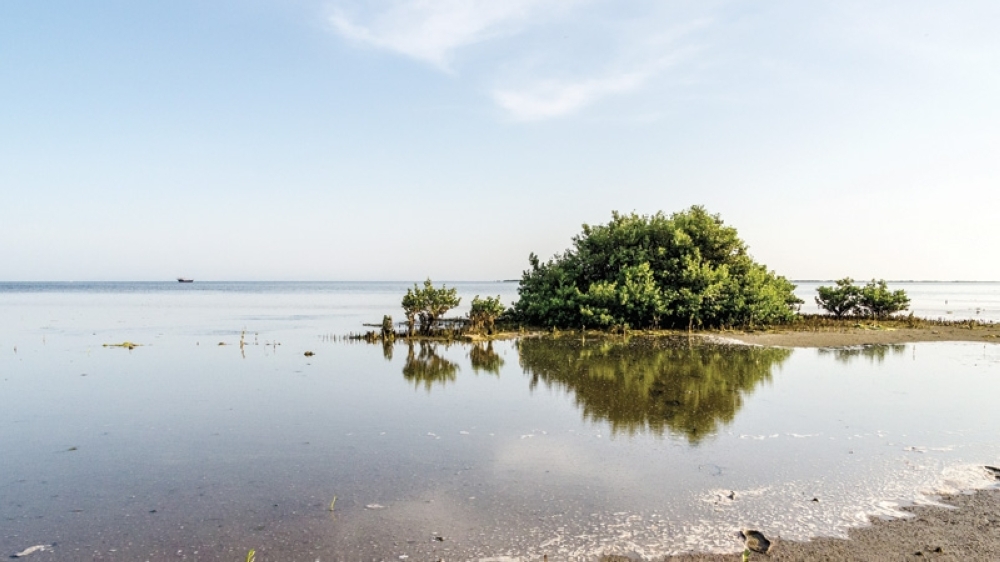





February 2 is celebrated as World Wetlands Day every year to create awareness about the wetlands’ vital role in preserving biodiversity.
On February 2, 1971, in Ramsar, Iran, the Convention on Wetlands was adopted and brought into focus the need to protect the world’s wetlands.
February 2, 2022, however, has its unique importance because this is first time the World Wetlands Day is being observed as a United Nations International Day, the decision for which was taken by the General Assembly through a resolution co-sponsored by 75 member states.
With the participation of 171 national governments, by July 2021, Ramsar sites recorded 2,424 sites that protected 629,149,070 acres of wetland.
According to Ramsar.org, the convention on Wetlands came into force in the Sultanate of Oman on August 19, 2013, by designating Qurum Nature Reserve as a Wetland of International Importance.
The Environment Authority of the Sultanate of Oman stated that the nation is observing the World Wetland Day along with the world with working to protect land for the benefit of people and nature, theme. The Day emphasises measures to ensure conservation and sustainable use of wetlands for the benefits of human health and safety of the earth.
A wetland in the Sultanate of Oman that holds great international prominence as it meets all the nine criteria is Barr al Hikman.
A wetland can be considered of international importance if any of the nine criteria are met: “If it contains a representative, rare or unique example of a natural or near natural wetland type found within the appropriate bio geographic region; it supports vulnerable, endangered species or threatened ecological communities; it supports plant and/or animal species important for maintaining the biological diversity of a particular bio geographic region; it supports plant and/or animal species at a critical stage in their lifecycles, or provides a refuge during adverse conditions; it regularly supports 20,000 or more water birds; it regularly supports one per cent of the individuals in a population of one species or subspecies of water bird; it supports a significant proportion of indigenous fish subspecies, species or families, life-history stages, species interactions and/or populations that are representative of wetland benefits and/or values and thereby contributes to global biological diversity; it is an important source of food for fishes, spawning ground, nursery and/or migration path on which fish stocks, either within the wetland or elsewhere, depend; and it regularly supports one per cent of the individuals in a population of one species or sub species of wetland-dependent non avian animal species.”
As Barr al Hikman met all nine criteria, it has been classified as Wetland Area of International Importance under the International Ramsar Convention.
Barr al Hikman has been described as the jewel of the West Asian-East African flyway, the least known flyways of the African-Eurasian region. This is where the migratory birds rest, feed, and nest during winter as thousands of them arrive from arctic Russia and Central Asia. On the other hand, it is an important nesting area for many waterbird species from East and west.
The book, Barr Al Hikman: Shorebird paradise in Oman, jointly authored by Jimmy de Fouw, Roeland Bom, Andrew Thorpe and Raymond Klaassen with Ward Hagemeijer from Wetlands International, described Barr al Hikman in great depth.
“Comprised of intertidal mudflats, reefs, ‘Sabkhas’ or salt flats and associated coastal wetlands, the Barr al Hikman peninsula in Al Wusta province in Oman is the most critically important area for waterbirds in the West Asian-East African flyway, sustaining over half a million water birds,” the book describes.
A voluntary group for the protection of the environment in the Sultanate of Oman, Basmatna Gheer, observed the day with awareness via social media channels and also emphasised on Barr al Hikman. The chairman of the group, Jihad al Farsi, said, the celebration comes with the aim of raising awareness on the importance that wetlands represent in human life and their vital functions for the planet.
“Environment is our life, and it is our responsibility to protect it and preserve it for the future,” said Al Farsi.
“Coastal wetlands are natural solutions to extreme weather events. The Sultanate of Oman has paid great attention to wetlands, as the wetlands reserve was declared a nature reserve by Royal Decree No 51/2,” their campaign stated.
Oman Observer is now on the WhatsApp channel. Click here


