




Sébastien Chauvin
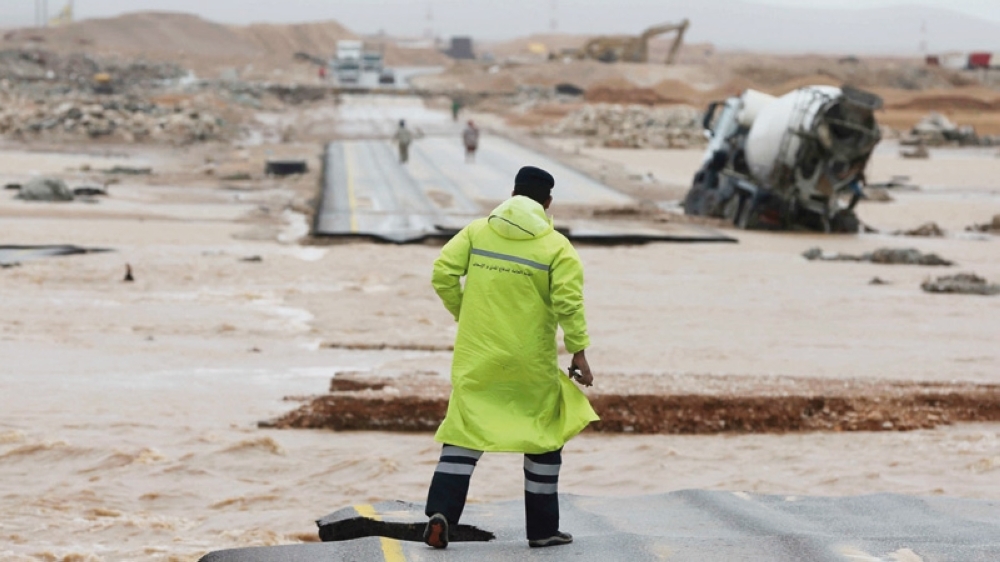
CEO, Veolia Middle EastAs we witness the effects of climate change around the world, never have environmental concerns been so instantly visible, or their consequences for our societies so real to people. We are seeing more extreme weather conditions, such as cyclones, flooding, droughts and wildfires, and rising ocean temperatures and the destruction of habitats are threatening the biodiversity of the natural world.
These issues are particularly pertinent to countries in the GCC, which are especially vulnerable to the effects of increasing global temperatures. According to research by Stratfor, sea-level rise will impact up to 35 per cent of the UAE’s population by the end of this century. Climate change also poses a threat to the region’s marine biodiversity, possibly endangering fisheries. By 2100, the amount of yellowfin tuna in the Arabian Sea, which is crucial to the Omani fish industry, is expected to decline between 28 and 65 per cent. Sustaining our current way of life without causing further harm to our planet will require a fundamental shift in our approach to waste and resource management — a process we call ecological transformation.
Ecological transformation means working to radically change patterns of production and consumption. It means placing ecology at the heart of every process and every assessment, and providing radical, meaningful solutions in partnership with all stakeholders.
We must also push towards a circular economy through the recycling and reuse of waste products to create an economic system of closed loops in which raw materials and products lose their value as little as possible.
Recycling waste to achieve a circular economy
The recovery of everyday waste such as plastic glasses and bottles, food packaging and boxes is a major ecological challenge. Only 9 per cent of plastics are currently recycled, and their proliferation is impacting significantly on both the environment and biodiversity. By adopting a circular economy approach, we can recover this waste and transform it into secondary raw materials to be reintegrated into the manufacturing cycle in place of virgin material. Recycling is crucial to reducing the amount of litter in natural environments, especially in seas and oceans, where plastic pollution is wreaking havoc on marine habitats, endangering animal and plant species and negatively affecting industries such as fishing and transportation.
Particularly in the area of plastics recycling, it is possible to treat several types of resins and reclaim them for reuse by manufacturers. For example, recycled bottles can be used to make new bottles from a material equally as good as virgin material, but with better environmental credentials, as manufacturing the recycled product emits less CO2 than when using virgin raw material.
Biowaste as a resource
Biowaste refers to biodegradable matter which can include anything from food waste such as vegetable peelings and cooking oils to garden waste like grass clippings, and even human sewage. Biowaste is a major source of the greenhouse gas methane when it breaks down, but managed correctly, it can instead be a source of energy or soil nutrients.
For example, vegetable or fruit peelings can be transformed into a new resource such as green energy or fertiliser. With the right collection, sorting and treatment processes, biowaste doesn’t have to be wasted at all. From collection to recovery, the waste can be managed throughout its life cycle before being transformed into green energy, organic compost or even animal feed. When composted, biowaste can contribute to biodiversity conservation through aiding habitat revitalisation efforts, nourishing soil, and decreasing greenhouse gas emissions, among other benefits.
Environmentally conscious water treatment
Representing just 2.5 per cent of all available water on the planet, freshwater is coming under ever-increasing pressure, largely thanks to population growth. To manage this, we must not only reduce consumption, but also develop solutions for reusing wastewater. Reuse is less costly than desalination or transporting drinking water, and offers societies a safe and effective way to reclaim an abundant resource in the form of high-quality water, for use in applications ranging from domestic consumption to agricultural and landscape irrigation.
However, treating wastewater isn’t always enough. In arid regions such as the Middle East, water availability is a crucial issue, making it very hard to satisfy local water needs with traditional resources. This is why deploying sustainable seawater desalination can augment available water resources, and reduce the burden on the natural water table.
One example of this is the Sur Desalination Plant (SDP), a major reverse osmosis desalination plant in the Al Sharqiyah Governorate of the Sultanate of Oman. Designed, built and operated by Veolia, the plant helps to fight the depletion of the region’s limited groundwater resource by producing 130,000 m3 per day of drinking water.
However, it is also important to monitor the ecological impact of desalination on marine and coastal ecology. In the design phase of the underwater infrastructure, in order to minimise the impact on marine biodiversity, the outfall structure was modelled through a dispersion software to show theoretical impacts of brine composition, turbidity and velocity.
The careful selection of the discharge design and the thorough flow modelling were essential to ensuring a suitable brine dispersion. Samples were taken over four months in both 2013 and 2014 of brine and seawater and compared to effluent quality requirements.
Comprehensive biodiversity studies were carried out in 2015 and 2019 in and around the surrounding area of the underwater infrastructure. The researchers were surprised to find that, in both studies, the concentrations of marine life were higher on the SDP site than in the surrounding environment. It was discovered that the underwater infrastructure acted as an artificial reef, with shelters offered by rocks used in the construction as well as by the artificial infrastructure itself, such as intake screeners, slabs and diffuser infrastructures, and the structure’s surfaces encouraged the growth of marine flora such as corals and seaweed. There were around 80 species of fish recorded, as well as a large number of coral colonies.
Sustainable future
All of this has proven that the recycling and reuse of waste and the implementation of sustainable resource management is possible with the right investment in the necessary research and technologies, and the development of climate-neutral and environmentally friendly infrastructure. While this does represent an initial cost, this price is minor compared to the economic and humanitarian costs of doing nothing at all.
The reality of climate change has made it a necessity to act quickly and decisively in order to mitigate and adapt to its effects, to create the best possible future for ourselves and for coming generations.
Ecological transformation should therefore be at the very core of our approach to human progress and development.
Oman Observer is now on the WhatsApp channel. Click here