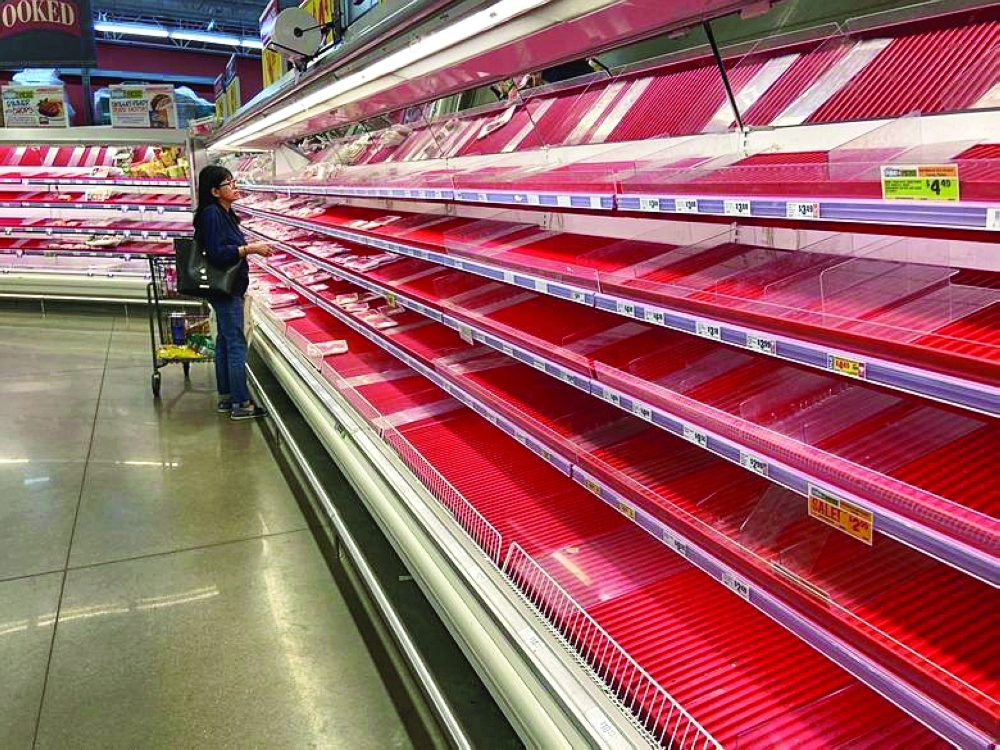





WASHINGTON: High demand for groceries combined with soaring freight costs and Omicron-related labor shortages are creating a new round of backlogs at processed food and fresh produce companies, leading to empty supermarket shelves at major retailers across the United States.
Growers of perishable produce across the West Coast are paying nearly triple pre-pandemic trucking rates to ship things like lettuce and berries before they spoil. Shay Myers, CEO of Owyhee Produce, which grows onions, watermelons and asparagus along the border of Idaho and Oregon, said he has been holding off shipping onions to retail distributors until freight costs go down.
Myers said transportation disruptions in the last three weeks, caused by a lack of truck drivers and recent highway-blocking storms, have led to a doubling of freight costs for fruit and vegetable producers, on top of already-elevated pandemic prices. "We typically will ship, East Coast to West Coast – we used to do it for about $7,000," he said. "Today it’s somewhere between $18,000 and $22,000." Birds Eye frozen vegetables maker Conagra Brands' CEO Sean Connolly told investors last week that supplies from its US plants could be constrained for at least the next month due to Omicron-related absences.
Earlier this week, Albertsons CEO Vivek Sankaran said he expects the supermarket chain to confront more supply chain challenges over the next four to six weeks as Omicron has put a dent in its efforts to plug supply chain gaps.
Shoppers on social media complained of empty pasta and meat aisles at some Walmart stores; a Meijer store in Indianapolis was swept bare of chicken; a Publix in Palm Beach, Florida was out of bath tissue and home hygiene products while Costco reinstated purchase limits on toilet paper at some stores in Washington state.
The situation is not expected to abate for at least a few more weeks, Katie Denis, vice president of communications and research at the Consumer Brands Association said, blaming the shortages on a scarcity of labor.
The consumer-packaged goods industry is missing around 120,000 workers out of which only 1,500 jobs were added last month, she said, while the National Grocer’s Association said that many of its grocery store members were operating with less than 50% of their workforce capacity. — Reuters
Oman Observer is now on the WhatsApp channel. Click here