




Dr Mohammed Shafiuddin
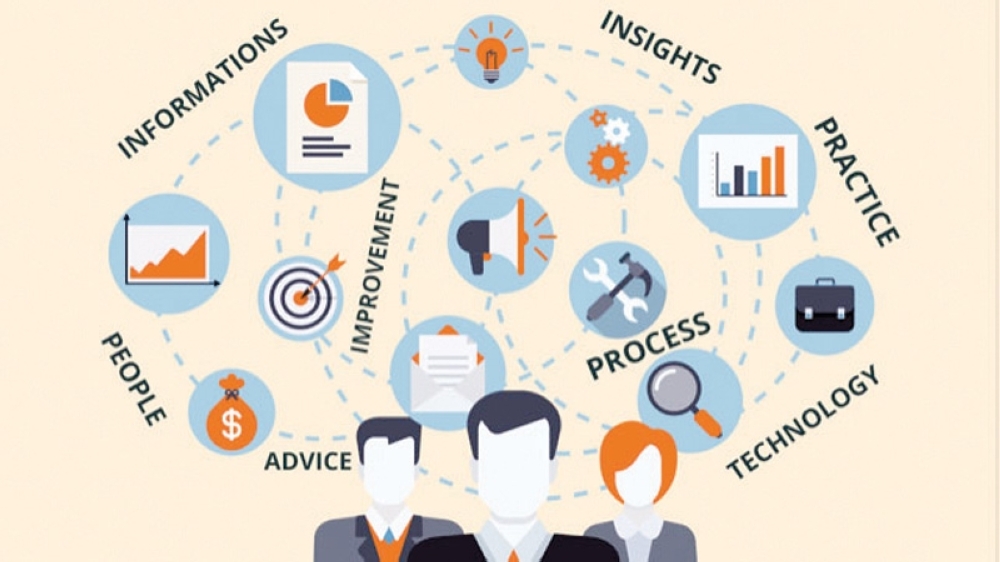
Knowledge management which is the innovative branch of management started to change into many new domains in the new era of Covid-19. Knowledge management is one of the branches which boosts the efficiency of an organisation’s decision-making ability. The four components of knowledge management are people, process, content/information technology and strategies.
When we examine the three-step process of knowledge management, the three steps are knowledge accumulation, integration and reconfiguration. This process is known for its natural ability to promote strategy and practicality suitable to all the organisations. These three steps appear to be complicated but in practice they are highly interrelated. Knowledge accumulation is linked with integration and reconfiguration which ensures that companies exchange knowledge to overcome challenging situations in the time of Covid-19.
The world is rapidly changing day by day and the business world more than most. No environment has changed as quickly as Covid-19, During this stage, the knowledge collected by organisations should be kept within their business and used to improve to face competitors.
As flexible work arrangements become the new and compulsory norm, businesses face new operational challenges in this period. So, it is necessary for the organisations to find new ways to innovate their offices and work remotely. These new imperatives make the organisation both technologically and culturally for transformation and ultimately require businesses to think strategically about how to keep employees engaged with the organisation’s collective knowledge. The organisations which are faster can adapt new flexible work models and faster they gain advantages of the market. The pandemic changed the urgency of customer interactions rapidly. As self-service dominates, human interactions with companies become crucial points. In fact, great customer experiences rest on great employee experiences. The pandemic has forced organisations to adopt a flexible work system. Flexible working means these workers work when, where, and how they need to. This is the future of work, which increases employee productivity and makes companies more quickly into desired ways. Knowledge management is necessarily required technology to adopt a flexible working model. It democratises organisational knowledge and helps faster for teams to grow and acquire goals.
Organisations must select a knowledge management solution which allows simple content capture, robust content life cycle management, and easy access.
Ineffective knowledge management impacts the financial front and employee satisfaction levels of the organisation. So, while applying knowledge management the nature of the knowledge not the process plays an important role in the development of organisations efficiency. Nowadays neither the brainstorming nor the group discussion works effectively but where to keep what is most important in the knowledge management system.
The author is with OCMT- Barka.
Oman Observer is now on the WhatsApp channel. Click here