




GLASGOW: Governments will push for agreement on Monday on how to help the most vulnerable deal with global warming and compensate for damage already done, a test of whether developing and rich nations can end years of deadlock over cash for climate change.
At the start of the second and final week of the UN climate talks in Glasgow, ministers get down to the nitty gritty of trying to honour promises to pay for climate-linked losses and damages, and to address how to help nations adapt to the effects of climate change.
Tuvalu's foreign minister, Simon Kofe, will offer a graphic demonstration of how rising sea levels affect his small island nation with a recorded speech to the conference dressed in a suit and tie while standing knee-deep in seawater.
"The statement juxtaposes the COP26 setting with the real-life situations faced in Tuvalu due to the impacts of climate change and sea level rise," said Kofe, standing at a lectern on the shores of the Pacific island. The speech will be broadcast to the Glasgow conference on Tuesday.
Britain, which is hosting the COP26 meeting, attempted to set the pace on Monday by announcing 290 million pounds ($391 million) in new funding, including support for countries in the Asia Pacific to deal with the impact of global warming.
It says the money is in addition to the "billions in additional international funding" already committed by rich countries such as Denmark, Japan and the United States for adaption and resilience in vulnerable nations, many of which have experienced the worst effects of climate change.
"We must act now to stop climate change from pushing more people into poverty. We know that climate impacts disproportionately affect those already most vulnerable," said Anne-Marie Trevelyan, who was appointed by the British government to focus on adaptation and resilience.
Ghana's Environment Minister Kwaku Afriyie said negotiations were not reflecting the levels of ambition publicly voiced by developed countries.
"It's very unfortunate and sad indeed," he said.
DIFFERENT PRIORITIES
While developing countries want more money to help them adapt to higher temperatures that have caused more frequent droughts, floods and wildfires, developed nations have been focused on channelling finance towards cutting emissions.
The cost of both is huge.
The expected economic cost of loss and damage by 2030 has been put at between $400 billion and $580 billion a year in developing countries, and up to $1.8 trillion by 2050, the Heinrich Boll Foundation said, citing academic studies.
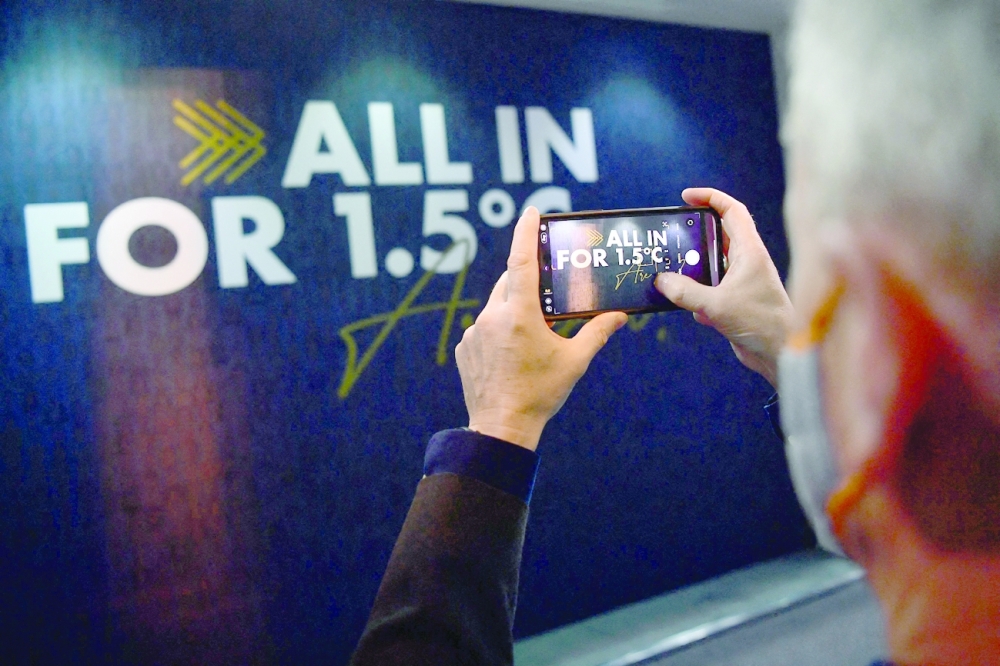
Makerusa Porotesano, a member of the Marshall Islands delegation, said the way to limit the amount of money needed to help islands in danger of disappearing under rising seas was to keep global warming below 1.5 Celsius (2.7 degrees Fahrenheit) above pre-industrial levels.
"We don't have the luxury of optimism. We're here to fight for our islands," he said.
Beyond the 1.5C level, which the Glasgow talks aims to keep alive, the world risks devastating climate impacts.
Richer nations need to show they can make good on the many pledges they delivered in the first week of the talks, which are scheduled to finish on Friday.
Developing countries are wary. At a UN climate summit 12 years ago in Copenhagen, rich nations promised to hand developing countries $100 billion a year by 2020 to help them adapt to climate change.
The target was missed and at COP26, richer nations have said they will meet the goal in 2023 at the latest, with some hoping it could be delivered a year earlier. - Reuters
Oman Observer is now on the WhatsApp channel. Click here