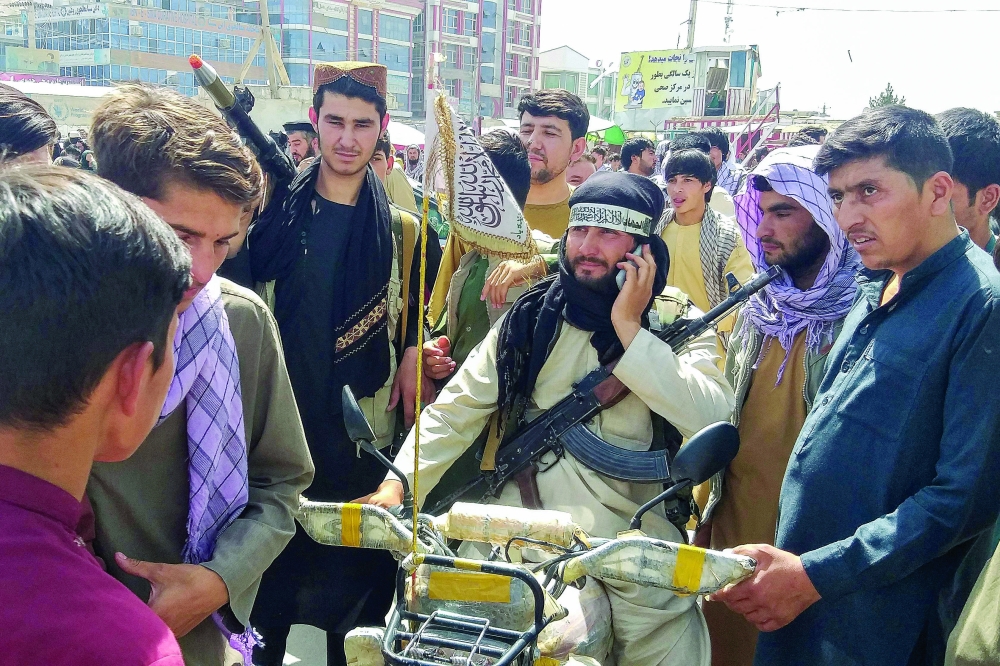





KABUL: Taliban fighters could isolate Afghanistan's capital in 30 days and possibly take it over in 90, a US defence official told Reuters on Wednesday citing US intelligence, as militants took control of an eighth provincial Afghan capital.
The official, speaking on condition of anonymity, said that the new assessment of how long Kabul could stand was a result of the rapid gains the Taliban had been making around the country as US-led foreign forces leave.
"But this is not a foregone conclusion," the official added, saying that the Afghan security forces could reverse the momentum by putting up more resistance.
The fighters now control 65 per cent of Afghanistan and have taken or threaten to take 11 provincial capitals, a senior EU official said on Tuesday.
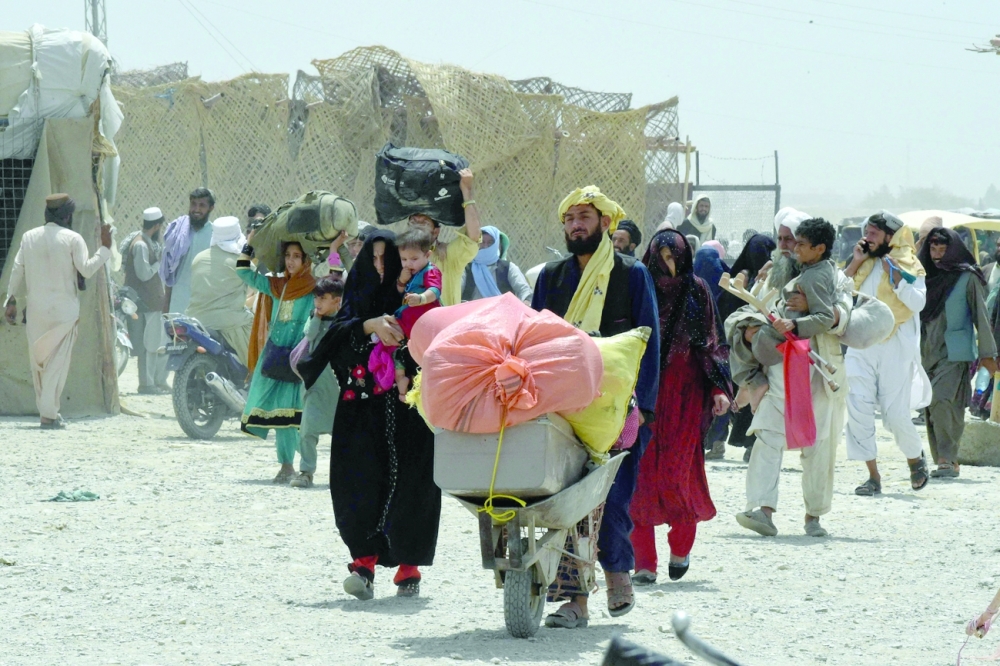
All entry points to Kabul, which lies in a valley surrounded by mountains, are choked with civilians fleeing violence elsewhere, a Western security source in the city told Reuters, making it hard to tell whether Taliban fighters were also entering.
"The fear is of suicide bombers entering the diplomatic quarters to scare, attack and ensure everyone leaves at the earliest opportunity," he said.
Wednesday's loss of Faizabad, capital of the northeastern province of Badakhshan, was the latest setback for the Afghan government, which has been struggling to stem the momentum of Taliban assaults.
It came as President Ashraf Ghani flew to Mazar-i-Sharif to rally old warlords to the defence of the biggest city in the north as Taliban forces closed in.
Jawad Mujadidi, a provincial council member from Badakhshan, said the Taliban had laid siege to Faizabad before launching an offensive on Tuesday.
"Unfortunately, after hours of heavy fighting the ANDSF retreated," Mujadidi told Reuters, referring to national security forces. "With the fall of Faizabad the whole of the northeast has come under Taliban control."
Badakhshan borders Tajikistan, Pakistan and China.
The Taliban are battling to defeat the U.S-backed government and reimpose strict Islamic law. The speed of their advance has shocked the government and its allies.
US President Joe Biden urged Afghan leaders to fight for their homeland, saying on Tuesday he did not regret his decision to withdraw. He noted that the United States had spent more than $1 trillion over 20 years and lost thousands of troops.
The United States was providing significant air support, food, equipment and salaries to Afghan forces, he said.
The United States will complete the withdrawal of its forces this month in exchange for Taliban promises to prevent Afghanistan being used for international terrorism.
The Taliban promised not to attack foreign forces as they withdraw but did not agree to a ceasefire with the government. A commitment by the Taliban to talk peace with the government side has come to nothing as they eye military victory.
A senior Taliban leader told Reuters that the head of the group's Political Office, Mullah Abdul Ghani Baradar, met U.S. Special Envoy for Afghan Reconciliation Ambassador Zalmay Khalilzad in Doha on Tuesday.
No details of the meeting have been released. One of the meetings expected to take place on Wednesday will be of the Troika Plus - a platform led by the United States, China and Russia. The Taliban leader, requesting anonymity, said that a Taliban delegation would also take part.
The Taliban advances have raised fears of a return to power of the hardline militants who emerged in the early 1990s from the chaos of civil war. They controlled most of the country from 1996 to 2001, when they were ousted by a U.S.-led campaign for harbouring al Qaeda chief Osama bin Laden.
A new generation of Afghans, who have come of age since 2001, fears that the progress made in areas such as women's rights and media freedom will be squandered. -- Reuters
Oman Observer is now on the WhatsApp channel. Click here